広島・長崎に原爆が投下されて65周年の記念日にちなみ、感想を。
(1)バンクーバー時間8月7日にテレビジャパンの、NHKニュースのなかで、イラクファルージャにおける2004年(アメリカの無差別総攻撃があった)以後の小児がん患者や白血病患者の急増、奇形児の誕生の増加などの紹介があった。
(2)日刊ベリタ紙上に書いた落合の記事(8.06)はファルージャにおける下記の統計値を紹介している。
(a)幼児死亡率は、1000人誕生中80人で、周辺国の数倍以上(エジプト19、ヨルダン17、クウェート9.7)。
(b)癌は総体で4倍増加.14歳以下の小児癌は12倍、白血病は38倍、乳癌は10倍。これらのデータは広島の放射能による白血病の増加(17倍)よりも高い率であるうえに、その発生が広島よりもかなり速い。
(c)新生児の性比は通常1015男児/1000女児であるが、2005年以後のファルージャでは、850/1000で男児が非常に減少している。これは、遺伝子変化の影響が男児により多く現れるためで、広島の戦後にも見られた。なお、統計には現れないが、新生児の奇形もかなり多いらしい;例えば、頭を2つ持った女児とか、下半身不随とか。
(3)NHKの放送では、こうした現象の原因にはいっさい触れられていないが、日刊ベリタで紹介した専門家による報告書は、原因としてある種の放射性物質を示唆し、暗に劣化ウラン弾としている。劣化ウランは、その名から、原爆に使用されるウランとは異なり、その放射能は問題にならないという印象を与える。劣化ウラン弾を使用する側は、そう主張しているので、そのように思う人が多いのではないかと考えられる。しかし、上の統計にもあるように、例えば白血病の発生はファルージャでは、広島でのそれの2倍以上であり患者の増加率は広島よりもかなり速い。おそらく、放射性物質の単位面積あたりの量は、ファルージャのほうが、広島よりもかなり多いのではないかと思われる。これは、劣化ウラン弾は攻撃対象物周辺に、大量のウラン化合物の微粉末をまき散らすためである。そしてこの微粉末をそこに生活する人々は呼吸とともに吸い込まざるをえないのである。とくに、劣化ウラン弾により破壊された戦車などに取り付いて遊ぶ子供達に甚大な影響を及ぼしている。これは、原爆の炸裂により広範囲にまき散らされた放射能よりも影響力が大きい。放射性物質が皮膚など体外から作用する場合、その作用は皮膚への直接的な影響と、皮膚などを通しての体内への影響とあるが後者の影響はあまり大きくない。しかし、体内に一度入りこんだ放射性物質はその物質が体外へ排出されない限り、放出し続ける放射線で、その物質の周辺の体組織を破壊しつづける.この体内被爆のほうが、影響ははるかに大きいのである。劣化ウラン弾は、原爆のように瞬時の大量殺人は起こさないが、ローカルの人々への健康への影響は原爆に劣らず甚大である。
(4)今年の原爆記念日は、国連事務総長や、核保有国—米、英、仏の代表などが出席するという、シンボリックにすぎないとはいえ、記念すべき年になったことは結構である。いわゆる核兵器は大量破壊兵器として、その悪は認識しやすい(といっても日本人以外にはなかなか実感が難しいであろうが)し、その廃絶が促進される気配が世界中に出て来たことは喜ばしい。日本がそのような運動で世界の指導的役割をはたすことが望まれる。
(5)20世紀中頃までに人類は、核分裂(核融合も)など理論を確立し、その実用化を進めてきた。「科学」として人類の知識を促進することは望ましい。しかしその知識を応用するには、人類による周到な配慮がなされなければならない。核分裂による大量エネルギーの平和利用(原子力発電)も、核物質に常に付随する放射能の問題を、無視ではないが、十分な解決法を確立する前に、広範に使用してしまっているし、地球温暖化軽減の名の下に、核発電をさらにふやす傾向にある。原子力発電により長期の潜水が可能になったために、そうした利用も増えた。これらの施設が事故を起こせば、直ちに放射能汚染がその周辺に起ることは避けられない。そのものの事故でなくとも、不完全に廃棄処理された放射性物質からの放射線、また環境へ拡散した放射性物質からの放射線は、人間その他あらゆる地球上の生物に影響を及ぼすし、すでにかなり広範な影響を及ぼしているものと思われる。放射能の影響は、普通目に見えない。(なお、原爆の大量破壊は、放射能よりも、物理的(熱と風力)なものによる)。残念なことには、かなりの放射性物質がすでに地球上にバラまかれてしまっているし、その影響はあまり目に見えない形で、徐々に人類とその他の生物を蝕んでいく。
ところで、ウランは地球上にかなりの量、鉱物として存在するのである。そして、この鉱物も放射能をもってはいるのである。しかし、これらの鉱物がその場に固定されているかぎり、あまり拡散することはない。したがって、今後の地球上の生命を放射能から守るためには、これ以上のウラン鉱物の採掘、利用、拡散を押しとどめる必要がある。核兵器廃絶の運動とともにこの点についての運動も進める必要がある。特に、カナダはウランの大供給国であるから。
落合栄一郎
8.07.2010


7.27.2010
憲法9条なし崩しの動き
以下は、毎日新聞からの記事です。憲法9条は無視して、実質的に日本の軍備拡張、集団自衛権行使、武器生産・輸出拡大などを政府/企業が画策していることを意味しているでしょう。これは、9条の更なる無意味化につながります。これについて民主党内でどうなるかがこの記事の主眼ですが、憲法を守ろうとする日本国民への警告を強調すべきでしょう(落合栄一郎)。
安保懇報告原案:南西諸島に自衛隊配備…武器三原則緩和も
2010年7月27日 22時40分 更新:7月28日 0時38分
菅直人首相の私的諮問機関「新たな時代の安全保障と防衛力に関する懇談会」(座長=佐藤茂雄・京阪電鉄最高経営責任者)が8月上旬に首相に提出す る報告書原案の全容が27日、明らかになった。中国の海洋進出や北朝鮮の核・ミサイル開発への懸念を背景に、鹿児島から沖縄にかけて点在する南西諸島を念 頭においた「離島地域への自衛隊の部隊配備」を検討するよう提言。また、集団的自衛権の行使を禁じる政府の憲法解釈の見直しや、武器輸出三原則の緩和など を求めている。
報告書は、民主党政権下で初となる年末の「防衛計画の大綱」(防衛大綱)改定のたたき台となる。菅内閣として報告書をどの程度、大綱に反映させるかが、今後の議論の焦点となる。
報告書原案では、東シナ海や日本近海で海洋進出を活発化させている中国、弾道ミサイル発射や核実験を繰り返す北朝鮮などによる日本周辺の安全保障 環境の悪化に言及。「離島地域の多くは日本の防衛力の配置が手薄で、領土や海洋利用の自由が脅かされかねない」として、南西諸島周辺を念頭に離島への自衛 隊部隊の重点配備の必要性などを指摘した。冷戦時代に採用された、自らが力の空白とならないよう必要最小限の基盤的な防衛力を保有する「基盤的防衛力」の 概念については、「もはや有効でない」として見直しを求めている。
集団的自衛権の行使については、日米同盟を重視し、米国に向かうミサイルを迎撃することが可能となるよう、柔軟に解釈や制度を変える必要があると指摘。武器輸出三原則は、米国以外の国とも共同開発が可能となるよう、早期に緩和するよう提言している。
安保懇報告原案:南西諸島に自衛隊配備…武器三原則緩和も
2010年7月27日 22時40分 更新:7月28日 0時38分
菅直人首相の私的諮問機関「新たな時代の安全保障と防衛力に関する懇談会」(座長=佐藤茂雄・京阪電鉄最高経営責任者)が8月上旬に首相に提出す る報告書原案の全容が27日、明らかになった。中国の海洋進出や北朝鮮の核・ミサイル開発への懸念を背景に、鹿児島から沖縄にかけて点在する南西諸島を念 頭においた「離島地域への自衛隊の部隊配備」を検討するよう提言。また、集団的自衛権の行使を禁じる政府の憲法解釈の見直しや、武器輸出三原則の緩和など を求めている。
報告書は、民主党政権下で初となる年末の「防衛計画の大綱」(防衛大綱)改定のたたき台となる。菅内閣として報告書をどの程度、大綱に反映させるかが、今後の議論の焦点となる。
報告書原案では、東シナ海や日本近海で海洋進出を活発化させている中国、弾道ミサイル発射や核実験を繰り返す北朝鮮などによる日本周辺の安全保障 環境の悪化に言及。「離島地域の多くは日本の防衛力の配置が手薄で、領土や海洋利用の自由が脅かされかねない」として、南西諸島周辺を念頭に離島への自衛 隊部隊の重点配備の必要性などを指摘した。冷戦時代に採用された、自らが力の空白とならないよう必要最小限の基盤的な防衛力を保有する「基盤的防衛力」の 概念については、「もはや有効でない」として見直しを求めている。
集団的自衛権の行使については、日米同盟を重視し、米国に向かうミサイルを迎撃することが可能となるよう、柔軟に解釈や制度を変える必要があると指摘。武器輸出三原則は、米国以外の国とも共同開発が可能となるよう、早期に緩和するよう提言している。
7.04.2010
Questions about Cheonan Sinking 韓国哨戒艦沈没についての疑惑
バンクーバー九条の会 会長の落合栄一郎さんが『日刊ベリタ』に書いた記事です。
落合栄一郎
韓国哨戒艦沈没についての疑惑
先に(日刊ベリタ2010.06.23)、この事件についての韓国国内での民間からの疑問提出を韓国政府が躍起になって押さえつけようとする様が報告された。日本では、世界中でも最も早い時期に田中宇氏が非常に重大な疑問符を投げかけた(http://tanakanews.com/100507korea.htm;
http://tanakanews.com/100531korea.htm )が、主要なメデイアや政府は、公式報告(北朝鮮による魚雷攻撃と結論)を鵜呑みにして、沖縄普天間基地/辺野古移転への正当化、軍備強化、日米同盟深化などをすすめる道具に使っている。
一方、当の韓国政府は国連の安保理への書翰(http://en.rian.ru/world/20100604/159308808.html)では、検討を要請するのみで、北朝鮮制
裁を要求してはいない。それを受けて、安保理の議長国メキシコ代表は、非公式だが報告書をまとめ、あの攻撃は避難されるべきとしながらも、北朝鮮がその責任者であるとは言っていない(読売新聞、2010.07.01)。また、アメリカは、最近北朝鮮を「テリスト国家」に再度指定することを見送った。ここカナダバンクーバ-市の代表的新聞であるヴァンクーバーサン紙のコラムニストの一人は、この米韓(それに他の数カ国の専門家も係わったとされるがー疑問)による報告へ様々な疑問を提出している。また別のサイトでは、唯一の証拠品とされる魚雷の詳しい分析から報告書の結論は間違っているという指摘もされている。
これらの動きからは、あの事件の真実はまだ解明されていないことがわかるが、当事者達(韓国政府/米国政府)ですら真相究明を避けようとする(真相が解明されると当事者に不都合か)傾向があ
り、北朝鮮を本当に非難することは避けているきらいが見られる。日本政府/メデイアは、北朝鮮に責任をなすり付けることが、自分達に好都合なのか、または真相究明などという精神は持ち合わせな
いのか、北朝鮮制裁強化などを主張する唯一の国である。しかも多数の国民もあまり疑問を抱かないようである。これがひいては、無条件の普天間基地返還という沖縄県民の念願を無視する政府に加担
することになる。
落合栄一郎
韓国哨戒艦沈没についての疑惑
先に(日刊ベリタ2010.06.23)、この事件についての韓国国内での民間からの疑問提出を韓国政府が躍起になって押さえつけようとする様が報告された。日本では、世界中でも最も早い時期に田中宇氏が非常に重大な疑問符を投げかけた(http://tanakanews.com/100507korea.htm;
http://tanakanews.com/100531korea.htm )が、主要なメデイアや政府は、公式報告(北朝鮮による魚雷攻撃と結論)を鵜呑みにして、沖縄普天間基地/辺野古移転への正当化、軍備強化、日米同盟深化などをすすめる道具に使っている。
一方、当の韓国政府は国連の安保理への書翰(http://en.rian.ru/world/20100604/159308808.html)では、検討を要請するのみで、北朝鮮制
裁を要求してはいない。それを受けて、安保理の議長国メキシコ代表は、非公式だが報告書をまとめ、あの攻撃は避難されるべきとしながらも、北朝鮮がその責任者であるとは言っていない(読売新聞、2010.07.01)。また、アメリカは、最近北朝鮮を「テリスト国家」に再度指定することを見送った。ここカナダバンクーバ-市の代表的新聞であるヴァンクーバーサン紙のコラムニストの一人は、この米韓(それに他の数カ国の専門家も係わったとされるがー疑問)による報告へ様々な疑問を提出している。また別のサイトでは、唯一の証拠品とされる魚雷の詳しい分析から報告書の結論は間違っているという指摘もされている。
これらの動きからは、あの事件の真実はまだ解明されていないことがわかるが、当事者達(韓国政府/米国政府)ですら真相究明を避けようとする(真相が解明されると当事者に不都合か)傾向があ
り、北朝鮮を本当に非難することは避けているきらいが見られる。日本政府/メデイアは、北朝鮮に責任をなすり付けることが、自分達に好都合なのか、または真相究明などという精神は持ち合わせな
いのか、北朝鮮制裁強化などを主張する唯一の国である。しかも多数の国民もあまり疑問を抱かないようである。これがひいては、無条件の普天間基地返還という沖縄県民の念願を無視する政府に加担
することになる。
6.21.2010
A Message from Chuck Overby, founder of the Article 9 Society in the U.S., for the 63rd Anniversary of the Japanese Constitution
From Dr. Chuck Overby
28 April 2010 [slightly revised 5/14/10]
TO: My Japanese Article 9 loving friends –
Greetings and best wishes on this May 3rd sixty third Anniversary of the adoption of your post World War II Constitution, with its Article 9 species wisdom – most all humanity’s cry for an end to that dominantly masculine obscenity called war.
Some of my recent writings suggest that we “Imagine The Magic Of An Article 9 Without Borders.” See my web-site www.article9society.org [English only].
Your supreme challenge, my dear Japanese friends, is not only to “imagine” a world in which all nations have an Article 9 type clause in their founding documents -- but to make it happen – and by vigorously working to keep Article 9 alive as a model for all nations on Planet Earth to emulate. Nations of the world so desperately need to be weaned from their age old “lust” for “Rules of War” and freshly nourished with Article 9’s wonderful non-violent “Rules of Law.”
Please, my dear friends, keep your Japanese and my U.S. governments from completely destroying Article 9 – and keep your government from its often stated passion to be like all the other “big-boys” on Planet Earth – a so-called “normal nation,” meaning one that bullies its way around the world with a military fist.
My 84 year journey on Planet Earth has profoundly helped me to understand how important Article 9 is for all life and for Mother Earth herself. My life-trip includes -- [1] service in two of America’s wars, World War II and the Korean War [combat pilot in Korea] – [2] over half a century as an engineering professor [and passionate humanist internationalist] – [3] over four decades of, thus far mostly unsuccessful, professional engineering dedication to the ideas of Green Technology By Design [GTBD] as means for enabling us to help prevent “oil” and other “resource wars” – and “global warming” – [4] and a growing understanding that there are no military solutions what-so-ever for the multitudes of problems and challenges we as a species face on Planet Earth.
If we do not replace “rules of war” with Article 9 like “rules of law,” and constrain our unjust and profligate material consumptions -- our trajectory points in the not too distant future to the end of life on beautiful Planet Earth. We will end things by one or the other of the following two means; or with both in synergy -- [1] our exponentially increasingly lethal science and engineering designed systems for killing and destruction and/or with [2] polluting and globally warming ourselves into Martian lifelessness with our “possessive-individualist” culture’s often greed-driven, mindless, profligate, and inequitable consumption of beautiful Mother Earth’s resource treasures -- converting them into entropic randomness -- resources over which we increasingly fight “resource wars.”
Never-ending economic “growth” “growth” and more “growth,” a philosophy, for which we in the USA have been Earth’s chief proponent, must be replaced across the planet with an equitable “no-growth-steady-state” model – both in “consumption” and in “population.”
One dimension of this “steady-state” model needs to be GTBD in all its multiplicity of possibilities -- something that Japan is uniquely equipped to demonstrate across Planet Earth. Please see my unsophisticated web site, www.article9society.org [unfortunately English only] for materials on GTBD along with much more on Article 9 and the things that Japan might do so as to provide leadership for Planet Earth in non-violence and in war and violence prevention with Article 9 as its “badge of honor.” Please also see pages 130 – 203 of any edition of our bilingual book [Japanese and English] -- Overby, Kunihiro, and Momoi, A Call For Peace: The Implications of Japan’s War-Renouncing Constitution, for much additional amplification on these themes.
Finally -- at this time, early May 2010, when you celebrate the 63rd anniversary of the adoption of your new constitution and its Article 9 wisdom -- a “review” is taking place at the United Nations on the 40th anniversary of the adoption of the 1970 nuclear Non-Proliferation Treaty [NPT] -- the “NPT 2010 Review.” Significant international demonstrations are being planned for this “NPT 2010 Review” event.
If everything materializes as planned, I hope to participate in some of these international demonstrations with my Veterans For Peace [VFP] friends by doing a bit of “Street Theater” -- in costume as Uncle Sam. I will be carrying signs that call for the elimination of all nuclear weapons from Planet Earth, with the help of Articles VI and VII of the NPT. Articles VI and VII of the 1979 NPT read as follows:
Article VI --“Each of the Parties to the Treaty undertakes to pursue negotiations in good faith on effective measures relating to cessation of the nuclear arms race at an early date and to nuclear disarmament, and on a Treaty on general and complete disarmament under strict and effective international control.”
Article VII -- “Nothing in this Treaty affects the right of any group of States to conclude regional treaties in order to assure the total absence of nuclear weapons in their respective territories.”
Best wishes in your efforts to save Article 9. You in Japan have primary responsibility for this challenge because A9 resides in your constitution.
Please wish us well in our New York City demonstrations at the “NPT 2010 Review” event.
Peace,
Chuck Overby
-- 1991 Founder of the Article 9 Society – USA
28 April 2010 [slightly revised 5/14/10]
TO: My Japanese Article 9 loving friends –
Greetings and best wishes on this May 3rd sixty third Anniversary of the adoption of your post World War II Constitution, with its Article 9 species wisdom – most all humanity’s cry for an end to that dominantly masculine obscenity called war.
Some of my recent writings suggest that we “Imagine The Magic Of An Article 9 Without Borders.” See my web-site www.article9society.org [English only].
Your supreme challenge, my dear Japanese friends, is not only to “imagine” a world in which all nations have an Article 9 type clause in their founding documents -- but to make it happen – and by vigorously working to keep Article 9 alive as a model for all nations on Planet Earth to emulate. Nations of the world so desperately need to be weaned from their age old “lust” for “Rules of War” and freshly nourished with Article 9’s wonderful non-violent “Rules of Law.”
Please, my dear friends, keep your Japanese and my U.S. governments from completely destroying Article 9 – and keep your government from its often stated passion to be like all the other “big-boys” on Planet Earth – a so-called “normal nation,” meaning one that bullies its way around the world with a military fist.
My 84 year journey on Planet Earth has profoundly helped me to understand how important Article 9 is for all life and for Mother Earth herself. My life-trip includes -- [1] service in two of America’s wars, World War II and the Korean War [combat pilot in Korea] – [2] over half a century as an engineering professor [and passionate humanist internationalist] – [3] over four decades of, thus far mostly unsuccessful, professional engineering dedication to the ideas of Green Technology By Design [GTBD] as means for enabling us to help prevent “oil” and other “resource wars” – and “global warming” – [4] and a growing understanding that there are no military solutions what-so-ever for the multitudes of problems and challenges we as a species face on Planet Earth.
If we do not replace “rules of war” with Article 9 like “rules of law,” and constrain our unjust and profligate material consumptions -- our trajectory points in the not too distant future to the end of life on beautiful Planet Earth. We will end things by one or the other of the following two means; or with both in synergy -- [1] our exponentially increasingly lethal science and engineering designed systems for killing and destruction and/or with [2] polluting and globally warming ourselves into Martian lifelessness with our “possessive-individualist” culture’s often greed-driven, mindless, profligate, and inequitable consumption of beautiful Mother Earth’s resource treasures -- converting them into entropic randomness -- resources over which we increasingly fight “resource wars.”
Never-ending economic “growth” “growth” and more “growth,” a philosophy, for which we in the USA have been Earth’s chief proponent, must be replaced across the planet with an equitable “no-growth-steady-state” model – both in “consumption” and in “population.”
One dimension of this “steady-state” model needs to be GTBD in all its multiplicity of possibilities -- something that Japan is uniquely equipped to demonstrate across Planet Earth. Please see my unsophisticated web site, www.article9society.org [unfortunately English only] for materials on GTBD along with much more on Article 9 and the things that Japan might do so as to provide leadership for Planet Earth in non-violence and in war and violence prevention with Article 9 as its “badge of honor.” Please also see pages 130 – 203 of any edition of our bilingual book [Japanese and English] -- Overby, Kunihiro, and Momoi, A Call For Peace: The Implications of Japan’s War-Renouncing Constitution, for much additional amplification on these themes.
Finally -- at this time, early May 2010, when you celebrate the 63rd anniversary of the adoption of your new constitution and its Article 9 wisdom -- a “review” is taking place at the United Nations on the 40th anniversary of the adoption of the 1970 nuclear Non-Proliferation Treaty [NPT] -- the “NPT 2010 Review.” Significant international demonstrations are being planned for this “NPT 2010 Review” event.
If everything materializes as planned, I hope to participate in some of these international demonstrations with my Veterans For Peace [VFP] friends by doing a bit of “Street Theater” -- in costume as Uncle Sam. I will be carrying signs that call for the elimination of all nuclear weapons from Planet Earth, with the help of Articles VI and VII of the NPT. Articles VI and VII of the 1979 NPT read as follows:
Article VI --“Each of the Parties to the Treaty undertakes to pursue negotiations in good faith on effective measures relating to cessation of the nuclear arms race at an early date and to nuclear disarmament, and on a Treaty on general and complete disarmament under strict and effective international control.”
Article VII -- “Nothing in this Treaty affects the right of any group of States to conclude regional treaties in order to assure the total absence of nuclear weapons in their respective territories.”
Best wishes in your efforts to save Article 9. You in Japan have primary responsibility for this challenge because A9 resides in your constitution.
Please wish us well in our New York City demonstrations at the “NPT 2010 Review” event.
Peace,
Chuck Overby
-- 1991 Founder of the Article 9 Society – USA
5.24.2010
NPT Review Conference - Determined for a World Without Nuclear Weapons: an Evening with Sachi Rummel, a Hiroshima Witness 核なき世界への決意:被爆者ランメル幸さんとの夕べ

Please see the report of this event on Peace Philosophy Centre's Blog.

Peace March in New York, May 2, in which one hundred Hibakusha (a-bomb survivors) among the 15,000 participants called for nuclear weapons abolition. 5月2日、ニューヨークで核廃絶のための平和行進の様子。日本から参加した100人の被爆者をはじめ、15,000人がニューヨークのタイムズスクエアから国連本部まで行進した。
イベントのご案内です。下方に日本語案内があります。
You are invited to:
A Special Event after the United Nations NPT (Non-Proliferation Treaty) Review Conference:
"Determined for a World Without Nuclear Weapons: an Evening with Sachi Rummel, a Hiroshima witness"
Time and Date: 7-9 PM, Wednesday, June 2
Place: Room C (Ground Floor), Roundhouse Community Centre , Yaletown, Downtown Vancouver (181 Roundhouse Mews, Vancouver, BC - Roundhouse Station of Canada Line)
A month-long negotiation of the NPT (Nuclear Non-Proliferation Treaty) Review Conference will come to the conclusion on May 28th. Satoko Norimatsu, Director of Peace Philosophy Centre and a founding member of Vancouver Save Article 9 will report her experience of NPT activities in New York, where near one hundred Hibakusha (a-bomb survivors) gathered to influence the UN's policy towards nuclear disarmament. The special guest of the evening will be Sachi Rummel, a Hiroshima witness. Sachi will share her precious experience of the atomic-bombing on August 6, 1945 and her life afterwards.
Free Admission (donation accepted)
RSVP and inquiries: info@peacephilosophy.com or 604-619-5627
Organizers: Vancouver Save Article 9, Peace Philosophy Centre
The primary language of this event will be English. Japanese/English translation can be provided during discussion.
Profile: Sachi Rummel 
Sachi was born in Hiroshima. Sachi was 8 years old, and at her school 3.5 kilometre away from the hypocentre when the atomic bomb was dropped on August 6, 1945. She married a Canadian man and moved to Canada in 1975. She has two children. Sachi's hobbies are tea ceremony and flower arrangement.
NPT再検討会議記念特別イベント:
「核なき世界への決意:ヒロシマ体験者 ランメル幸さんとの夕べ」
日時: 6月2日(水)午後7-9時
場所:ラウンドハウスコミュニティーセンター(バンクーバー、イェールタウン カナダライン・ラウンドハウス駅) 1階 C会議室
5年ごとに開催される核不拡散条約再検討会議が5月にニューヨーク国連本部で開催されました。被爆者100人が核廃絶を訴えたニューヨークで会議主催や通訳を務めた乗松聡子が報告します。スペシャルゲストとして、広島被爆者であるランメル幸さんをお迎えし、体験を語っていただきます。
参加費 無料(ドネーションを受け付けます)
参加申込、問い合わせ: info@peacephilosophy.com か電話 604-619-5627 へ
主催:バンクーバー九条の会、ピース・フィロソフィー・センター
この催しは英語で進めます。質疑応答のとき、英語・日本語間の通訳可能です。
プロフィール ランメル幸
ランメル幸さんは、広島出身で、8歳のとき、爆心地から3.5キロの学校で被爆しました。カナダ人と結婚し、1975年にカナダに移住、二児の母である。 趣味はお茶とお花。
ふるってご参加ください!
バンクーバー九条の会
ピース・フィロソフィー・センター
5.18.2010
Law on Referendum Came Into Effect on May 18 国民投票法 施行
(graph from Chosun Online. Graph shows Asahi and Yomiuri Polls.
Constitution revision necessary?
Yomiuri
Yes - 43%
No - 42%
Asahi
Yes - 47%
No - 39%
Should Article 9 be changed?
Yomiuri
Yes - 32%
No - 44%
Asahi
Yes - 24%
No - 67%
This has been an overall trend in many polls - people can agree to the general idea of constitutional revision, but it is generally the case that more people want to keep Article 9 as it is.
On May 18, 2010, the three-year freeze on the National Referendum Law was removed. Here are various news reports on the topic.
http://www.japantoday.com/category/politics/view/law-on-referendum-for-revising-constitution-takes-effect
Law on referendum for revising Constitution takes effect
Tuesday 18th May, 07:10 AM JST
TOKYO (Kyodo News)—
A law on a referendum for revising the Constitution came into effect on Tuesday, three years after its enactment, setting the scene for people to vote on any proposed revision of the pacifist Constitution. The National Referendum Law stipulates procedures for constitutional revisions and allows revision proposals to be submitted to the Diet at any time.
But the deliberative councils on the Constitution in both houses of the Diet, where draft revision proposals are to be deliberated, have so far been dormant. The law was enacted in 2007 by a coalition led by the then ruling Liberal Democratic Party as part of the party’s House of Councillors election manifesto.
However, the Democratic Party of Japan, which wrested power from the LDP in the House of Representatives election last August, has been reluctant to debate the issue as one of its coalition partners—the Social Democratic Party—staunchly opposes changing the Constitution.
As the law allows people aged 18 or older to vote in a referendum on revising the Constitution, it requires that other relevant laws also be revised before its enforcement to lower the age to 18 from 20 to be eligible to vote in elections, but the government has taken no concrete steps, citing the need for more discussion.
Meanwhile, the main opposition LDP has been studying revisions to its draft new constitution worked out in 2005 to make it more conservative, ahead of this summer’s upper house election.
以下、各紙報道
産経新聞
http://sankei.jp.msn.com/politics/policy/100518/plc1005181955018-n2.htm
憲法改正の手続きを定めた国民投票法が18日、施行された。これで、衆院で100人以上、参院で50人以上の賛同があれば、憲法改正原案(改憲原案)の提出が可能になった。しかし、国民投票法制定に伴う国会法改正で、平成19年8月に設置された衆参の憲法審査会が、民主党のサボタージュと共産、社民両党の反対で今も始動していない。憲法審査会という審議の場がなければ、改憲原案は宙に浮き、国会が国民に憲法改正を発議できない状態がなお続く。
国民が投票で、最高法規の改正の是非を最終的に決する制度がしかれるのは本来画期的だが、今回の国民投票法施行は、まるで羊頭狗肉、「不完全な施行」(中谷元・自民党憲法改正推進本部事務局長)だ。
責任が最も大きいのは、改憲論者を自称する鳩山由紀夫首相と民主党だ。党内に護憲派議員を抱え、社民党と連立を組む民主党が一向に動かないため、憲法審査会は2年9カ月後の今も動いていない。「法律を制定し国民に順守を求める立場の国会が、法律を守らない」(中谷氏)事態は、日本の憲政史に泥を塗る事態と言っていい。
国民投票法施行までに解決が期待された(1)18歳選挙権、成人年齢実現などの法整備(2)国民投票運動に関する公務員の政治的行為の法規制(3)国民投票の対象拡大の検討-の「3つの宿題」も解決していない。
自民、公明両党などの国会議員有志は18日、「国民投票法施行記念集会」を国会内で開き、憲法審査会始動を求める緊急アピールを決議したが、「創憲」政党のはずの民主党の議員の姿はなかった。
民主党護憲派の千葉景子法相は18日の記者会見で、成人年齢引き下げについて「国民投票法と一体として議論しなければならないものか」と、消極姿勢を示している。
国民投票という、国民が「主権」の行使に直接参加する唯一の機会を封じ、憲法論議から逃げて、大きな世直しなどできるのか。明治時代の自由民権運動の闘士が今の国会の惨状を知ったら、激怒するに違いない。(榊原智)
朝日新聞
http://mytown.asahi.com/niigata/news.php?k_id=16000001005180005
国民投票法きょう施行 憲法、若者は考えた
2010年05月18日
憲法改正の手続きを定めた国民投票法は18日、施行される。5年前に民主、自民両党が示した改憲のカタチには、自衛軍の保持や環境権を含む新しい権利の確立などがうたわれたが、憲法論議は下火となった。18歳以上に投票権を認めた国民投票法も、年齢に関する法令の改正が進んでいない。いま20歳前後の若者は、憲法改正にどのような意識を持っているのか。新潟大学法学部の学生たちに聞いた。
◆
18歳以上の投票について、3年の中野莉香子さん(20)は「早いうちから関心を持つためにもいいと思う」、2年の柿沼衣里さん(19)も「18、19歳なら、ちゃんと自分の意見を持つことができると思う」と肯定的だった。
生活に身近な「環境権」や「プライバシー保護」を憲法に明記することについて、柿沼さんは「環境権はまだ議論が深まっていない。きちんと議論せずに規定されれば、企業活動が萎縮(い・しゅく)するなどのデメリットも考えられる。プライバシー権については、その重要性を認める判例もあるので、明文規定してもいいのではないか」と話した。
戦争の放棄をうたう9条も、対テロ戦争や北朝鮮のミサイル問題などを契機に、改憲の波にさらされている。
2年の横田佑花子さん(19)は、家庭や大学で、祖母や被爆者から戦争の体験談を聞いた。「9条は、悲惨な戦争を体験した日本が世界へ向けて発信している平和のメッセージでもある。日本が過去から今へつなげていくものとしてとても大切だと思う」と、改正に慎重な見方を示した。
3年の女子学生(20)も「日本を取り巻く状況が変わっても、終戦時の反省の精神は変えるべきではない」と答えた。
◆
2005年10月、民主党は「憲法提言」を、自民党は「新憲法草案」をそれぞれ発表し、改憲案の形を示した。
民主党は9条に関し、「制約された自衛権」を掲げた。自衛権を、国連の集団安全保障活動が作動するまでの間の緊急避難的な活動に限定するとしている。また国連主導の集団安全保障活動以外には参加しないとした。
また、環境権(良好な環境で生活を営む権利)や知る権利、生命倫理など新しい権利の確立をうたった。新しい権利を維持するための義務は、国や企業、個人が協力し合う「共同の責務」という考え方で位置づけた。
自民党は、9条で「自衛軍の保持」を明記。集団的自衛権の行使を認め、国際社会の平和と安全確保のための国際的な協調活動も行うとした。
12条(自由・権利の保持の責任とその濫用(らんよう)の禁止)では「自由及び権利には責任及び義務が伴う」と記した。19条(思想及び良心の自由)には個人情報の保護を、25条(生存権、国の社会的使命)には環境権を、29条(財産権)には知的財産権を加えた。
公明党は9条の表現を維持し、環境権などを加える「加憲」の立場。共産党、社民党は「護憲」の立場だ。
◆
■国民投票法 憲法96条は、改正の手続きとして、衆参両院それぞれの総議員の3分の2以上の賛成で改正案を発議し、国民投票で過半数の賛成を必要としている。この国民投票の具体的な手続きを定めた法律で、安倍政権下の2007年5月に成立した。改正原案を審議、採決する憲法審査会が同年8月に両院に設置されたが、委員は選任されていない。投票権は18歳以上の国民とされるが、関連法改正のめども立っていない。
毎日新聞
http://mainichi.jp/select/seiji/news/20100518ddm002040024000c.html
国民投票法:きょう施行 目立つ機能不全
<分析>
◇憲法審査会「開店休業」/「18歳投票権」法整備できず
憲法改正の手続きを定めた国民投票法が18日、完全施行される。日本国憲法96条は改正手続きについて(1)衆参両院で総議員の3分の2以上の賛成により憲法改正案を発議(2)国民投票の過半数の賛成で承認--と定めただけで、改正を進めるための法的な仕組みが整うのは初めて。ただ、国会は与野党の対立が激しく、憲法改正原案を審査する衆参両院の憲法審査会は始動のめどが立たない状況。同法に明記された「18歳投票権」も必要な法整備が間に合わず、同法は機能不全のまま施行を迎えることとなった。【高山祐、野原大輔、岡崎大輔】
「参院に憲法審査会を立ち上げるための規程がないのは正常な状態ではない。早急に検討してもらいたい」
江田五月参院議長は13日、民主、自民、公明3党の参院国対委員長を国会内の議長室に呼び、憲法審査会の委員数などを定める「規程」の策定を促した。
国民投票法は07年5月に成立、公布され、施行まで3年の準備期間が設けられた。衆参両院に憲法審査会を設置する条項は07年8月に部分施行されたが、同年7月の参院選で民主党が圧勝し、政界は09年衆院選後の政権交代を挟んで与野党対立が激化。衆院では09年6月、当時与党だった自民、公明両党が民主党などの反対を押し切って審査会規程を議決したが、民主党が主導権を握る参院では見送られてきた。
民主党が規程の策定を拒み続けるのは、改憲派と護憲派が混在する党内事情に加え、改憲に「断固反対」する社民党と連立を組んでいることも影響している。民主党内改憲派の西岡武夫参院議院運営委員長が「違法状態」だとして江田氏に働きかけ、議長自らが説得に乗り出したが、民主党の平田健二参院国対委員長は「党内の議論が十分なされていない」と先送りを主張。民主党出身議長の面目をつぶす形になった。
18日の完全施行後も衆参両院の憲法審査会は「開店休業」状態が続く見通し。民主党は夏の参院選後も子ども手当など「マニフェスト政策」を優先する構えだ。ただ、参院選の結果次第では連立の組み替えも想定され、米軍普天間飛行場移設問題や消費税引き上げを巡って社民党の連立離脱も取りざたされる。そもそも鳩山由紀夫首相は「新憲法試案」の著書もある改憲論者。参院選後、改憲論議が動き始める可能性がないわけではない。
国民投票に参加できる年齢を18歳以上とする課題も、国会と政府の不作為で積み残された。同法は選挙権・成人年齢を20歳以上から18歳以上に引き下げることを前提とし、施行までに「必要な法制上の措置を講ずる」よう求めていた。法相の諮問機関・法制審議会民法成年年齢部会が昨年7月、成人年齢の18歳引き下げを「適当」とする報告書をまとめたが、たなざらしのまま。公職選挙法や民法の改正論議に与野党が取り組んだ形跡はなく、投票権年齢は「20歳以上」でスタートする。
◇「自民原案」路線対立で見送り
野党転落後、「保守回帰」の傾向を強める自民党は夏の参院選マニフェストの「1丁目1番地」に自主憲法制定を掲げる方針。18日の国民投票法施行に合わせて憲法改正原案を国会に提出することも検討した。しかし「部分改正」か「全面改正」かを巡る路線対立が表面化し、あえなく見送り。谷垣禎一総裁ら執行部の求心力低下を改めて印象づける迷走劇となった。
石破茂政調会長は12日の記者会見で「18日を期して改正案を提出すべきではないか」と述べた。石破氏が想定したのは(1)改正手続きを定めた96条の発議要件を「過半数の賛成」に緩和(2)財政の健全性確保に配慮する条項を83条に追加--する部分改正。国民投票法は憲法改正原案の国会提出に「衆院で100人以上、参院で50人以上」の賛成が必要と規定しており、自民党は単独で提出可能だ。
同法はテーマごとに改正する「個別発議」の規定を設け、憲法全体の「一括改正」は難しい仕組みになっている。石破氏はこれに基づき党内の合意を得やすい「無難なテーマ」に絞って改正原案を提案したい考えだった。自民党の改憲姿勢をアピールするとともに、改憲、護憲両派を抱える民主党を揺さぶる狙いもあった。
しかし、可決の見込みもないまま部分改正を提起する石破氏の提案を全面改正派は「拙速」と受け止めた。
党憲法改正推進本部の保利耕輔本部長は「一部だけ取り出せば批判が必ず出る」と反対。谷垣総裁も「憲法全体の案を出すのが一番正しい対応だ。できるところからやる場合には与野党共通してすぐ取り組む必要があるが、そこまで議論は熟していない」と判断し、石破氏は断念に追い込まれた。
==============
■国民投票法のポイント■
▽憲法改正原案の国会提出
・衆院では100人以上、参院では50人以上の議員の賛成が必要
・内容が関連する事項ごとに区分して提案する(個別発議)
▽憲法審査会の設置
・憲法と関連法制について調査し、憲法改正原案を審査するため、衆参両院に憲法審査会を設ける(07年8月に施行済み)
▽憲法改正案の発議
・衆参両院で総議員の3分の2以上の賛成で発議し、国民に提案(憲法96条の規定)
▽国民投票の手続き
・発議の60日以後180日以内に投票
・有権者に働きかける「国民投票運動」は原則自由。インターネットは制限なく、テレビ・ラジオCMは投票14日前から禁止
・個別発議された改正案ごとに1人1票ずつ投票用紙に印刷された「賛成」か「反対」のいずれかを「○」で囲んで投票する
・無効票を除いた有効投票総数(賛成票と反対票の合計)の過半数の賛成で承認
▽投票権年齢
・投票権は満18歳以上の日本国民が有する
・国民投票法の施行までに18歳以上が国政選挙に参加できるよう公職選挙法の選挙権年齢や民法の成人年齢を検討し、必要な法制上の措置をとる
・18歳以上が国政選挙に参加できるまでは20歳以上が投票権を有する
読売新聞
http://www.yomiuri.co.jp/politics/news/20100518-OYT1T00151.htm
憲法改正の手続きを定めた国民投票法が施行
憲法改正の手続きを定めた国民投票法が18日午前0時、施行された。
衆院では議員100人以上、参院では同50人以上の賛成で憲法改正原案の国会提出が可能になる。ただ、原案を審査する衆参両院の憲法審査会は委員が選任されない状態が続いており、現状で原案が提出されても「たなざらし」となる見通しだ。
国民投票法は2007年5月に自民、公明両党などの賛成で成立。民主党は、安倍首相(当時)が憲法改正を同年参院選の争点にする考えを示したことに反発し、反対した。「公布3年後」の施行日を迎えるにあたり、松本剛明・衆院議院運営委員長(民主)は17日、国会内で記者団に、憲法改正には各党の理解が必要だと強調。安倍政権が「何年もの議論を一瞬で葬り去った」とし、「真の改正論議につながるにはどうしたらいいかを考える反省の日」と位置づけた。
(2010年5月18日08時53分 読売新聞)
時事通信
http://www.jiji.com/jc/c?g=pol_30&k=2010051800011
国民投票法が施行=憲法改正原案、提出可能に-審査会休眠で審議できず
憲法改正の手続きを定めた国民投票法が18日施行された。これに伴い改正原案の国会提出が可能となった。しかし、原案を審議する衆参両院の憲法審査会は、与野党対立や民主党政権の誕生などの影響で休眠状態が続いている。改正原案が提出されても審議できる環境にないのが実情だ。
国民投票法は、改憲に積極的だった安倍内閣当時の2007年5月、自民、公明両党の賛成多数で成立した。施行後は衆院100人以上、参院50人以上の賛同で改正原案を国会に提出できる。原案が両院で可決され、改正が発議されると60-180日以内に国民投票が行われ、半数以上の賛成で承認される仕組みだ。
同法は、成人年齢の18歳への引き下げを前提に、国民投票の有権者を18歳以上の国民と定めた。しかし、民法など関係法令の改正は進んでおらず、当面は20歳以上が対象となる。
憲法96条は、改正の発議には衆参両院で「総議員の3分の2以上の賛成」が必要としており、ハードルは高い。このため自民党は、発議要件を「2分の1以上の賛成」に緩和する改正原案を早期に提出することを検討している。
憲法審査会は07年8月に衆参両院に設置された。ただ、委員の選任に連立与党の社民党が強く反対しているほか、護憲派を抱える民主党も慎重姿勢のままだ。衆院は昨年6月に審査会の運営ルールを定めた規程を作ったが、参院ではそれすら決まっていない。(2010/05/18-00:35)
朝鮮日報日本語版
憲法改正:日本できょう国民投票法施行(上)
http://www.chosunonline.com/news/20100518000029
憲法制定から63年
日本で18日から国民投票法(平成19年5月18日法律第51号「日本国憲法の改正手続に関する法律」)が施行された。日本の憲法は、憲法改正時に限って国民投票を認めている。衆参両院の3分の2の賛成と、国民投票での過半数の賛成が、憲法改正の要件だ(憲法96条)。今回施行された国民投票法は、この国民投票をどのように行うかを具体的に定めたもの。同法の施行により、日本は憲法改正のための手続き的枠組みを備えた、と見ることができる。
野党・自民党は、国民投票法の施行と同時に、憲法改正案を国会に提出する方針だ。与党民主党も、原則的には憲法改正に賛成している。とはいえ、志向する憲法改正の内容・時期・意思は互いに異なっており、日本国民の関心も小さく、憲法改正論が日本社会の中心的話題となる可能性は非常に低い。
■関心は消えたが、法律は生きる
日本の憲法は、1947年に施行されて以来、一字一句たりとも改正されていない。従って、憲法改正のための手続き法である国民投票法は、実際のところ必要なかった。
突如この法律が注目を集めるようになったのは、2006年に憲法改正論者の安倍晋三首相(当時)が就任してからだ。05年の衆院選で自民党が大勝したことにより、連立与党が衆議院に占める議席は3分の2を超えた。07年の参院選でも、自民党の勝利が予想されていた。その間に政権に就いた安倍首相は、選挙で勝った後に憲法改正を推し進めたい、と語った。そのため、選挙直前の07年5月、施行は3年後とくぎを刺した上で、国民投票法案を通過させた。
ところがその年の参院選は、自民党の敗北で終わった。09年の衆院選でも自民党が惨敗した。政権が変わり、憲法改正論も封印されたが、法律だけは生き残ったわけだ。憲法改正への関心がなくなったことで、国民投票法の規定と衝突する公職選挙法や民法の修正、国民投票法が定める国会憲法審査会の運営なども手つかずとなり、「国民投票法の施行そのものが違法状態」という批判まで受けている。
朝鮮日報/朝鮮日報日本語版
憲法改正:日本できょう国民投票法施行(下)
http://www.chosunonline.com/news/20100518000030
憲法制定から63年
■日本の憲法改正論の多様なスペクトラム
憲法改正と護憲は、日本の戦後政治で左右を分かつ中核論点だった。自民党は、1955年の創立の際、憲法改正を「党の使命」と明文化した政党だ。現在は社民党が継承している旧社会党は、憲法の死守を存立の根拠として勢力を維持してきた。占領米軍が作った憲法を、戦力の非保持と交戦権の否定という理想的条項(9条)があるという理由で、親共・左派が擁護するという皮肉を演出したわけだ。
現在の政権与党・民主党は、自民党と旧社会党出身の勢力が合流して作った混合政党だ。旧社会党の後身である社民党とは、連立を組んでいる。従って、憲法改正に関する見解も複雑で、その意思も弱い。「憲法改正には賛成だが、急ぐべきではなく、9条の改正は駄目だ」という点を、現在の立場として整理している。このため、民主党政権の下では、憲法改正が中心的話題になる可能性はほとんどない。
80年代までは、憲法改正論といえば9条の改正だけが取り上げられていた。しかしその憲法改正論も、90年代に入り、環境権やプライバシー権といった人権の新たな価値が登場したことで、大きく幅を広げている。9条改正に反対する人々の間でも、新たな価値を盛り込むことができない63年前の憲法に手を入れるべきだ、という見解が広まっているという。そのため、これまでとは異なり、憲法改正への賛否の世論と9条改正への賛否の世論は別々に形成される様相を見せている。
今月3日に公開された朝日新聞の世論調査を見ると、「憲法改正が必要」という意見は47%で、「必要ない」という意見(39%)より多かった。だが9条については、67%が「そのままにしておくのが良い」と答えた。「変えた方が良い」という意見は24%だった。
こうした世論があるため、自民党ですら、今回提出する憲法改正案で9条に手を付けることはしなかった。9条があるにもかかわらず、政府が法解釈により十分な軍備強化を進めてきたことも、9条改正の現実的必要性が弱まった理由の一つだ。日本では、「憲法9条を永久化して世界文化遺産に登録しよう」という余裕ある意見まで出ている。
東京=鮮于鉦(ソンウ・ジョン)特派員
朝鮮日報/朝鮮日報日本語版
「改憲手続き法」の施行にあたって
日本共産党書記局長 市田忠義
http://www.jcp.or.jp/akahata/aik10/2010-05-18/2010051803_02_1.html
--------------------------------------------------------------------------------
「改憲手続き法」の施行にあたり、日本共産党の市田忠義書記局長が発表した談話は以下の通りです。
◇
本日、いわゆる「改憲手続き法」(日本国憲法の改正手続に関する法律)が完全施行されたことによって、憲法を改定するさいの国民投票など、改憲を具体化するための一連の制度的な枠組みが発効することとなった。
もともとこの法律は、国民の要求にこたえて制定されたものでもなければ、さしせまった必要があって制定されたものでもない。「憲法を頂点とした戦後レジームからの脱却」などという時代錯誤のスローガンをかかげ、ひたすら、現憲法の平和・人権・民主主義の原理・原則を根こそぎ改悪することを「政権の使命」として追求した安倍・自公政権が、国民の強い反対を押し切って強行成立させたものである。
「改憲手続き法」制定直後の参院選(2007年7月)での改憲派の惨敗、それにつづく昨年の総選挙での壊滅的敗北、この間の世論調査で多くの人びとが「改憲反対」と回答していることなどをみれば、主権者国民は現憲法の改定などまったく求めておらず、したがって、この法律を発動する条件も必要もないことは明瞭(めいりょう)である。
そのうえこの法律は、「投票年齢」を何歳とするのか、憲法改定の是非に関する国民運動の自由をどう保障するのか、「最低投票率」の要件をどう規定するのか等々、民主主義的な制度として当然備えるべき条項を欠いた、まったくの「欠陥法」にほかならない。このような「改憲手続き法」は、すみやかに廃止すべきである。
自民党は、この法律の施行を機に改憲案を国会に提出して改憲機運を盛り上げようと躍起になっているが、日本共産党は、わが国の憲政史に取り返しのつかない汚点を残すこのような暴挙に強く反対する。
憲法にかかわっていま切実に求められていることは、世界に誇るべき「9条」をはじめ、日本国民が大切にはぐくんできた憲法の平和・人権・民主主義の原理・原則をまもり、わが国の社会と政治にいっそう深く定着させることである。そのために日本共産党は、多くの国民とともに力をつくす決意である。
2010年5月17日
日本国憲法の改正手続きに関する法律(改憲手続法)の施行にあたって(談話)
社会民主党幹事長
重野安正
http://www5.sdp.or.jp/comment/2010/dannwa100517.htm
1.憲法を改定するための国民投票法などの手続きを定めた「日本国憲法の改正手続きに関する法律」(改憲手続法)が、明日施行される。この法律は、かつての自公政権・安倍内閣が、戦前のシステムや価値観への回帰を目論み、国会での審議や国民的議論が十分なされないまま強行に成立させたものである。社民党は、国の基本を定めた憲法を変える重要法案を軽々に取り扱う自公政権の暴挙に強く抗議し、法案成立に反対してきた。
2.改憲手続法は、18項目にもわたる付帯決議が付けられた欠陥法案であり、施行までには多くの法整備や検討課題が残されていた。しかしこれまで、憲法改正原案、改正発議を審議する憲法審査会は一度も開かれていない。これは、改憲に反対する国民の意思を国が真摯に受け止め慎重な配慮をすべきである、という世論のうねりが高まってきたからであり、国民が憲法改正を求めていないことにほかならない。社民党はこの声をしっかりと受け止め、憲法審査会を始動させないよう国会内外で働きかけてきた。なお、改憲手続法が施行されても、同法附則が定めている投票年齢と公務員の政治的行為に対する制限に関する検討と、必要な法制上の措置が講じられるまでの間は、同法は不完全な状態であり、憲法改正原案の発議を行うことができないことは当然である。
3.昨年の総選挙で、国民生活を無視し続けた自公政権は敗れ、社民党・民主党・国民新党の3党連立による「新しい政治」への転換がなされた。「新しい政治」に求められるものは、憲法に定められた「すべて国民は、健康で文化的な最低限度の生活を営む権利」を実現する真の政治を取り戻すことにある。また、国民主権と基本的人権の尊重は、広く国民のなかに定着しており、さらなる充実をはかることが私たちの責務である。
4.日本国憲法は、国の最高法規であり、わが国が平和国家として歩むための基礎となってきた。連立政権の政策合意においては、憲法の3原則の遵守と、「憲法の保障する諸権利の実現を第一とし、国民の生活再建に全力を挙げる」ことが確認されている。今こそ、平和憲法を正しく理解し、その理念の実現に傾注すべき時である。法施行の今再び、自民党を中心に改憲策動が強まり、改正原案を今国会に提出しようとする動きが出ている。憲法を尊重し擁護すべき義務をかなぐり捨て「米国に追従し、戦争のできる国づくり」を進めようとするタカ派の危険な策動には、断固として対決していく。
5.鳩山内閣での社民党の責務は、人権が保障された平和で豊かな社会を築くため、憲法の理念を生かした政治を実現させることである。社民党は、新しい政治の品質保証役として、引き続き、憲法改悪に反対する人々や、国の礎である憲法を軽々しく扱うことに異議を唱える人々と手を携えて、憲法審査会を動かさないよう監視していく。
以上
日本経済新聞
これでは国民投票法が泣く
http://www.nikkei.com/news/editorial/article/g=96958A96889DE2E5E4E0E1E3E1E2E3EAE2E7E0E2E3E28297EAE2E2E2;n=96948D819A938D96E38D8D8D8D8D 憲法改正の手続きを定めた国民投票法の施行日を迎えた。これにより、国会が憲法改正を発議し、国民投票で過半数の賛成があれば、憲法改正が実現する仕組みが整う。
本来であれば画期的な出来事だが、国民投票法が定めている衆参両院の憲法審査会は休眠状態が続き、憲法改正の作業は停滞している。これではせっかくの国民投票法を生かせない。違法ともいえる状態を速やかに改め、国会で憲法改正の議論を始めるよう重ねて求めたい。
国民投票法の成立から施行まで3年間の準備期間があった。しかしこの間、衆参両院の憲法審査会は一度も開かれなかった。参院は審査会の運営規程すら決まっていない。
民主党出身の江田五月参院議長は13日に民主、自民、公明3党の参院国会対策委員長に審査会の運営規程を早急に制定するよう求めた。自民、公明両党は賛同したが、民主党は慎重姿勢を崩さなかった。
憲法改正をめぐる党内の意見がまとまっていないうえ、憲法審査会の開催に反対している社民党への配慮からとみられるが、理解に苦しむ対応である。
3年間の準備期間を空費したため、施行までに法整備をしなければならなかった選挙権年齢の18歳への引き下げなども実現していない。公務員の政治活動をどこまで認めるかという課題も積み残したままだ。
国民投票法は本則で18歳以上に投票権を与えると定めている。ただ付則で、施行されるまでに一般の選挙権や民法の成人年齢を18歳に引き下げる法整備をすることを条件にしていた。このままだと国民投票法の投票年齢も20歳以上になり、10代の若者の声が国民投票に反映されなくなってしまう。
18歳選挙権は民主党のかねての主張であり、民主党の政策集にも明記されている。にもかかわらず鳩山内閣の下でも検討は進んでいない。
法相の諮問機関である法制審議会は昨年秋に成人年齢の引き下げを千葉景子法相に答申したが、関連法案の提出のめどは立っていない。成人年齢の引き下げは少年法など他の法律にも大きな影響を与える。政府は成人年齢の引き下げに向けて、具体的な検討を急ぐ必要がある。
Constitution revision necessary?
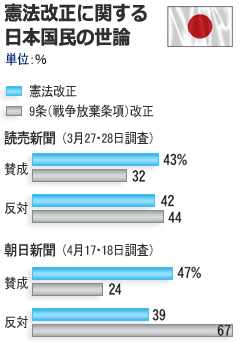
Yomiuri
Yes - 43%
No - 42%
Asahi
Yes - 47%
No - 39%
Should Article 9 be changed?
Yomiuri
Yes - 32%
No - 44%
Asahi
Yes - 24%
No - 67%
This has been an overall trend in many polls - people can agree to the general idea of constitutional revision, but it is generally the case that more people want to keep Article 9 as it is.
On May 18, 2010, the three-year freeze on the National Referendum Law was removed. Here are various news reports on the topic.
http://www.japantoday.com/category/politics/view/law-on-referendum-for-revising-constitution-takes-effect
Law on referendum for revising Constitution takes effect
Tuesday 18th May, 07:10 AM JST
TOKYO (Kyodo News)—
A law on a referendum for revising the Constitution came into effect on Tuesday, three years after its enactment, setting the scene for people to vote on any proposed revision of the pacifist Constitution. The National Referendum Law stipulates procedures for constitutional revisions and allows revision proposals to be submitted to the Diet at any time.
But the deliberative councils on the Constitution in both houses of the Diet, where draft revision proposals are to be deliberated, have so far been dormant. The law was enacted in 2007 by a coalition led by the then ruling Liberal Democratic Party as part of the party’s House of Councillors election manifesto.
However, the Democratic Party of Japan, which wrested power from the LDP in the House of Representatives election last August, has been reluctant to debate the issue as one of its coalition partners—the Social Democratic Party—staunchly opposes changing the Constitution.
As the law allows people aged 18 or older to vote in a referendum on revising the Constitution, it requires that other relevant laws also be revised before its enforcement to lower the age to 18 from 20 to be eligible to vote in elections, but the government has taken no concrete steps, citing the need for more discussion.
Meanwhile, the main opposition LDP has been studying revisions to its draft new constitution worked out in 2005 to make it more conservative, ahead of this summer’s upper house election.
以下、各紙報道
産経新聞
http://sankei.jp.msn.com/politics/policy/100518/plc1005181955018-n2.htm
憲法改正の手続きを定めた国民投票法が18日、施行された。これで、衆院で100人以上、参院で50人以上の賛同があれば、憲法改正原案(改憲原案)の提出が可能になった。しかし、国民投票法制定に伴う国会法改正で、平成19年8月に設置された衆参の憲法審査会が、民主党のサボタージュと共産、社民両党の反対で今も始動していない。憲法審査会という審議の場がなければ、改憲原案は宙に浮き、国会が国民に憲法改正を発議できない状態がなお続く。
国民が投票で、最高法規の改正の是非を最終的に決する制度がしかれるのは本来画期的だが、今回の国民投票法施行は、まるで羊頭狗肉、「不完全な施行」(中谷元・自民党憲法改正推進本部事務局長)だ。
責任が最も大きいのは、改憲論者を自称する鳩山由紀夫首相と民主党だ。党内に護憲派議員を抱え、社民党と連立を組む民主党が一向に動かないため、憲法審査会は2年9カ月後の今も動いていない。「法律を制定し国民に順守を求める立場の国会が、法律を守らない」(中谷氏)事態は、日本の憲政史に泥を塗る事態と言っていい。
国民投票法施行までに解決が期待された(1)18歳選挙権、成人年齢実現などの法整備(2)国民投票運動に関する公務員の政治的行為の法規制(3)国民投票の対象拡大の検討-の「3つの宿題」も解決していない。
自民、公明両党などの国会議員有志は18日、「国民投票法施行記念集会」を国会内で開き、憲法審査会始動を求める緊急アピールを決議したが、「創憲」政党のはずの民主党の議員の姿はなかった。
民主党護憲派の千葉景子法相は18日の記者会見で、成人年齢引き下げについて「国民投票法と一体として議論しなければならないものか」と、消極姿勢を示している。
国民投票という、国民が「主権」の行使に直接参加する唯一の機会を封じ、憲法論議から逃げて、大きな世直しなどできるのか。明治時代の自由民権運動の闘士が今の国会の惨状を知ったら、激怒するに違いない。(榊原智)
朝日新聞
http://mytown.asahi.com/niigata/news.php?k_id=16000001005180005
国民投票法きょう施行 憲法、若者は考えた
2010年05月18日
憲法改正の手続きを定めた国民投票法は18日、施行される。5年前に民主、自民両党が示した改憲のカタチには、自衛軍の保持や環境権を含む新しい権利の確立などがうたわれたが、憲法論議は下火となった。18歳以上に投票権を認めた国民投票法も、年齢に関する法令の改正が進んでいない。いま20歳前後の若者は、憲法改正にどのような意識を持っているのか。新潟大学法学部の学生たちに聞いた。
◆
18歳以上の投票について、3年の中野莉香子さん(20)は「早いうちから関心を持つためにもいいと思う」、2年の柿沼衣里さん(19)も「18、19歳なら、ちゃんと自分の意見を持つことができると思う」と肯定的だった。
生活に身近な「環境権」や「プライバシー保護」を憲法に明記することについて、柿沼さんは「環境権はまだ議論が深まっていない。きちんと議論せずに規定されれば、企業活動が萎縮(い・しゅく)するなどのデメリットも考えられる。プライバシー権については、その重要性を認める判例もあるので、明文規定してもいいのではないか」と話した。
戦争の放棄をうたう9条も、対テロ戦争や北朝鮮のミサイル問題などを契機に、改憲の波にさらされている。
2年の横田佑花子さん(19)は、家庭や大学で、祖母や被爆者から戦争の体験談を聞いた。「9条は、悲惨な戦争を体験した日本が世界へ向けて発信している平和のメッセージでもある。日本が過去から今へつなげていくものとしてとても大切だと思う」と、改正に慎重な見方を示した。
3年の女子学生(20)も「日本を取り巻く状況が変わっても、終戦時の反省の精神は変えるべきではない」と答えた。
◆
2005年10月、民主党は「憲法提言」を、自民党は「新憲法草案」をそれぞれ発表し、改憲案の形を示した。
民主党は9条に関し、「制約された自衛権」を掲げた。自衛権を、国連の集団安全保障活動が作動するまでの間の緊急避難的な活動に限定するとしている。また国連主導の集団安全保障活動以外には参加しないとした。
また、環境権(良好な環境で生活を営む権利)や知る権利、生命倫理など新しい権利の確立をうたった。新しい権利を維持するための義務は、国や企業、個人が協力し合う「共同の責務」という考え方で位置づけた。
自民党は、9条で「自衛軍の保持」を明記。集団的自衛権の行使を認め、国際社会の平和と安全確保のための国際的な協調活動も行うとした。
12条(自由・権利の保持の責任とその濫用(らんよう)の禁止)では「自由及び権利には責任及び義務が伴う」と記した。19条(思想及び良心の自由)には個人情報の保護を、25条(生存権、国の社会的使命)には環境権を、29条(財産権)には知的財産権を加えた。
公明党は9条の表現を維持し、環境権などを加える「加憲」の立場。共産党、社民党は「護憲」の立場だ。
◆
■国民投票法 憲法96条は、改正の手続きとして、衆参両院それぞれの総議員の3分の2以上の賛成で改正案を発議し、国民投票で過半数の賛成を必要としている。この国民投票の具体的な手続きを定めた法律で、安倍政権下の2007年5月に成立した。改正原案を審議、採決する憲法審査会が同年8月に両院に設置されたが、委員は選任されていない。投票権は18歳以上の国民とされるが、関連法改正のめども立っていない。
毎日新聞
http://mainichi.jp/select/seiji/news/20100518ddm002040024000c.html
国民投票法:きょう施行 目立つ機能不全
<分析>
◇憲法審査会「開店休業」/「18歳投票権」法整備できず
憲法改正の手続きを定めた国民投票法が18日、完全施行される。日本国憲法96条は改正手続きについて(1)衆参両院で総議員の3分の2以上の賛成により憲法改正案を発議(2)国民投票の過半数の賛成で承認--と定めただけで、改正を進めるための法的な仕組みが整うのは初めて。ただ、国会は与野党の対立が激しく、憲法改正原案を審査する衆参両院の憲法審査会は始動のめどが立たない状況。同法に明記された「18歳投票権」も必要な法整備が間に合わず、同法は機能不全のまま施行を迎えることとなった。【高山祐、野原大輔、岡崎大輔】
「参院に憲法審査会を立ち上げるための規程がないのは正常な状態ではない。早急に検討してもらいたい」
江田五月参院議長は13日、民主、自民、公明3党の参院国対委員長を国会内の議長室に呼び、憲法審査会の委員数などを定める「規程」の策定を促した。
国民投票法は07年5月に成立、公布され、施行まで3年の準備期間が設けられた。衆参両院に憲法審査会を設置する条項は07年8月に部分施行されたが、同年7月の参院選で民主党が圧勝し、政界は09年衆院選後の政権交代を挟んで与野党対立が激化。衆院では09年6月、当時与党だった自民、公明両党が民主党などの反対を押し切って審査会規程を議決したが、民主党が主導権を握る参院では見送られてきた。
民主党が規程の策定を拒み続けるのは、改憲派と護憲派が混在する党内事情に加え、改憲に「断固反対」する社民党と連立を組んでいることも影響している。民主党内改憲派の西岡武夫参院議院運営委員長が「違法状態」だとして江田氏に働きかけ、議長自らが説得に乗り出したが、民主党の平田健二参院国対委員長は「党内の議論が十分なされていない」と先送りを主張。民主党出身議長の面目をつぶす形になった。
18日の完全施行後も衆参両院の憲法審査会は「開店休業」状態が続く見通し。民主党は夏の参院選後も子ども手当など「マニフェスト政策」を優先する構えだ。ただ、参院選の結果次第では連立の組み替えも想定され、米軍普天間飛行場移設問題や消費税引き上げを巡って社民党の連立離脱も取りざたされる。そもそも鳩山由紀夫首相は「新憲法試案」の著書もある改憲論者。参院選後、改憲論議が動き始める可能性がないわけではない。
国民投票に参加できる年齢を18歳以上とする課題も、国会と政府の不作為で積み残された。同法は選挙権・成人年齢を20歳以上から18歳以上に引き下げることを前提とし、施行までに「必要な法制上の措置を講ずる」よう求めていた。法相の諮問機関・法制審議会民法成年年齢部会が昨年7月、成人年齢の18歳引き下げを「適当」とする報告書をまとめたが、たなざらしのまま。公職選挙法や民法の改正論議に与野党が取り組んだ形跡はなく、投票権年齢は「20歳以上」でスタートする。
◇「自民原案」路線対立で見送り
野党転落後、「保守回帰」の傾向を強める自民党は夏の参院選マニフェストの「1丁目1番地」に自主憲法制定を掲げる方針。18日の国民投票法施行に合わせて憲法改正原案を国会に提出することも検討した。しかし「部分改正」か「全面改正」かを巡る路線対立が表面化し、あえなく見送り。谷垣禎一総裁ら執行部の求心力低下を改めて印象づける迷走劇となった。
石破茂政調会長は12日の記者会見で「18日を期して改正案を提出すべきではないか」と述べた。石破氏が想定したのは(1)改正手続きを定めた96条の発議要件を「過半数の賛成」に緩和(2)財政の健全性確保に配慮する条項を83条に追加--する部分改正。国民投票法は憲法改正原案の国会提出に「衆院で100人以上、参院で50人以上」の賛成が必要と規定しており、自民党は単独で提出可能だ。
同法はテーマごとに改正する「個別発議」の規定を設け、憲法全体の「一括改正」は難しい仕組みになっている。石破氏はこれに基づき党内の合意を得やすい「無難なテーマ」に絞って改正原案を提案したい考えだった。自民党の改憲姿勢をアピールするとともに、改憲、護憲両派を抱える民主党を揺さぶる狙いもあった。
しかし、可決の見込みもないまま部分改正を提起する石破氏の提案を全面改正派は「拙速」と受け止めた。
党憲法改正推進本部の保利耕輔本部長は「一部だけ取り出せば批判が必ず出る」と反対。谷垣総裁も「憲法全体の案を出すのが一番正しい対応だ。できるところからやる場合には与野党共通してすぐ取り組む必要があるが、そこまで議論は熟していない」と判断し、石破氏は断念に追い込まれた。
==============
■国民投票法のポイント■
▽憲法改正原案の国会提出
・衆院では100人以上、参院では50人以上の議員の賛成が必要
・内容が関連する事項ごとに区分して提案する(個別発議)
▽憲法審査会の設置
・憲法と関連法制について調査し、憲法改正原案を審査するため、衆参両院に憲法審査会を設ける(07年8月に施行済み)
▽憲法改正案の発議
・衆参両院で総議員の3分の2以上の賛成で発議し、国民に提案(憲法96条の規定)
▽国民投票の手続き
・発議の60日以後180日以内に投票
・有権者に働きかける「国民投票運動」は原則自由。インターネットは制限なく、テレビ・ラジオCMは投票14日前から禁止
・個別発議された改正案ごとに1人1票ずつ投票用紙に印刷された「賛成」か「反対」のいずれかを「○」で囲んで投票する
・無効票を除いた有効投票総数(賛成票と反対票の合計)の過半数の賛成で承認
▽投票権年齢
・投票権は満18歳以上の日本国民が有する
・国民投票法の施行までに18歳以上が国政選挙に参加できるよう公職選挙法の選挙権年齢や民法の成人年齢を検討し、必要な法制上の措置をとる
・18歳以上が国政選挙に参加できるまでは20歳以上が投票権を有する
読売新聞
http://www.yomiuri.co.jp/politics/news/20100518-OYT1T00151.htm
憲法改正の手続きを定めた国民投票法が施行
憲法改正の手続きを定めた国民投票法が18日午前0時、施行された。
衆院では議員100人以上、参院では同50人以上の賛成で憲法改正原案の国会提出が可能になる。ただ、原案を審査する衆参両院の憲法審査会は委員が選任されない状態が続いており、現状で原案が提出されても「たなざらし」となる見通しだ。
国民投票法は2007年5月に自民、公明両党などの賛成で成立。民主党は、安倍首相(当時)が憲法改正を同年参院選の争点にする考えを示したことに反発し、反対した。「公布3年後」の施行日を迎えるにあたり、松本剛明・衆院議院運営委員長(民主)は17日、国会内で記者団に、憲法改正には各党の理解が必要だと強調。安倍政権が「何年もの議論を一瞬で葬り去った」とし、「真の改正論議につながるにはどうしたらいいかを考える反省の日」と位置づけた。
(2010年5月18日08時53分 読売新聞)
時事通信
http://www.jiji.com/jc/c?g=pol_30&k=2010051800011
国民投票法が施行=憲法改正原案、提出可能に-審査会休眠で審議できず
憲法改正の手続きを定めた国民投票法が18日施行された。これに伴い改正原案の国会提出が可能となった。しかし、原案を審議する衆参両院の憲法審査会は、与野党対立や民主党政権の誕生などの影響で休眠状態が続いている。改正原案が提出されても審議できる環境にないのが実情だ。
国民投票法は、改憲に積極的だった安倍内閣当時の2007年5月、自民、公明両党の賛成多数で成立した。施行後は衆院100人以上、参院50人以上の賛同で改正原案を国会に提出できる。原案が両院で可決され、改正が発議されると60-180日以内に国民投票が行われ、半数以上の賛成で承認される仕組みだ。
同法は、成人年齢の18歳への引き下げを前提に、国民投票の有権者を18歳以上の国民と定めた。しかし、民法など関係法令の改正は進んでおらず、当面は20歳以上が対象となる。
憲法96条は、改正の発議には衆参両院で「総議員の3分の2以上の賛成」が必要としており、ハードルは高い。このため自民党は、発議要件を「2分の1以上の賛成」に緩和する改正原案を早期に提出することを検討している。
憲法審査会は07年8月に衆参両院に設置された。ただ、委員の選任に連立与党の社民党が強く反対しているほか、護憲派を抱える民主党も慎重姿勢のままだ。衆院は昨年6月に審査会の運営ルールを定めた規程を作ったが、参院ではそれすら決まっていない。(2010/05/18-00:35)
朝鮮日報日本語版
憲法改正:日本できょう国民投票法施行(上)
http://www.chosunonline.com/news/20100518000029
憲法制定から63年
日本で18日から国民投票法(平成19年5月18日法律第51号「日本国憲法の改正手続に関する法律」)が施行された。日本の憲法は、憲法改正時に限って国民投票を認めている。衆参両院の3分の2の賛成と、国民投票での過半数の賛成が、憲法改正の要件だ(憲法96条)。今回施行された国民投票法は、この国民投票をどのように行うかを具体的に定めたもの。同法の施行により、日本は憲法改正のための手続き的枠組みを備えた、と見ることができる。
野党・自民党は、国民投票法の施行と同時に、憲法改正案を国会に提出する方針だ。与党民主党も、原則的には憲法改正に賛成している。とはいえ、志向する憲法改正の内容・時期・意思は互いに異なっており、日本国民の関心も小さく、憲法改正論が日本社会の中心的話題となる可能性は非常に低い。
■関心は消えたが、法律は生きる
日本の憲法は、1947年に施行されて以来、一字一句たりとも改正されていない。従って、憲法改正のための手続き法である国民投票法は、実際のところ必要なかった。
突如この法律が注目を集めるようになったのは、2006年に憲法改正論者の安倍晋三首相(当時)が就任してからだ。05年の衆院選で自民党が大勝したことにより、連立与党が衆議院に占める議席は3分の2を超えた。07年の参院選でも、自民党の勝利が予想されていた。その間に政権に就いた安倍首相は、選挙で勝った後に憲法改正を推し進めたい、と語った。そのため、選挙直前の07年5月、施行は3年後とくぎを刺した上で、国民投票法案を通過させた。
ところがその年の参院選は、自民党の敗北で終わった。09年の衆院選でも自民党が惨敗した。政権が変わり、憲法改正論も封印されたが、法律だけは生き残ったわけだ。憲法改正への関心がなくなったことで、国民投票法の規定と衝突する公職選挙法や民法の修正、国民投票法が定める国会憲法審査会の運営なども手つかずとなり、「国民投票法の施行そのものが違法状態」という批判まで受けている。
朝鮮日報/朝鮮日報日本語版
憲法改正:日本できょう国民投票法施行(下)
http://www.chosunonline.com/news/20100518000030
憲法制定から63年
■日本の憲法改正論の多様なスペクトラム
憲法改正と護憲は、日本の戦後政治で左右を分かつ中核論点だった。自民党は、1955年の創立の際、憲法改正を「党の使命」と明文化した政党だ。現在は社民党が継承している旧社会党は、憲法の死守を存立の根拠として勢力を維持してきた。占領米軍が作った憲法を、戦力の非保持と交戦権の否定という理想的条項(9条)があるという理由で、親共・左派が擁護するという皮肉を演出したわけだ。
現在の政権与党・民主党は、自民党と旧社会党出身の勢力が合流して作った混合政党だ。旧社会党の後身である社民党とは、連立を組んでいる。従って、憲法改正に関する見解も複雑で、その意思も弱い。「憲法改正には賛成だが、急ぐべきではなく、9条の改正は駄目だ」という点を、現在の立場として整理している。このため、民主党政権の下では、憲法改正が中心的話題になる可能性はほとんどない。
80年代までは、憲法改正論といえば9条の改正だけが取り上げられていた。しかしその憲法改正論も、90年代に入り、環境権やプライバシー権といった人権の新たな価値が登場したことで、大きく幅を広げている。9条改正に反対する人々の間でも、新たな価値を盛り込むことができない63年前の憲法に手を入れるべきだ、という見解が広まっているという。そのため、これまでとは異なり、憲法改正への賛否の世論と9条改正への賛否の世論は別々に形成される様相を見せている。
今月3日に公開された朝日新聞の世論調査を見ると、「憲法改正が必要」という意見は47%で、「必要ない」という意見(39%)より多かった。だが9条については、67%が「そのままにしておくのが良い」と答えた。「変えた方が良い」という意見は24%だった。
こうした世論があるため、自民党ですら、今回提出する憲法改正案で9条に手を付けることはしなかった。9条があるにもかかわらず、政府が法解釈により十分な軍備強化を進めてきたことも、9条改正の現実的必要性が弱まった理由の一つだ。日本では、「憲法9条を永久化して世界文化遺産に登録しよう」という余裕ある意見まで出ている。
東京=鮮于鉦(ソンウ・ジョン)特派員
朝鮮日報/朝鮮日報日本語版
「改憲手続き法」の施行にあたって
日本共産党書記局長 市田忠義
http://www.jcp.or.jp/akahata/aik10/2010-05-18/2010051803_02_1.html
--------------------------------------------------------------------------------
「改憲手続き法」の施行にあたり、日本共産党の市田忠義書記局長が発表した談話は以下の通りです。
◇
本日、いわゆる「改憲手続き法」(日本国憲法の改正手続に関する法律)が完全施行されたことによって、憲法を改定するさいの国民投票など、改憲を具体化するための一連の制度的な枠組みが発効することとなった。
もともとこの法律は、国民の要求にこたえて制定されたものでもなければ、さしせまった必要があって制定されたものでもない。「憲法を頂点とした戦後レジームからの脱却」などという時代錯誤のスローガンをかかげ、ひたすら、現憲法の平和・人権・民主主義の原理・原則を根こそぎ改悪することを「政権の使命」として追求した安倍・自公政権が、国民の強い反対を押し切って強行成立させたものである。
「改憲手続き法」制定直後の参院選(2007年7月)での改憲派の惨敗、それにつづく昨年の総選挙での壊滅的敗北、この間の世論調査で多くの人びとが「改憲反対」と回答していることなどをみれば、主権者国民は現憲法の改定などまったく求めておらず、したがって、この法律を発動する条件も必要もないことは明瞭(めいりょう)である。
そのうえこの法律は、「投票年齢」を何歳とするのか、憲法改定の是非に関する国民運動の自由をどう保障するのか、「最低投票率」の要件をどう規定するのか等々、民主主義的な制度として当然備えるべき条項を欠いた、まったくの「欠陥法」にほかならない。このような「改憲手続き法」は、すみやかに廃止すべきである。
自民党は、この法律の施行を機に改憲案を国会に提出して改憲機運を盛り上げようと躍起になっているが、日本共産党は、わが国の憲政史に取り返しのつかない汚点を残すこのような暴挙に強く反対する。
憲法にかかわっていま切実に求められていることは、世界に誇るべき「9条」をはじめ、日本国民が大切にはぐくんできた憲法の平和・人権・民主主義の原理・原則をまもり、わが国の社会と政治にいっそう深く定着させることである。そのために日本共産党は、多くの国民とともに力をつくす決意である。
2010年5月17日
日本国憲法の改正手続きに関する法律(改憲手続法)の施行にあたって(談話)
社会民主党幹事長
重野安正
http://www5.sdp.or.jp/comment/2010/dannwa100517.htm
1.憲法を改定するための国民投票法などの手続きを定めた「日本国憲法の改正手続きに関する法律」(改憲手続法)が、明日施行される。この法律は、かつての自公政権・安倍内閣が、戦前のシステムや価値観への回帰を目論み、国会での審議や国民的議論が十分なされないまま強行に成立させたものである。社民党は、国の基本を定めた憲法を変える重要法案を軽々に取り扱う自公政権の暴挙に強く抗議し、法案成立に反対してきた。
2.改憲手続法は、18項目にもわたる付帯決議が付けられた欠陥法案であり、施行までには多くの法整備や検討課題が残されていた。しかしこれまで、憲法改正原案、改正発議を審議する憲法審査会は一度も開かれていない。これは、改憲に反対する国民の意思を国が真摯に受け止め慎重な配慮をすべきである、という世論のうねりが高まってきたからであり、国民が憲法改正を求めていないことにほかならない。社民党はこの声をしっかりと受け止め、憲法審査会を始動させないよう国会内外で働きかけてきた。なお、改憲手続法が施行されても、同法附則が定めている投票年齢と公務員の政治的行為に対する制限に関する検討と、必要な法制上の措置が講じられるまでの間は、同法は不完全な状態であり、憲法改正原案の発議を行うことができないことは当然である。
3.昨年の総選挙で、国民生活を無視し続けた自公政権は敗れ、社民党・民主党・国民新党の3党連立による「新しい政治」への転換がなされた。「新しい政治」に求められるものは、憲法に定められた「すべて国民は、健康で文化的な最低限度の生活を営む権利」を実現する真の政治を取り戻すことにある。また、国民主権と基本的人権の尊重は、広く国民のなかに定着しており、さらなる充実をはかることが私たちの責務である。
4.日本国憲法は、国の最高法規であり、わが国が平和国家として歩むための基礎となってきた。連立政権の政策合意においては、憲法の3原則の遵守と、「憲法の保障する諸権利の実現を第一とし、国民の生活再建に全力を挙げる」ことが確認されている。今こそ、平和憲法を正しく理解し、その理念の実現に傾注すべき時である。法施行の今再び、自民党を中心に改憲策動が強まり、改正原案を今国会に提出しようとする動きが出ている。憲法を尊重し擁護すべき義務をかなぐり捨て「米国に追従し、戦争のできる国づくり」を進めようとするタカ派の危険な策動には、断固として対決していく。
5.鳩山内閣での社民党の責務は、人権が保障された平和で豊かな社会を築くため、憲法の理念を生かした政治を実現させることである。社民党は、新しい政治の品質保証役として、引き続き、憲法改悪に反対する人々や、国の礎である憲法を軽々しく扱うことに異議を唱える人々と手を携えて、憲法審査会を動かさないよう監視していく。
以上
日本経済新聞
これでは国民投票法が泣く
http://www.nikkei.com/news/editorial/article/g=96958A96889DE2E5E4E0E1E3E1E2E3EAE2E7E0E2E3E28297EAE2E2E2;n=96948D819A938D96E38D8D8D8D8D 憲法改正の手続きを定めた国民投票法の施行日を迎えた。これにより、国会が憲法改正を発議し、国民投票で過半数の賛成があれば、憲法改正が実現する仕組みが整う。
本来であれば画期的な出来事だが、国民投票法が定めている衆参両院の憲法審査会は休眠状態が続き、憲法改正の作業は停滞している。これではせっかくの国民投票法を生かせない。違法ともいえる状態を速やかに改め、国会で憲法改正の議論を始めるよう重ねて求めたい。
国民投票法の成立から施行まで3年間の準備期間があった。しかしこの間、衆参両院の憲法審査会は一度も開かれなかった。参院は審査会の運営規程すら決まっていない。
民主党出身の江田五月参院議長は13日に民主、自民、公明3党の参院国会対策委員長に審査会の運営規程を早急に制定するよう求めた。自民、公明両党は賛同したが、民主党は慎重姿勢を崩さなかった。
憲法改正をめぐる党内の意見がまとまっていないうえ、憲法審査会の開催に反対している社民党への配慮からとみられるが、理解に苦しむ対応である。
3年間の準備期間を空費したため、施行までに法整備をしなければならなかった選挙権年齢の18歳への引き下げなども実現していない。公務員の政治活動をどこまで認めるかという課題も積み残したままだ。
国民投票法は本則で18歳以上に投票権を与えると定めている。ただ付則で、施行されるまでに一般の選挙権や民法の成人年齢を18歳に引き下げる法整備をすることを条件にしていた。このままだと国民投票法の投票年齢も20歳以上になり、10代の若者の声が国民投票に反映されなくなってしまう。
18歳選挙権は民主党のかねての主張であり、民主党の政策集にも明記されている。にもかかわらず鳩山内閣の下でも検討は進んでいない。
法相の諮問機関である法制審議会は昨年秋に成人年齢の引き下げを千葉景子法相に答申したが、関連法案の提出のめどは立っていない。成人年齢の引き下げは少年法など他の法律にも大きな影響を与える。政府は成人年齢の引き下げに向けて、具体的な検討を急ぐ必要がある。
5.12.2010
沖縄問題に関して —日本の皆さん、目を覚ましてくださいー
2009年9月民主党政権が、長く続いた自民党政権にあいそをつかした日本国民の期待に答えるべく発足したが、政治献金などの非本質的問題(重大問題ではあるし、早急に解決しなければならない問題だが)でつまずき、今、公約した普天間基地沖縄県外移設問題で、沖縄県民の念願である沖縄基地縮小(さしあたり普天間基地撤廃、代換地なし)を、アメリカ政府に堂々と要求することが出来ないでいることは日本国民の信頼を裏切るものである。
しかし、一方これは沖縄県民以外の日本国民に責任の一端があるように思われる。首相もなんども発言しているように、日本の安全保障に沖縄の基地が一役かっているという思い込みである。政治家も日本人の多くも,日米安保が日本の安全に寄与していると思い込んでいるようである。従って、日米関係はさらに深化すべきという意見が多数を占めているという事実こそが、普天間基地県内移設に、沖縄県民以外の日本国民が声を大にして反対の意思表示をしないでいることの原因であろう。そこで、現政権は、断固としてアメリカに普天間基地撤廃、県内移設反対を主張しない(できないのではなく)のではないかと思われる。
さて日米安保とそれに基づくとされている日本国土上への米軍基地の維持は、本当に日本を守るためにあるのだろうか。本当にいざという場合、アメリカは日本の安全を保障してくれるのだろうか。そもそも、日米安保は、冷戦中敵対国であったソ連と中国へ睨みをきかせる格好の場所に日本が位置しているがために、日本への安全保障を口実に、アメリカが第2次世界大戦後も占領しつづけるために作りあげたものである。過去半世紀、日本が侵略の危機に晒されるような事態がなかったので、アメリカの本心を試す機会がなかったから、確認のしようはなかったが。
逆に、日本人の多くは、アメリカの保護下にあったからこそ、今まで日本は安泰だったのだと思っているようだが。しかし、なにも起らなかった原因が、そのためであったと実証することは不可能である。それよりも大戦後の世界情勢、なかんずく日本の世界的地位への台頭などの実情から考えるに、日本を攻撃しようとする国があったとか、現在もあるようには思われない。北朝鮮の脅威を政治家は強調するが、あの国にはそんな余裕はない。アメリカの脅威に対して強がりを見せているだけであるし、「金」独裁体制を維持するため、国民の目を外からの脅威に向けるような雰囲気を作り出しているだけに過ぎないと思われる。
アメリカの軍事主義、世界制覇欲などについては、このブログ(vsa9.org)でお知らせした筆者の著書(未出版だが、日刊ベリタ紙上に発表)に詳しく議論したので、参照していただきたい。しかし、そのような努力をされなくとも、現在の世界を見渡して見ていただけば、このことは歴然としているのではないだろうか。現在世界中の紛争のあるところで、アメリカが全然関与していないところは非常に少数である。そのアメリカの関与の仕方だが、平和構築ではなく、覇権の拡大、資源の獲得などという帝国主義的なものが大部分である。アメリカという国は、世界平和構築への大きな障害なのである。日本がいつまでもそれに加担していてよいものだろうか。さしあたり普天間基地閉鎖、移設地を提供しないということを声を大にして多くの人が主張してほしい。(落合栄一郎)
しかし、一方これは沖縄県民以外の日本国民に責任の一端があるように思われる。首相もなんども発言しているように、日本の安全保障に沖縄の基地が一役かっているという思い込みである。政治家も日本人の多くも,日米安保が日本の安全に寄与していると思い込んでいるようである。従って、日米関係はさらに深化すべきという意見が多数を占めているという事実こそが、普天間基地県内移設に、沖縄県民以外の日本国民が声を大にして反対の意思表示をしないでいることの原因であろう。そこで、現政権は、断固としてアメリカに普天間基地撤廃、県内移設反対を主張しない(できないのではなく)のではないかと思われる。
さて日米安保とそれに基づくとされている日本国土上への米軍基地の維持は、本当に日本を守るためにあるのだろうか。本当にいざという場合、アメリカは日本の安全を保障してくれるのだろうか。そもそも、日米安保は、冷戦中敵対国であったソ連と中国へ睨みをきかせる格好の場所に日本が位置しているがために、日本への安全保障を口実に、アメリカが第2次世界大戦後も占領しつづけるために作りあげたものである。過去半世紀、日本が侵略の危機に晒されるような事態がなかったので、アメリカの本心を試す機会がなかったから、確認のしようはなかったが。
逆に、日本人の多くは、アメリカの保護下にあったからこそ、今まで日本は安泰だったのだと思っているようだが。しかし、なにも起らなかった原因が、そのためであったと実証することは不可能である。それよりも大戦後の世界情勢、なかんずく日本の世界的地位への台頭などの実情から考えるに、日本を攻撃しようとする国があったとか、現在もあるようには思われない。北朝鮮の脅威を政治家は強調するが、あの国にはそんな余裕はない。アメリカの脅威に対して強がりを見せているだけであるし、「金」独裁体制を維持するため、国民の目を外からの脅威に向けるような雰囲気を作り出しているだけに過ぎないと思われる。
アメリカの軍事主義、世界制覇欲などについては、このブログ(vsa9.org)でお知らせした筆者の著書(未出版だが、日刊ベリタ紙上に発表)に詳しく議論したので、参照していただきたい。しかし、そのような努力をされなくとも、現在の世界を見渡して見ていただけば、このことは歴然としているのではないだろうか。現在世界中の紛争のあるところで、アメリカが全然関与していないところは非常に少数である。そのアメリカの関与の仕方だが、平和構築ではなく、覇権の拡大、資源の獲得などという帝国主義的なものが大部分である。アメリカという国は、世界平和構築への大きな障害なのである。日本がいつまでもそれに加担していてよいものだろうか。さしあたり普天間基地閉鎖、移設地を提供しないということを声を大にして多くの人が主張してほしい。(落合栄一郎)
自民改憲案提出へ 九条は避ける LDP to submit a constitutional revision draft
自民、18日に改憲案提出へ 民主揺さぶりも
http://www.tokyo-np.co.jp/s/article/2010051201000380.html
東京新聞
2010年5月12日 13時15分
自民党の石破茂政調会長は12日の記者会見で、憲法改正手続きを定めた国民投票法が施行される18日に財政健全化条項などを盛り込んだ党の憲法改正案を国会提出する考えを示した。改憲に賛否両論がある民主党を揺さぶると同時に、参院選に向け、党の独自色をアピールする狙いもありそうだ。
改憲案の提出には衆院では100人、参院で50人の賛同が必要だが、いずれでも自民党単独での提出が可能。衆参両院のどちらに提出するかは明らかにしなかった。
財政健全化については、国会議決に基づく財政処理原則を定めた憲法83条に「財政の健全性の確保は常に配慮されなければならない」との条文を付け加え、後世につけを残さないよう明記する。さらに憲法改正の発議に関し、衆参両院それぞれ総議員の「3分の2以上」の賛成が必要な要件をいずれも「過半数」に下げる内容とする。
石破氏は「財政健全化と改憲発議要件の緩和とに関しては党内に異論はない」と説明した。他の改憲内容を加えるか検討を進めて、最終案を取りまとめる方針。ただ9条改正には自民党内のほか国民の間でも慎重論が強く、踏み込まない見通しだ。
(共同)
http://www.tokyo-np.co.jp/s/article/2010051201000380.html
東京新聞
2010年5月12日 13時15分
自民党の石破茂政調会長は12日の記者会見で、憲法改正手続きを定めた国民投票法が施行される18日に財政健全化条項などを盛り込んだ党の憲法改正案を国会提出する考えを示した。改憲に賛否両論がある民主党を揺さぶると同時に、参院選に向け、党の独自色をアピールする狙いもありそうだ。
改憲案の提出には衆院では100人、参院で50人の賛同が必要だが、いずれでも自民党単独での提出が可能。衆参両院のどちらに提出するかは明らかにしなかった。
財政健全化については、国会議決に基づく財政処理原則を定めた憲法83条に「財政の健全性の確保は常に配慮されなければならない」との条文を付け加え、後世につけを残さないよう明記する。さらに憲法改正の発議に関し、衆参両院それぞれ総議員の「3分の2以上」の賛成が必要な要件をいずれも「過半数」に下げる内容とする。
石破氏は「財政健全化と改憲発議要件の緩和とに関しては党内に異論はない」と説明した。他の改憲内容を加えるか検討を進めて、最終案を取りまとめる方針。ただ9条改正には自民党内のほか国民の間でも慎重論が強く、踏み込まない見通しだ。
(共同)
4.20.2010
Upcoming Events in New York
There will be numerous events happening in New York in May, related to the UN Non-Proliferation Treaty Review Conference. About 100 Hibakusha (a-bomb survivors) will be there to call for nuclear abolition.
Vancouver Save Article 9 is one of the endorsing organizations of the NGO Conference in New York "Disarm! Now," which will take place on April 30 and May 1 at Riverside Church, New York. About 1,000 delegates from all around the world will gather to call for a sustainable world without nuclear weapons.
http://peaceandjusticenow.org/wordpress/
VSA9, Peace Philosophy Centre and Hiroshima's NGO HANWA (Hiroshima Alliance for Nuclear Weapons Abolition) will offer a workshop on May 1.
"Atomic Bombings and Indiscriminate Attacks On Civilians "
http://peaceandjusticenow.org/wordpress/2010/04/workshops/
Also, Peace Philosophy Centre is one of the co-sponsors of Symposium "The Wisdom of the Survivor"to take place at Schimmel Theater, at Pace University in Lower Manhattan.
http://johnjay.jjay.cuny.edu/wisdomconf/index.html
The bilingual version (English and Japanese) of the program is here:
http://peacephilosophy.blogspot.com/2010/03/may-4-symposium-in-new-york-wisdom-of.html
I hope those of you who have friends, family, and colleagues in New York will spread the word.
Satoko Norimatsu
Director, VSA9
Vancouver Save Article 9 is one of the endorsing organizations of the NGO Conference in New York "Disarm! Now," which will take place on April 30 and May 1 at Riverside Church, New York. About 1,000 delegates from all around the world will gather to call for a sustainable world without nuclear weapons.
http://peaceandjusticenow.org/wordpress/
VSA9, Peace Philosophy Centre and Hiroshima's NGO HANWA (Hiroshima Alliance for Nuclear Weapons Abolition) will offer a workshop on May 1.
"Atomic Bombings and Indiscriminate Attacks On Civilians "
http://peaceandjusticenow.org/wordpress/2010/04/workshops/
Also, Peace Philosophy Centre is one of the co-sponsors of Symposium "The Wisdom of the Survivor"to take place at Schimmel Theater, at Pace University in Lower Manhattan.
http://johnjay.jjay.cuny.edu/wisdomconf/index.html
The bilingual version (English and Japanese) of the program is here:
http://peacephilosophy.blogspot.com/2010/03/may-4-symposium-in-new-york-wisdom-of.html
I hope those of you who have friends, family, and colleagues in New York will spread the word.
Satoko Norimatsu
Director, VSA9
4.16.2010
Okinawa marines said dispensable
Rarely in the Japanese media we see this well-researched, well-balanced article like this.
http://search.japantimes.co.jp/cgi-bin/nn20100416f4.html
Okinawa marines said dispensable
Analysts say force levels have been greatly reduced and question their role as a deterrent
By YUTAKA YOSHIDA
Kyodo News
The clock is ticking for Prime Minister Yukio Hatoyama as he works to decide where to relocate the controversial U.S. Marine Corps Air Station Futenma, but there has been little discussion regarding whether it is reasonable to assert that the presence of the marines in Okinawa is indispensable.
Military experts in Japan say the number of marines actually stationed in Okinawa has been much smaller in recent years than the formal tally, prompting some to doubt whether keeping many marines there would act as a deterrent.
In February, a top marine commander came to Tokyo and made a pitch for the importance of the marines' presence in terms of the fundamental nature of the 1960 bilateral security treaty.
During a U.S. Embassy-organized gathering, Lt. Gen. Keith Stalder, commander of the Marine Corps' Pacific force, said the current deployment of marines in Okinawa is "the perfect model" to support the bilateral alliance's objectives of "deterring, defending and defeating potential adversaries."
"Our service members are prepared to risk their lives in defense of Japan. . . . Japan does not have a reciprocal obligation to defend the United States" under the treaty, Stalder said.
"In return for U.S. defense guarantees, Japan provides bases, opportunities to train and, in more recent times, financial support," he said.
Stalder said the United States "accepts this asymmetry" but hinted Washington wants Tokyo to always keep this in mind.
But military analyst Shoji Fukuyoshi has his doubts, saying the deployment of marines in Okinawa has been "hollowed out."
The United States says the full strength of the marines in Okinawa is around 18,000, while the prefectural government says the number is actually about 12,000.
Many ground units do not remain in Okinawa on a regular basis but rotate to the prefecture, local government officials said, adding some of the units have been sent to Iraq and Afghanistan.
Fukuyoshi said the U.S. side claims it has four infantry battalions in Okinawa, but three of them, with a total of around 2,000 members, have been away from the island since 2003.
Under the current bilateral agreement on the realignment of U.S. forces in Japan, around 8,000 marines in Okinawa will be transferred to Guam and the remaining 10,000 will theoretically remain in the prefecture.
The U.S. Marine Corps has three expeditionary forces and Okinawa is the only location outside of the U.S. mainland that hosts one of them, the 3rd Marine Expeditionary Force, which manages facilities including the Futenma air station — the base at the center of the controversy between Japan and the United States. Nearly 60 percent of U.S. service personnel stationed in Okinawa are marines.
But there is a view that only the 31st Marine Expeditionary Unit, which has about 2,200 members, could deal with an emergency by boarding four amphibious assault ships in Sasebo, Nagasaki Prefecture.
Security experts say marine units should stay in Okinawa for purposes such as providing ground force presence, rescuing civilians in an emergency on the Korean Peninsula, antiterrorism operations in Asia and disaster relief activities.
But Masaaki Gabe, an expert on international politics, said, "The U.S. Navy and Air Force in Japan could be seen as a deterrent. But I don't see meaning in keeping the marines."
http://search.japantimes.co.jp/cgi-bin/nn20100416f4.html
Okinawa marines said dispensable
Analysts say force levels have been greatly reduced and question their role as a deterrent
By YUTAKA YOSHIDA
Kyodo News
The clock is ticking for Prime Minister Yukio Hatoyama as he works to decide where to relocate the controversial U.S. Marine Corps Air Station Futenma, but there has been little discussion regarding whether it is reasonable to assert that the presence of the marines in Okinawa is indispensable.
Military experts in Japan say the number of marines actually stationed in Okinawa has been much smaller in recent years than the formal tally, prompting some to doubt whether keeping many marines there would act as a deterrent.
In February, a top marine commander came to Tokyo and made a pitch for the importance of the marines' presence in terms of the fundamental nature of the 1960 bilateral security treaty.
During a U.S. Embassy-organized gathering, Lt. Gen. Keith Stalder, commander of the Marine Corps' Pacific force, said the current deployment of marines in Okinawa is "the perfect model" to support the bilateral alliance's objectives of "deterring, defending and defeating potential adversaries."
"Our service members are prepared to risk their lives in defense of Japan. . . . Japan does not have a reciprocal obligation to defend the United States" under the treaty, Stalder said.
"In return for U.S. defense guarantees, Japan provides bases, opportunities to train and, in more recent times, financial support," he said.
Stalder said the United States "accepts this asymmetry" but hinted Washington wants Tokyo to always keep this in mind.
But military analyst Shoji Fukuyoshi has his doubts, saying the deployment of marines in Okinawa has been "hollowed out."
The United States says the full strength of the marines in Okinawa is around 18,000, while the prefectural government says the number is actually about 12,000.
Many ground units do not remain in Okinawa on a regular basis but rotate to the prefecture, local government officials said, adding some of the units have been sent to Iraq and Afghanistan.
Fukuyoshi said the U.S. side claims it has four infantry battalions in Okinawa, but three of them, with a total of around 2,000 members, have been away from the island since 2003.
Under the current bilateral agreement on the realignment of U.S. forces in Japan, around 8,000 marines in Okinawa will be transferred to Guam and the remaining 10,000 will theoretically remain in the prefecture.
The U.S. Marine Corps has three expeditionary forces and Okinawa is the only location outside of the U.S. mainland that hosts one of them, the 3rd Marine Expeditionary Force, which manages facilities including the Futenma air station — the base at the center of the controversy between Japan and the United States. Nearly 60 percent of U.S. service personnel stationed in Okinawa are marines.
But there is a view that only the 31st Marine Expeditionary Unit, which has about 2,200 members, could deal with an emergency by boarding four amphibious assault ships in Sasebo, Nagasaki Prefecture.
Security experts say marine units should stay in Okinawa for purposes such as providing ground force presence, rescuing civilians in an emergency on the Korean Peninsula, antiterrorism operations in Asia and disaster relief activities.
But Masaaki Gabe, an expert on international politics, said, "The U.S. Navy and Air Force in Japan could be seen as a deterrent. But I don't see meaning in keeping the marines."
4.14.2010
In Memory of Inoue
 Inoue was one of the founding members of Article 9 Association, like Kato Shuichi and Oda Makoto, who also passed away recently. (photo from the Article 9 Association website)
VSA9 produced a play reading "The Face of Jizo" by Inoue in June, 2006, as part of the World Peace Forum. (photo by Nishimura Makoto, Kyodo News)
Inoue will be remembered forever.

Asahi Editorial April 13, 2010
An extraordinary comedy writer and a modern-day popular writer. A man of knowledge and fountain of wisdom. An observer of the times. A pro-Constitution pacifist, activist and intellectual.
Hisashi Inoue, who died last Friday at age 75, was all these things--and more. But there was just one thread that tied his many activities together, and that was his determination to rely on his own eyes and head to deliver his messages to his audience in simple language.
Inoue's novels and plays deal with profound subjects, but all are easy to read and understand. That was because he focused on the core or essence of each subject, refined it with great care and chose the most appropriate language and style in which to package his product.
To make this possible, Inoue collected every bit of research material he could lay his hands on, pored over the materials and thought them through. He expended tremendous time and energy in his quest to establish his own paradigm of history and the workings of the world.
Such a fastidious approach to his profession was not unrelated to his background.
Born in 1934, Inoue was 5 years old when he lost his father, a leftist activist. He was 10 at the end of World War II, and spent his boyhood in an atmosphere of postwar liberalism. His home of many years was a Catholic institution for children, where he lived until he graduated from senior high school.
Inoue began writing and submitting his works to literary contests in hopes of winning prize money. He got his training as a skit writer at a strip-tease joint in Tokyo's Asakusa district. He also wrote scripts for TV shows when television was still in its infancy as a mass communication medium.
And when he debuted as a playwright, he chose comedy as his genre, even though it was still considered out of the mainstream in the theatrical world.
Anything but an Establishment elite, Inoue was a writer born from the undulating waves of populism of his era. And precisely because of this, he understood the necessity of depending on his own eyes and using his own head to learn from history, lest he make the mistake of getting caught unawares and being swept away in a surge of some "wrong" wave of history that might again engulf the nation.
In particular, Inoue persisted in questioning what World War II had been really about.
"Yami ni Saku Hana" (A flower blooming in the dark) is a play about Class B and C war criminals, and its protagonist is a young World War II veteran. A line in this play goes: "It's wrong to forget what happened. It's even more wrong to pretend to forget."
From 2001 to 2006, Inoue worked on a series of three plays written for New National Theatre, Tokyo. Collectively known as "Tokyo Saiban Sanbu-saku" (Tokyo war crimes trial trilogy), the plays deal with the issue of war responsibility of ordinary Japanese citizens.
Inoue called the Tokyo tribunal "a flawed gemstone." But despite the flaw, he evaluated it highly for enabling the Japanese people to learn their nation's hidden history from classified government documents submitted to the tribunal.
In part of the serial run of the three plays at New National Theatre, Tokyo, Part One of the trilogy started last Thursday. Inoue died the following day, right after the curtain came down on the play amid thunderous applause.
"If we continue to disrespect the past, the future will eventually disrespect us," Inoue commented concerning this play. These became his final words for the public.
Inoue's entire life was spent creating a vast "universe of words." The constellations that shimmer there will continue to entertain us. They will also be our guiding stars as we journey through life.
--The Asahi Shimbun, April 13
An extraordinary comedy writer and a modern-day popular writer. A man of knowledge and fountain of wisdom. An observer of the times. A pro-Constitution pacifist, activist and intellectual.
Hisashi Inoue, who died last Friday at age 75, was all these things--and more. But there was just one thread that tied his many activities together, and that was his determination to rely on his own eyes and head to deliver his messages to his audience in simple language.
Inoue's novels and plays deal with profound subjects, but all are easy to read and understand. That was because he focused on the core or essence of each subject, refined it with great care and chose the most appropriate language and style in which to package his product.
To make this possible, Inoue collected every bit of research material he could lay his hands on, pored over the materials and thought them through. He expended tremendous time and energy in his quest to establish his own paradigm of history and the workings of the world.
Such a fastidious approach to his profession was not unrelated to his background.
Born in 1934, Inoue was 5 years old when he lost his father, a leftist activist. He was 10 at the end of World War II, and spent his boyhood in an atmosphere of postwar liberalism. His home of many years was a Catholic institution for children, where he lived until he graduated from senior high school.
Inoue began writing and submitting his works to literary contests in hopes of winning prize money. He got his training as a skit writer at a strip-tease joint in Tokyo's Asakusa district. He also wrote scripts for TV shows when television was still in its infancy as a mass communication medium.
And when he debuted as a playwright, he chose comedy as his genre, even though it was still considered out of the mainstream in the theatrical world.
Anything but an Establishment elite, Inoue was a writer born from the undulating waves of populism of his era. And precisely because of this, he understood the necessity of depending on his own eyes and using his own head to learn from history, lest he make the mistake of getting caught unawares and being swept away in a surge of some "wrong" wave of history that might again engulf the nation.
In particular, Inoue persisted in questioning what World War II had been really about.
"Yami ni Saku Hana" (A flower blooming in the dark) is a play about Class B and C war criminals, and its protagonist is a young World War II veteran. A line in this play goes: "It's wrong to forget what happened. It's even more wrong to pretend to forget."
From 2001 to 2006, Inoue worked on a series of three plays written for New National Theatre, Tokyo. Collectively known as "Tokyo Saiban Sanbu-saku" (Tokyo war crimes trial trilogy), the plays deal with the issue of war responsibility of ordinary Japanese citizens.
Inoue called the Tokyo tribunal "a flawed gemstone." But despite the flaw, he evaluated it highly for enabling the Japanese people to learn their nation's hidden history from classified government documents submitted to the tribunal.
In part of the serial run of the three plays at New National Theatre, Tokyo, Part One of the trilogy started last Thursday. Inoue died the following day, right after the curtain came down on the play amid thunderous applause.
"If we continue to disrespect the past, the future will eventually disrespect us," Inoue commented concerning this play. These became his final words for the public.
Inoue's entire life was spent creating a vast "universe of words." The constellations that shimmer there will continue to entertain us. They will also be our guiding stars as we journey through life.
--The Asahi Shimbun, April 13
4.13.2010
Records show Japan collaborated with U.S. to have base presence ruled Constitutional砂川事件:「跳躍上告検討」など外務省公開文書に協議内容
Mainichi Shimbun - April 8, 2010
http://mdn.mainichi.jp/mdnnews/national/archive/news/2010/04/09/20100409p2a00m0na021000c.html
Records show Japan collaborated with U.S. to have base presence ruled Constitutional
Gentaro Tsuchiya, left, and Shigeru Sakata show off copies of the document, released by the Foreign Ministry. (Mainichi)After a district court ruled in 1959 that the U.S. military presence in Japan was unconstitutional, Tokyo told Washington that it was considering skipping normal procedures and directly appealing the case to the Supreme Court to have the ruling reversed, it has been learned.
The information comes from a group of former defendants in the case, which is known as the "Sunagawa Case," who disclosed the details of a now declassified document they received from the Foreign Ministry. The document shows that Japanese and U.S. officials held secret consultations in a desperate bid to nullify the ruling as quickly as possible.
The document contains a record of a meeting between then Foreign Minister Aiichiro Fujiyama and then U.S. Ambassador to Japan Douglas MacArthur II on April 1, 1959, only two days after the Tokyo District Court ruling.
At the beginning of the meeting, Fujiyama promised to continue efforts to revise the Japan-U.S. Security Treaty despite the ruling.
He then told MacArthur that Japan was considering appealing the district court ruling to the Supreme Court, skipping a high court.
When MacArthur then asked Fujiyama what the prospects were for such a maneuver, Fujiyama responded that he had heard that the Supreme Court would place priority on the case, but it would still take three or four months before it handed down a ruling.
In April 2008, it was separately learned from a declassified U.S. document that MacArthur met with Fujiyama the day after the original ruling and recommended that Japan appeal directly to the Supreme Court. However, the Foreign Ministry has denied that it has any record of this meeting.
"It's impossible that this record does not exist. We'll ask for it again," said one of the former defendants, Gentaro Tsuchiya, 75.
"I want to use all my power to continue getting the release of important documents as long as I'm alive," said another defendant, 80-year-old Shigeru Sakata.
Tsuchiya and Sakata were among seven protesters indicted for trespassing on a U.S. base in Tachikawa, western Tokyo, in 1957. However, in March 1959 the Tokyo District Court acquitted all, ruling that the U.S. military presence in Japan was unconstitutional.
Prosecutors appealed the case directly to the Supreme Court, skipping the Tokyo High Court. The Supreme Court overturned the district court's decision in December 1959.
The Supreme Court's ruling came only a month before the January 1960 revision to the bilateral security treaty. It is likely that Tokyo and Washington were attempting to annul the lower court decision before the treaty revision.
毎日新聞 4月8日
砂川事件:「跳躍上告検討」など外務省公開文書に協議内容
http://mainichi.jp/select/wadai/news/20100409k0000m040091000c.html
東京都砂川町(現立川市)にあった米軍立川基地での「砂川事件」(1957年)を巡る情報公開請求に対し、外務省が一転して文書を開示した問題で、請求者の元被告らが8日記者会見し、文書の内容を明らかにした。米軍駐留を違憲とした「伊達判決」(59年)について、当時の外相が控訴を経ずに上告する「跳躍上告」の検討を駐日米大使に伝えたり、大使が外相に上告審の見通しを尋ねるなどした内容で、日米が違憲状態の早期解消を狙い協議したことが裏付けられた。
文書は、伊達判決2日後の4月1日の「藤山大臣在京米大使会談録」。日本側は藤山愛一郎外相ら4人、米側はマッカーサー大使ら3人が出席した会談が記録されている。
会談は日米安保条約改定作業のためと推測され、藤山外相は冒頭で伊達判決に触れ、「改定交渉は引き続き継続する」と明言。「最高裁に直接、上告するか検討中」としている。大使は上告審の見通しを尋ね、外相は「優先的に扱うと聞いているが、3、4カ月はかかる」と答えている。
伊達判決を巡っては08年4月、大使が判決翌日に外相と会い、跳躍上告を勧めたことが米側公文書で判明している。今回、その会談録は開示されず、元被告の土屋源太郎さん(75)は「この1通しか文書がないというのはあり得ない。再度請求したい」と述べた。元被告の坂田茂さん(80)は「もっと重要な文書が出てくるよう命ある限り闘いたい」と力を込めた。【野口由紀】
http://mdn.mainichi.jp/mdnnews/national/archive/news/2010/04/09/20100409p2a00m0na021000c.html
Records show Japan collaborated with U.S. to have base presence ruled Constitutional
Gentaro Tsuchiya, left, and Shigeru Sakata show off copies of the document, released by the Foreign Ministry. (Mainichi)After a district court ruled in 1959 that the U.S. military presence in Japan was unconstitutional, Tokyo told Washington that it was considering skipping normal procedures and directly appealing the case to the Supreme Court to have the ruling reversed, it has been learned.
The information comes from a group of former defendants in the case, which is known as the "Sunagawa Case," who disclosed the details of a now declassified document they received from the Foreign Ministry. The document shows that Japanese and U.S. officials held secret consultations in a desperate bid to nullify the ruling as quickly as possible.
The document contains a record of a meeting between then Foreign Minister Aiichiro Fujiyama and then U.S. Ambassador to Japan Douglas MacArthur II on April 1, 1959, only two days after the Tokyo District Court ruling.
At the beginning of the meeting, Fujiyama promised to continue efforts to revise the Japan-U.S. Security Treaty despite the ruling.
He then told MacArthur that Japan was considering appealing the district court ruling to the Supreme Court, skipping a high court.
When MacArthur then asked Fujiyama what the prospects were for such a maneuver, Fujiyama responded that he had heard that the Supreme Court would place priority on the case, but it would still take three or four months before it handed down a ruling.
In April 2008, it was separately learned from a declassified U.S. document that MacArthur met with Fujiyama the day after the original ruling and recommended that Japan appeal directly to the Supreme Court. However, the Foreign Ministry has denied that it has any record of this meeting.
"It's impossible that this record does not exist. We'll ask for it again," said one of the former defendants, Gentaro Tsuchiya, 75.
"I want to use all my power to continue getting the release of important documents as long as I'm alive," said another defendant, 80-year-old Shigeru Sakata.
Tsuchiya and Sakata were among seven protesters indicted for trespassing on a U.S. base in Tachikawa, western Tokyo, in 1957. However, in March 1959 the Tokyo District Court acquitted all, ruling that the U.S. military presence in Japan was unconstitutional.
Prosecutors appealed the case directly to the Supreme Court, skipping the Tokyo High Court. The Supreme Court overturned the district court's decision in December 1959.
The Supreme Court's ruling came only a month before the January 1960 revision to the bilateral security treaty. It is likely that Tokyo and Washington were attempting to annul the lower court decision before the treaty revision.
毎日新聞 4月8日
砂川事件:「跳躍上告検討」など外務省公開文書に協議内容
http://mainichi.jp/select/wadai/news/20100409k0000m040091000c.html
東京都砂川町(現立川市)にあった米軍立川基地での「砂川事件」(1957年)を巡る情報公開請求に対し、外務省が一転して文書を開示した問題で、請求者の元被告らが8日記者会見し、文書の内容を明らかにした。米軍駐留を違憲とした「伊達判決」(59年)について、当時の外相が控訴を経ずに上告する「跳躍上告」の検討を駐日米大使に伝えたり、大使が外相に上告審の見通しを尋ねるなどした内容で、日米が違憲状態の早期解消を狙い協議したことが裏付けられた。
文書は、伊達判決2日後の4月1日の「藤山大臣在京米大使会談録」。日本側は藤山愛一郎外相ら4人、米側はマッカーサー大使ら3人が出席した会談が記録されている。
会談は日米安保条約改定作業のためと推測され、藤山外相は冒頭で伊達判決に触れ、「改定交渉は引き続き継続する」と明言。「最高裁に直接、上告するか検討中」としている。大使は上告審の見通しを尋ね、外相は「優先的に扱うと聞いているが、3、4カ月はかかる」と答えている。
伊達判決を巡っては08年4月、大使が判決翌日に外相と会い、跳躍上告を勧めたことが米側公文書で判明している。今回、その会談録は開示されず、元被告の土屋源太郎さん(75)は「この1通しか文書がないというのはあり得ない。再度請求したい」と述べた。元被告の坂田茂さん(80)は「もっと重要な文書が出てくるよう命ある限り闘いたい」と力を込めた。【野口由紀】
4.12.2010
Support for Constitution Rising 読売新聞憲法世論調査
読売新聞2010年4月9日
憲法改正「賛成」減少43%、「反対」と拮抗
http://www.yomiuri.co.jp/feature/20080116-907457/news/20100409-OYT1T00167.htm
読売新聞社が3月27、28の両日に実施した憲法に関する全国世論調査(面接方式)によると、憲法を「改正する方がよい」とする人は43%、「改正しない方がよい」は42%だった。
昨年3月調査では改正賛成(52%)が改正反対(36%)を大きく上回っていたが、今回は賛否が拮抗(きっこう)した。一方、国会が憲法改正論議に取り組むべきだという回答は7割を超えた。
改正論が減少した背景には、「護憲」を掲げる社民党が参加する鳩山内閣での憲法論議の停滞や、景気対策、米軍普天間飛行場移設など喫緊の課題が山積していることがあると見られる。
改正賛成派は、民主支持層で42%(昨年53%)、自民支持層でも41%(同54%)にとどまり、ともに反対派を下回った。
戦争放棄などを定めた憲法9条についても、「解釈や運用で対応するのは限界なので改正する」が32%(昨年38%)に減少し、「これまで通り解釈や運用で対応する」44%(同33%)が上回った。
憲法改正の手続きを定めた国民投票法は5月に施行される。国会での憲法改正論議に関しては、「憲法改正の原案の提出にはこだわらず議論をすべきだ」40%、「憲法改正の原案の提出を目指して議論をすべきだ」34%で、議論を望む人は合わせて74%に達した。
ただ、今後の国会で憲法論議が「進まない」との答えは64%に上り、「進む」は27%だった。「進まない」と思う理由(複数回答)では、「連立与党内で憲法問題に対する意見の違いがある」72%が最も多かった。
(2010年4月9日08時03分 読売新聞)
憲法改正「賛成」減少43%、「反対」と拮抗
http://www.yomiuri.co.jp/feature/20080116-907457/news/20100409-OYT1T00167.htm
読売新聞社が3月27、28の両日に実施した憲法に関する全国世論調査(面接方式)によると、憲法を「改正する方がよい」とする人は43%、「改正しない方がよい」は42%だった。
昨年3月調査では改正賛成(52%)が改正反対(36%)を大きく上回っていたが、今回は賛否が拮抗(きっこう)した。一方、国会が憲法改正論議に取り組むべきだという回答は7割を超えた。
改正論が減少した背景には、「護憲」を掲げる社民党が参加する鳩山内閣での憲法論議の停滞や、景気対策、米軍普天間飛行場移設など喫緊の課題が山積していることがあると見られる。
改正賛成派は、民主支持層で42%(昨年53%)、自民支持層でも41%(同54%)にとどまり、ともに反対派を下回った。
戦争放棄などを定めた憲法9条についても、「解釈や運用で対応するのは限界なので改正する」が32%(昨年38%)に減少し、「これまで通り解釈や運用で対応する」44%(同33%)が上回った。
憲法改正の手続きを定めた国民投票法は5月に施行される。国会での憲法改正論議に関しては、「憲法改正の原案の提出にはこだわらず議論をすべきだ」40%、「憲法改正の原案の提出を目指して議論をすべきだ」34%で、議論を望む人は合わせて74%に達した。
ただ、今後の国会で憲法論議が「進まない」との答えは64%に上り、「進む」は27%だった。「進まない」と思う理由(複数回答)では、「連立与党内で憲法問題に対する意見の違いがある」72%が最も多かった。
(2010年4月9日08時03分 読売新聞)
4.09.2010
U.N. chief to visit Hiroshima on Aug. 6
U.N. chief to visit Hiroshima on Aug. 6
http://home.kyodo.co.jp/modules/fstStory/index.php?storyid=495067
NEW YORK, April 9 KYODO
U.N. Secretary General Ban Ki Moon has decided to visit Hiroshima on Aug. 6 as the Japanese city marks the 65th anniversary of the 1945 atomic bombing, according to a senior U.N. official.
The plan, expected to be formalized around July, would make Ban the first U.N. chief to attend an annual commemorative ceremony at the city's Peace Memorial Park.
At this year's memorial ceremony, Ban will pledge to continue striving to achieve U.S. President Barack Obama's stated goal of building a world without nuclear weapons, the U.N. official told Kyodo News on condition of anonymity.
Ban's visit to Hiroshima is expected to provide impetus for Obama to visit the world's first atom-bombed city in western Japan and Nagasaki, the other bombed city.
Asked about the possibility of his trip to Hiroshima and Nagasaki in an interview with Kyodo News last December, Ban said he had received an invitation from the mayors of both cities, adding his attendance at a memorial ceremony would be ''quite an important occasion.''
The U.N. official said Ban is expected to also visit Tokyo during his August trip to Japan but will not travel to Nagasaki due to a tight schedule. Ban is expected to stay in Japan for two or three days.
Ban has already informed the Japanese government of his plan to visit Japan and arrangements for the trip will begin soon, the U.N. official said.
If their schedules allow, Ban is eager to meet Japanese Prime Minister Yukio Hatoyama during his stay in Japan.
On Aug. 6 last year, Miguel d'Escoto Brockmann, president of the U.N. General Assembly and a Roman Catholic priest, attended the Hiroshima memorial ceremony.
Global efforts for nuclear disarmament have gathered momentum after U.S. President Obama appealed for a world without nuclear weapons in a speech in Prague in April last year.
''The United States has a moral responsibility to act'' as the only nuclear power to have used nuclear weapons and the country will ''take concrete steps toward a world without nuclear weapons,'' Obama said.
Meeting with the Hiroshima mayor in Washington in January this year, Obama expressed willingness to visit Hiroshima and Nagasaki without referring to the timing of his possible visit.
But it is uncertain whether he can do so at an early date, as such a visit would be likely to attract criticism in the United States, where many people believe the atomic bombings of Hiroshima and Nagasaki were necessary to bring World War II to an end.
==Kyodo
http://home.kyodo.co.jp/modules/fstStory/index.php?storyid=495067
NEW YORK, April 9 KYODO
U.N. Secretary General Ban Ki Moon has decided to visit Hiroshima on Aug. 6 as the Japanese city marks the 65th anniversary of the 1945 atomic bombing, according to a senior U.N. official.
The plan, expected to be formalized around July, would make Ban the first U.N. chief to attend an annual commemorative ceremony at the city's Peace Memorial Park.
At this year's memorial ceremony, Ban will pledge to continue striving to achieve U.S. President Barack Obama's stated goal of building a world without nuclear weapons, the U.N. official told Kyodo News on condition of anonymity.
Ban's visit to Hiroshima is expected to provide impetus for Obama to visit the world's first atom-bombed city in western Japan and Nagasaki, the other bombed city.
Asked about the possibility of his trip to Hiroshima and Nagasaki in an interview with Kyodo News last December, Ban said he had received an invitation from the mayors of both cities, adding his attendance at a memorial ceremony would be ''quite an important occasion.''
The U.N. official said Ban is expected to also visit Tokyo during his August trip to Japan but will not travel to Nagasaki due to a tight schedule. Ban is expected to stay in Japan for two or three days.
Ban has already informed the Japanese government of his plan to visit Japan and arrangements for the trip will begin soon, the U.N. official said.
If their schedules allow, Ban is eager to meet Japanese Prime Minister Yukio Hatoyama during his stay in Japan.
On Aug. 6 last year, Miguel d'Escoto Brockmann, president of the U.N. General Assembly and a Roman Catholic priest, attended the Hiroshima memorial ceremony.
Global efforts for nuclear disarmament have gathered momentum after U.S. President Obama appealed for a world without nuclear weapons in a speech in Prague in April last year.
''The United States has a moral responsibility to act'' as the only nuclear power to have used nuclear weapons and the country will ''take concrete steps toward a world without nuclear weapons,'' Obama said.
Meeting with the Hiroshima mayor in Washington in January this year, Obama expressed willingness to visit Hiroshima and Nagasaki without referring to the timing of his possible visit.
But it is uncertain whether he can do so at an early date, as such a visit would be likely to attract criticism in the United States, where many people believe the atomic bombings of Hiroshima and Nagasaki were necessary to bring World War II to an end.
==Kyodo
4.04.2010
Document Revealing Secret Meeting to Overturn the "Unconstitutional" Ruling of US Military Bases in Japan 1959年 在日米軍違憲判決を覆した日米密議
日本語は下方をご覧ください。
Did you know that back in 1959, US military bases in Japan were deemed unconstitutional at Tokyo District Court? Two days after the ruling, then US ambassador and Japan's Foreign Minister had a secret meeting and Tokyo appealed at the Supreme Court, which overturned the district court's decision. That was right before the 1960 renewal of AMPO, Japan-US Security Treaty. In the 50th anniversary of AMPO, government is only talking about "deepening" of the bilateral military alliance. We citizens need to go back to the 1959 ruling and question the constitutionality of the US bases before we celebrate this Treaty based on such a deceitful political intervention with court by the two governments.
Documents confirm 1959 Japan-U.S. secret meeting over court case
Mainichi Newspaper on April 3, 2010
In a drastic turnaround, the Foreign Ministry has acknowledged the existence of documents on a secret meeting between Japan and the United States following a 1959 court decision that ruled the U.S. military's presence in Japan unconstitutional.
The ministry disclosed the documents to one of the former defendants in the so-called Sunagawa Case, in which anti-base demonstrators accused of trespassing on a U.S. military base in western Tokyo were acquitted after a court ruled the base unconstitutional. The decision was later overturned by the Supreme Court and the defendants convicted.
Shortly after the initial ruling, the then U.S. ambassador to Japan met with the Japanese foreign minister and the Supreme Court chief justice, but the Foreign Ministry had denied there were any documents left regarding the meetings.
The latest revelation underscores the ministry's reluctance to comply with the principle of information disclosure, following a recent finding that the ministry may have discarded some of the important documents related to secret pacts made between Japan and the United States during the Cold War.
The documents related to the secret bilateral meeting over the Sunagawa Case were disclosed on Friday evening to Shigeru Sakata, 80, a resident of Kawasaki, who along with 40 supporters had filed a request for their disclosure following the change of regime in September last year.
"We need to scrutinize the content (of the documents), but it's a step forward," said Sakata.
Sakata is among the former defendants accused of trespassing on a U.S. military base in Tachikawa, Tokyo, while they staged a protest against the base's expansion in July 1957. Out of the 23 demonstrators who were arrested in September the same year seven were indicted, but all were acquitted by the Tokyo District Court in March 1959 after the court ruled the U.S military's presence unconstitutional. However, prosecutors appealed the case to the Supreme Court, which overturned the lower court decision in December 1959.
Since the Supreme Court decision came shortly before the January 1960 revision to the Japan-U.S. Security Treaty, suspicions were raised that Tokyo and Washington rushed to settle the case by annulling the lower court decision ahead of the bilateral security arrangement amendments.
In April 2008, it emerged through U.S. official documents that then U.S. Ambassador to Japan Douglas MacArthur II met with Japanese Foreign Minister Aiichiro Fujiyama over the district court ruling and urged Tokyo to appeal the case to the Supreme Court. The U.S. documents also revealed that MacArthur discussed the timetable of the appeals hearing with then Supreme Court chief justice Kotaro Tanaka.
Sakata and others filed a request for the disclosure of information over the issue in March last year, but the Justice Ministry, the Foreign Ministry, the Cabinet Office and the Supreme Court all replied by May last year that there were no documents regarding the meetings with the U.S. ambassador.
Following the change of government in September last year, the petitioners once again filed a request for information disclosure in October, after Foreign Minister Katsuya Okada ordered a survey into Japan-U.S. secret pacts on the introduction of nuclear weapons into Japan and other issues. Although the Justice Ministry, the Cabinet Office and the Supreme Court insisted on nondisclosure in November, the Foreign Ministry pledged to "continue to investigate the case" while saying they "could not identify the documents at this moment" in its reply on Dec. 25.
The documents that were disclosed to Sakata on Friday evening came in 34 pages, handwritten and sealed as "confidential," and are titled "minutes from a meeting between Minister Fujiyama and the U.S. ambassador in Tokyo." The meeting took place in April 1959, only two days after the Tokyo District Court ruling. Lawyers and others from a group supporting Sakata will analyze the details of the documents.
Gentaro Tsuchiya, 75, a resident of Shizuoka and another former defendant of the Sunagawa Case, said: "Due to the heightened public attention on the bilateral secret pacts issue, the Foreign Ministry may have had no choice but to give serious consideration (to the disclosure of the documents)."
砂川事件判決:日米密談の文書存在 外務省が一転開示
毎日新聞 2010年4月3日
東京都立川市にあった米軍立川基地を巡り、米軍駐留を違憲とした59年の「伊達判決」直後に、当時の駐日米大使が日本側の外相や最高裁長官に面会していた問題で、外務省が「関連文書不存在」としていた従来の姿勢を翻し、文書の存在を認めたことが分かった。政権交代を受けて、文書を開示するよう再請求していた元被告側に2日夕開示した。一連の「密約問題」同様に、情報公開の趣旨を逸脱するこれまでの外務省の姿勢が明らかになった。【野口由紀】
開示を求めていたのは、同基地への立ち入りを問われた「砂川事件」の元被告、坂田茂さん(80)=川崎市中原区=と支援者ら計40人。
同事件の1審「伊達判決」を巡り、当時のマッカーサー駐日米大使が藤山愛一郎外相と会い、控訴を経ずに上告する「跳躍上告」を勧めていたことや、大使と田中耕太郎最高裁長官が上告審の時期の見通しについて密談していたことが08年4月、米側公文書で判明。元被告らが、09年3月に情報公開請求したが、法務省、外務省、内閣府、最高裁の4機関は同年5月までに、大使との会議記録などに関し「不存在」と通知していた。
今回、一転して外務省が公開したのは、伊達判決2日後の59年4月の「藤山大臣在京米大使会談録」。「極秘」との印が押された手書き文書で計34ページある。今後、支援組織の弁護士らが読解を進める。
公開の再請求は、昨年9月の政権交代で、岡田克也外相が一連の日米密約の調査を指示したことを受け、10月に行った。外務省以外の3機関は11月、以前と同じ理由で不開示としたが、外務省は12月25日、「現時点までに、該当文書を特定することができなかった」として、不開示を通知したものの、「最終決定ではなく、引き続き調査を行う」としていた。
坂田さんは「内容をよく見ないと分からないが、一歩前進だ」と喜び、同じく元被告の静岡市葵区、土屋源太郎さん(75)は「密約問題への世論が高まり、外務省としても真剣に考えざるを得なかったのだと思う」と話している。
【ことば】砂川事件
1957(昭和32)年7月、米軍立川基地拡張に反対するデモ隊の一部が基地に立ち入り、同年9月に23人が日米安保条約に基づく刑事特別法違反容疑で逮捕され、うち7人が起訴された。59年3月、東京地裁は米軍駐留は違憲として7人に無罪を言い渡した。伊達秋雄裁判長の名前から伊達判決と呼ばれる。検察側が跳躍上告し、最高裁が59年12月に1審を破棄。当時は日米安保条約の改定を60年1月に控え、日米両政府とも米軍基地の存在を違憲とする伊達判決を修正することが急務だったとみられる。
◆砂川事件をめぐる経過◆
1957年7月 米軍立川基地にデモ隊が立ち入る
9月 23人が刑事特別法違反容疑で逮捕。後に7人が同罪で起訴
59年3月 東京地裁が「米軍駐留は違憲」として7人に無罪判決(伊達判決)
4月 検察側が最高裁に跳躍上告
12月 最高裁、1審を破棄、差し戻しを命じる
60年1月 日米安保条約改定
61年3月 東京地裁、7人に罰金2000円の判決
63年12月 最高裁、上告棄却を決定。有罪確定
2008年4月 59年の最高裁判決の前に駐日米大使と最高裁長官が密談していたことが米側公文書で判明
09年3月 元被告らが日本側の記録開示を4機関に請求。5月までに「文書不存在」として不開示
10月 元被告らが再度、4機関に開示請求
11月 内閣府など3機関が同様理由で不開示
10年3月 外務省が開示と通知
Did you know that back in 1959, US military bases in Japan were deemed unconstitutional at Tokyo District Court? Two days after the ruling, then US ambassador and Japan's Foreign Minister had a secret meeting and Tokyo appealed at the Supreme Court, which overturned the district court's decision. That was right before the 1960 renewal of AMPO, Japan-US Security Treaty. In the 50th anniversary of AMPO, government is only talking about "deepening" of the bilateral military alliance. We citizens need to go back to the 1959 ruling and question the constitutionality of the US bases before we celebrate this Treaty based on such a deceitful political intervention with court by the two governments.
Documents confirm 1959 Japan-U.S. secret meeting over court case
Mainichi Newspaper on April 3, 2010
In a drastic turnaround, the Foreign Ministry has acknowledged the existence of documents on a secret meeting between Japan and the United States following a 1959 court decision that ruled the U.S. military's presence in Japan unconstitutional.
The ministry disclosed the documents to one of the former defendants in the so-called Sunagawa Case, in which anti-base demonstrators accused of trespassing on a U.S. military base in western Tokyo were acquitted after a court ruled the base unconstitutional. The decision was later overturned by the Supreme Court and the defendants convicted.
Shortly after the initial ruling, the then U.S. ambassador to Japan met with the Japanese foreign minister and the Supreme Court chief justice, but the Foreign Ministry had denied there were any documents left regarding the meetings.
The latest revelation underscores the ministry's reluctance to comply with the principle of information disclosure, following a recent finding that the ministry may have discarded some of the important documents related to secret pacts made between Japan and the United States during the Cold War.
The documents related to the secret bilateral meeting over the Sunagawa Case were disclosed on Friday evening to Shigeru Sakata, 80, a resident of Kawasaki, who along with 40 supporters had filed a request for their disclosure following the change of regime in September last year.
"We need to scrutinize the content (of the documents), but it's a step forward," said Sakata.
Sakata is among the former defendants accused of trespassing on a U.S. military base in Tachikawa, Tokyo, while they staged a protest against the base's expansion in July 1957. Out of the 23 demonstrators who were arrested in September the same year seven were indicted, but all were acquitted by the Tokyo District Court in March 1959 after the court ruled the U.S military's presence unconstitutional. However, prosecutors appealed the case to the Supreme Court, which overturned the lower court decision in December 1959.
Since the Supreme Court decision came shortly before the January 1960 revision to the Japan-U.S. Security Treaty, suspicions were raised that Tokyo and Washington rushed to settle the case by annulling the lower court decision ahead of the bilateral security arrangement amendments.
In April 2008, it emerged through U.S. official documents that then U.S. Ambassador to Japan Douglas MacArthur II met with Japanese Foreign Minister Aiichiro Fujiyama over the district court ruling and urged Tokyo to appeal the case to the Supreme Court. The U.S. documents also revealed that MacArthur discussed the timetable of the appeals hearing with then Supreme Court chief justice Kotaro Tanaka.
Sakata and others filed a request for the disclosure of information over the issue in March last year, but the Justice Ministry, the Foreign Ministry, the Cabinet Office and the Supreme Court all replied by May last year that there were no documents regarding the meetings with the U.S. ambassador.
Following the change of government in September last year, the petitioners once again filed a request for information disclosure in October, after Foreign Minister Katsuya Okada ordered a survey into Japan-U.S. secret pacts on the introduction of nuclear weapons into Japan and other issues. Although the Justice Ministry, the Cabinet Office and the Supreme Court insisted on nondisclosure in November, the Foreign Ministry pledged to "continue to investigate the case" while saying they "could not identify the documents at this moment" in its reply on Dec. 25.
The documents that were disclosed to Sakata on Friday evening came in 34 pages, handwritten and sealed as "confidential," and are titled "minutes from a meeting between Minister Fujiyama and the U.S. ambassador in Tokyo." The meeting took place in April 1959, only two days after the Tokyo District Court ruling. Lawyers and others from a group supporting Sakata will analyze the details of the documents.
Gentaro Tsuchiya, 75, a resident of Shizuoka and another former defendant of the Sunagawa Case, said: "Due to the heightened public attention on the bilateral secret pacts issue, the Foreign Ministry may have had no choice but to give serious consideration (to the disclosure of the documents)."
砂川事件判決:日米密談の文書存在 外務省が一転開示
毎日新聞 2010年4月3日
東京都立川市にあった米軍立川基地を巡り、米軍駐留を違憲とした59年の「伊達判決」直後に、当時の駐日米大使が日本側の外相や最高裁長官に面会していた問題で、外務省が「関連文書不存在」としていた従来の姿勢を翻し、文書の存在を認めたことが分かった。政権交代を受けて、文書を開示するよう再請求していた元被告側に2日夕開示した。一連の「密約問題」同様に、情報公開の趣旨を逸脱するこれまでの外務省の姿勢が明らかになった。【野口由紀】
開示を求めていたのは、同基地への立ち入りを問われた「砂川事件」の元被告、坂田茂さん(80)=川崎市中原区=と支援者ら計40人。
同事件の1審「伊達判決」を巡り、当時のマッカーサー駐日米大使が藤山愛一郎外相と会い、控訴を経ずに上告する「跳躍上告」を勧めていたことや、大使と田中耕太郎最高裁長官が上告審の時期の見通しについて密談していたことが08年4月、米側公文書で判明。元被告らが、09年3月に情報公開請求したが、法務省、外務省、内閣府、最高裁の4機関は同年5月までに、大使との会議記録などに関し「不存在」と通知していた。
今回、一転して外務省が公開したのは、伊達判決2日後の59年4月の「藤山大臣在京米大使会談録」。「極秘」との印が押された手書き文書で計34ページある。今後、支援組織の弁護士らが読解を進める。
公開の再請求は、昨年9月の政権交代で、岡田克也外相が一連の日米密約の調査を指示したことを受け、10月に行った。外務省以外の3機関は11月、以前と同じ理由で不開示としたが、外務省は12月25日、「現時点までに、該当文書を特定することができなかった」として、不開示を通知したものの、「最終決定ではなく、引き続き調査を行う」としていた。
坂田さんは「内容をよく見ないと分からないが、一歩前進だ」と喜び、同じく元被告の静岡市葵区、土屋源太郎さん(75)は「密約問題への世論が高まり、外務省としても真剣に考えざるを得なかったのだと思う」と話している。
【ことば】砂川事件
1957(昭和32)年7月、米軍立川基地拡張に反対するデモ隊の一部が基地に立ち入り、同年9月に23人が日米安保条約に基づく刑事特別法違反容疑で逮捕され、うち7人が起訴された。59年3月、東京地裁は米軍駐留は違憲として7人に無罪を言い渡した。伊達秋雄裁判長の名前から伊達判決と呼ばれる。検察側が跳躍上告し、最高裁が59年12月に1審を破棄。当時は日米安保条約の改定を60年1月に控え、日米両政府とも米軍基地の存在を違憲とする伊達判決を修正することが急務だったとみられる。
◆砂川事件をめぐる経過◆
1957年7月 米軍立川基地にデモ隊が立ち入る
9月 23人が刑事特別法違反容疑で逮捕。後に7人が同罪で起訴
59年3月 東京地裁が「米軍駐留は違憲」として7人に無罪判決(伊達判決)
4月 検察側が最高裁に跳躍上告
12月 最高裁、1審を破棄、差し戻しを命じる
60年1月 日米安保条約改定
61年3月 東京地裁、7人に罰金2000円の判決
63年12月 最高裁、上告棄却を決定。有罪確定
2008年4月 59年の最高裁判決の前に駐日米大使と最高裁長官が密談していたことが米側公文書で判明
09年3月 元被告らが日本側の記録開示を4機関に請求。5月までに「文書不存在」として不開示
10月 元被告らが再度、4機関に開示請求
11月 内閣府など3機関が同様理由で不開示
10年3月 外務省が開示と通知
3.28.2010
東京新聞 世論調査ニュース
『9条改憲不要』51% 普天間移設先 国外38%
2010年3月28日 朝刊
http://www.tokyo-np.co.jp/article/politics/news/CK2010032802000076.html
本社加盟の日本世論調査会は十三、十四両日、面接による全国世論調査を実施し、安全保障に関する国民の意識を探った。日米安全保障条約改定からことしで五十年を迎える節目に日米同盟の評価を聞いたところ「現状のままでよい」との答えが59%を占めた。戦争放棄と戦力不保持を定めた憲法九条に関しては51%が改正は不要と回答。焦点の米軍普天間飛行場(沖縄県宜野湾市)の移設先は38%が日米合意を見直し、日本国外へ移設するよう求めた。
日米安保条約が日本の平和と安全にどの程度役立っているかとの質問には「大いに」(16%)と「ある程度」(62%)を合わせ78%に上った。
集団的自衛権の行使を憲法解釈で禁じている政府見解に対しては「今のままでよい」が47%と最多。これに「解釈を変更して、行使できるようにする」の17%が続いた。日米同盟の評価に関しては現状肯定に次いで、同盟関係を「強化する」が17%。「弱める」が16%で「解消する」は3%にとどまった。
九条改憲をめぐっては「改正する必要があると思う」が24%。具体的には「自衛隊の存在を明記する」が52%と最も多く、次いで「国際貢献を行う規定を設ける」(27%)、「自衛隊について拡大解釈を防ぐ規定を設ける」(16%)の順だった。
普天間移設先に関しては「沖縄県以外の日本国内」が21%。国外と合わせて59%が沖縄県外を求めた。次いで、日米同意に沿って沖縄県名護市の「キャンプ・シュワブ沿岸部に移設」が18%。シュワブ沿岸部以外の沖縄県内移設は12%だった。
【注】小数点第一位を四捨五入した。
2010年3月28日 朝刊
http://www.tokyo-np.co.jp/article/politics/news/CK2010032802000076.html
本社加盟の日本世論調査会は十三、十四両日、面接による全国世論調査を実施し、安全保障に関する国民の意識を探った。日米安全保障条約改定からことしで五十年を迎える節目に日米同盟の評価を聞いたところ「現状のままでよい」との答えが59%を占めた。戦争放棄と戦力不保持を定めた憲法九条に関しては51%が改正は不要と回答。焦点の米軍普天間飛行場(沖縄県宜野湾市)の移設先は38%が日米合意を見直し、日本国外へ移設するよう求めた。
日米安保条約が日本の平和と安全にどの程度役立っているかとの質問には「大いに」(16%)と「ある程度」(62%)を合わせ78%に上った。
集団的自衛権の行使を憲法解釈で禁じている政府見解に対しては「今のままでよい」が47%と最多。これに「解釈を変更して、行使できるようにする」の17%が続いた。日米同盟の評価に関しては現状肯定に次いで、同盟関係を「強化する」が17%。「弱める」が16%で「解消する」は3%にとどまった。
九条改憲をめぐっては「改正する必要があると思う」が24%。具体的には「自衛隊の存在を明記する」が52%と最も多く、次いで「国際貢献を行う規定を設ける」(27%)、「自衛隊について拡大解釈を防ぐ規定を設ける」(16%)の順だった。
普天間移設先に関しては「沖縄県以外の日本国内」が21%。国外と合わせて59%が沖縄県外を求めた。次いで、日米同意に沿って沖縄県名護市の「キャンプ・シュワブ沿岸部に移設」が18%。シュワブ沿岸部以外の沖縄県内移設は12%だった。
【注】小数点第一位を四捨五入した。
3.23.2010
「アメリカ文明の終焉から持続可能な文明へ」
日刊ベリタなるインターネット紙に掲載されたいくつかの論考をまとめて、表題のような本をまとめました。ここで、この本を紹介することが適当かどうかわかりませんが、この第1部をなすアメリカ文明の様々な問題点を、皆様に知ってもらいたいと思い、下に本の前文と目次を掲げます。現在アメリカと日本の関係が、沖縄の基地問題や、核兵器持ち込みの密約などなど非常にきわどい状態になっています。それはアメリカのほとんど狂気に近い覇権主義、軍事主義の一端が日本への圧力として作用しているのですが、日本の人々の多く(70%)は、アメリカとの関係を「深化」させるべきと考えていることは脅威です。アメリカという国の本質を良く知り、アメリカとのつきあいは、距離を置いて(深化ではなく)慎重に是々非々の態度で行うべき時に来ていると思います。ご興味のある方は次のウェッブサイトから、無料でダウンロードできますので、ご覧ください:http://www.e-bookland.net/gateway_a/details.aspx?bookid=EBLS10071200&c=142(落合栄一郎)。
「アメリカ文明の終焉から持続可能な文明へ」
まえがき
2008年のアメリカ発経済危機は、世界各国に深刻な影響を及ぼしている。日本では、新自由主義的政策によって数年前から創出された非正規雇用者、派遣社員などが安易に放り出され、路頭に迷っている。おそらく、経済の冷え込みはさらに拡大するであろう。これは市場経済の単なる一過性の落ち込み(恐慌)などではないのではないかと思われる。現在の危機は、いままでと同様に消費者の需要を喚起し、財布のひもをゆるめさせれば回復するといった安易な考えでは解決できないのではないかと思える。人類、特にそのうちのいわゆるエリート達(大企業家、金融業者)が無思慮に自分達の欲望を満たすことに奔走してきたが、その成長経済の限界に達したのである。アメリカ文明に代表される現状の継続は、持続できないどころか、地球環境・生態系の破壊そして人類文明の破滅にも導きかねない。
2009年には、21世紀の最初の8年間の世界を大変間違った方向に導いてきた前政権に代わって、新大統領オバマ氏がアメリカの舵取りをすることになった。世界最大の消費国、軍事大国が今後どのような方向に動いて行くのか非常に興味深い。興味深いどころか、人類文明の今後を左右する。現時点2010年の初頭で、オバマ政権発足後1年が経過したが、今までのところ、前政権を継承したような政策が大部分で、選挙戦で約束した「変革」は殆ど実現、どころか提案もされていない。もちろん大統領ばかりの責任ではないかもしれないが、これまでの実績からは根本的な「変革」は期待できそうもない。特に問題なのは、中東その他での戦争拡大、経済危機の深化、それによる市民の貧困化などである。
さて現在の人類の陥っている危機から這い出すにはどのような方法があるのだろうか。持続可能な社会とはどのようなものか。この二つの問いは実は同一のものである。この問いになんとか答えてみようとする試みが本書である。人類の遭遇した最大の問題(人類の存続に関する)には、人類の多くが関心をもち、なんとか自分達を救い出そうとする努力が必要であろう。本書がそうした動きのキッカケを提供できれば幸いである。
実は、日本という国は、江戸時代2世紀半にわたって、平和を維持し、かなり高度な文化を、ソーラーエネルギーのみで持続させたという稀な経験をもっているのである。この経験を思い起こし、その経験を持続社会構築に生かすことは有意義であろう。本書でも、江戸時代の経験を下敷きにした部分は多い。この意味で、日本は、平和憲法9条とともに、江戸時代の経験を生かして、今後の世界の持続可能社会建設において指導的役割を担えるのではないだろうか。オバマ新政権についで、日本にも民主党の新政権が誕生した(2009.8)。今後、この新政権がどのような方向へ日本を引っ張って行くのか、その際に、本書で扱うレベルの持続性への配慮がどの程度取り入れられるのか注目したい。
本書は、第1部「(現代文明を代表する)アメリカ文明の黄昏」と第2部「経済危機・アメリカ的文明を乗りこえて持続可能な社会へ」とからなる。第1部ではアメリカ文明の問題点、特にその帝国主義的軍事優先的態度、消費依存経済など、持続可能性とはほど遠い現状を概観し、第2部では持続可能な未来社会の様々な制約、経済、政治状況を検討し、持続可能な未来社会のおおよそのイメージを具体的に描いてみる。そしてそのような社会を建設するにはどうしたら良いかを検討する。なおこれらの論考の大部分は、先にインターネット紙日刊ベリタに掲載されたものである。各章の冒頭にその掲載日を記す。
目次
第1部 アメリカ文明の終焉
1章 アメリカの帝国主義的心情と戦争意識
1.1。初期の歴史
1.2.アメリカの戦争意識の基礎
1.3.アメリカの平和主義者達・リベラル派
1.4.人類の将来とアメリカ
2章 アメリカ帝国主義の一形態—エコノミックヒットマンの物語
3章 非軍事面での帝国主義
3.1.優生学
3.2.食料を制するものは人間を制す
3.3。緑の革命
3.4。農畜産業の工業化
3.5。遺伝子革命
3.6。最後にー自然の反抗—
4章 悪/政治/戦争/新自由主義
5章 アメリカ的文明の黄昏
5.1.市場資本主義の退廃—コーポラテイズム
5.2.覇権主義—奢り
5.3.アメリカ的文明の持続不可能性
第2部 経済危機・アメリカ的文明を乗りこえて持続可能な社会へ
6章 総論
6.1.概観
6.2.歴史的展望
6.3.持続可能な未来社会のアウトライン
7章 地球上の物質的・エネルギー的制約、物理的制約—気候変動など
7.1.エネルギー的制約
7.2.物質的制約
7.3.物理的制約
8章 人口問題
8.1.人口と食料
8.2.人口の制御
9章 21世紀初頭の経済体系の問題点—持続可能文明形成を阻むものー
9.1.必要と需要—新古典派経済学—
9.2.新古典派経済から新自由主義へ
9.3.グローバリズム
9.4.カネをモノを等価と看做す誤り−1−未来のデイスカウント
9.5.カネとモノを等価と看做す誤り−2−金融の経済支配
10章 江戸期のモデル
10.1.持続した社会—概観
10.2.なぜ江戸社会は持続できたか
10.3.「自己制御(抑制)」の精神
11章 持続可能な未来社会のイメージ
11.1.持続可能な社会の概観
11.2.資源・エネルギー・環境
11.3.インフラストラクチャー
11.4.個人の開発
11.5.社会システム
11.6.政治システム
11.7.経済システム
12章 持続可能社会への道のり
12.1.世界観・価値観の変革
12.2.経済通念と経済産業構造の変革
12.3.変革実現の仕方
「アメリカ文明の終焉から持続可能な文明へ」
まえがき
2008年のアメリカ発経済危機は、世界各国に深刻な影響を及ぼしている。日本では、新自由主義的政策によって数年前から創出された非正規雇用者、派遣社員などが安易に放り出され、路頭に迷っている。おそらく、経済の冷え込みはさらに拡大するであろう。これは市場経済の単なる一過性の落ち込み(恐慌)などではないのではないかと思われる。現在の危機は、いままでと同様に消費者の需要を喚起し、財布のひもをゆるめさせれば回復するといった安易な考えでは解決できないのではないかと思える。人類、特にそのうちのいわゆるエリート達(大企業家、金融業者)が無思慮に自分達の欲望を満たすことに奔走してきたが、その成長経済の限界に達したのである。アメリカ文明に代表される現状の継続は、持続できないどころか、地球環境・生態系の破壊そして人類文明の破滅にも導きかねない。
2009年には、21世紀の最初の8年間の世界を大変間違った方向に導いてきた前政権に代わって、新大統領オバマ氏がアメリカの舵取りをすることになった。世界最大の消費国、軍事大国が今後どのような方向に動いて行くのか非常に興味深い。興味深いどころか、人類文明の今後を左右する。現時点2010年の初頭で、オバマ政権発足後1年が経過したが、今までのところ、前政権を継承したような政策が大部分で、選挙戦で約束した「変革」は殆ど実現、どころか提案もされていない。もちろん大統領ばかりの責任ではないかもしれないが、これまでの実績からは根本的な「変革」は期待できそうもない。特に問題なのは、中東その他での戦争拡大、経済危機の深化、それによる市民の貧困化などである。
さて現在の人類の陥っている危機から這い出すにはどのような方法があるのだろうか。持続可能な社会とはどのようなものか。この二つの問いは実は同一のものである。この問いになんとか答えてみようとする試みが本書である。人類の遭遇した最大の問題(人類の存続に関する)には、人類の多くが関心をもち、なんとか自分達を救い出そうとする努力が必要であろう。本書がそうした動きのキッカケを提供できれば幸いである。
実は、日本という国は、江戸時代2世紀半にわたって、平和を維持し、かなり高度な文化を、ソーラーエネルギーのみで持続させたという稀な経験をもっているのである。この経験を思い起こし、その経験を持続社会構築に生かすことは有意義であろう。本書でも、江戸時代の経験を下敷きにした部分は多い。この意味で、日本は、平和憲法9条とともに、江戸時代の経験を生かして、今後の世界の持続可能社会建設において指導的役割を担えるのではないだろうか。オバマ新政権についで、日本にも民主党の新政権が誕生した(2009.8)。今後、この新政権がどのような方向へ日本を引っ張って行くのか、その際に、本書で扱うレベルの持続性への配慮がどの程度取り入れられるのか注目したい。
本書は、第1部「(現代文明を代表する)アメリカ文明の黄昏」と第2部「経済危機・アメリカ的文明を乗りこえて持続可能な社会へ」とからなる。第1部ではアメリカ文明の問題点、特にその帝国主義的軍事優先的態度、消費依存経済など、持続可能性とはほど遠い現状を概観し、第2部では持続可能な未来社会の様々な制約、経済、政治状況を検討し、持続可能な未来社会のおおよそのイメージを具体的に描いてみる。そしてそのような社会を建設するにはどうしたら良いかを検討する。なおこれらの論考の大部分は、先にインターネット紙日刊ベリタに掲載されたものである。各章の冒頭にその掲載日を記す。
目次
第1部 アメリカ文明の終焉
1章 アメリカの帝国主義的心情と戦争意識
1.1。初期の歴史
1.2.アメリカの戦争意識の基礎
1.3.アメリカの平和主義者達・リベラル派
1.4.人類の将来とアメリカ
2章 アメリカ帝国主義の一形態—エコノミックヒットマンの物語
3章 非軍事面での帝国主義
3.1.優生学
3.2.食料を制するものは人間を制す
3.3。緑の革命
3.4。農畜産業の工業化
3.5。遺伝子革命
3.6。最後にー自然の反抗—
4章 悪/政治/戦争/新自由主義
5章 アメリカ的文明の黄昏
5.1.市場資本主義の退廃—コーポラテイズム
5.2.覇権主義—奢り
5.3.アメリカ的文明の持続不可能性
第2部 経済危機・アメリカ的文明を乗りこえて持続可能な社会へ
6章 総論
6.1.概観
6.2.歴史的展望
6.3.持続可能な未来社会のアウトライン
7章 地球上の物質的・エネルギー的制約、物理的制約—気候変動など
7.1.エネルギー的制約
7.2.物質的制約
7.3.物理的制約
8章 人口問題
8.1.人口と食料
8.2.人口の制御
9章 21世紀初頭の経済体系の問題点—持続可能文明形成を阻むものー
9.1.必要と需要—新古典派経済学—
9.2.新古典派経済から新自由主義へ
9.3.グローバリズム
9.4.カネをモノを等価と看做す誤り−1−未来のデイスカウント
9.5.カネとモノを等価と看做す誤り−2−金融の経済支配
10章 江戸期のモデル
10.1.持続した社会—概観
10.2.なぜ江戸社会は持続できたか
10.3.「自己制御(抑制)」の精神
11章 持続可能な未来社会のイメージ
11.1.持続可能な社会の概観
11.2.資源・エネルギー・環境
11.3.インフラストラクチャー
11.4.個人の開発
11.5.社会システム
11.6.政治システム
11.7.経済システム
12章 持続可能社会への道のり
12.1.世界観・価値観の変革
12.2.経済通念と経済産業構造の変革
12.3.変革実現の仕方
Film "The Sirota Family and the 20th Century" 映画「シロタ家の20世紀」


Film
"The Sirota family and the 20th Century"
• 93 minute / a colour documentary film
• Directed by Tomoko Fujiwara
• Produced by The Leo Sirota Production Committee and Nippon Eiga Shinsha
• First screened in October, 2008 at Iwanami Hall in Tokyo ; received many great reviews in Japan and France.
• The film won the Jury Award at the Seventh Kiev International Film Festival in 2008.
Please join us at this Canadian premier public showing of the film, made under a special arrangement with its director.
Time:
English version: 1:15 PM, April 24 (Sat.)
"The Sirota family and the 20th Century"
• 93 minute / a colour documentary film
• Directed by Tomoko Fujiwara
• Produced by The Leo Sirota Production Committee and Nippon Eiga Shinsha
• First screened in October, 2008 at Iwanami Hall in Tokyo ; received many great reviews in Japan and France.
• The film won the Jury Award at the Seventh Kiev International Film Festival in 2008.
Please join us at this Canadian premier public showing of the film, made under a special arrangement with its director.
Time:
English version: 1:15 PM, April 24 (Sat.)
(Japanese version: 3:00 PM of the same day)
Venue:
Multimedia Room, 2nd Floor
Roundhouse Community Centre in Yaletown
181 Roundhouse Mews, Vancouver
(Roundhouse Station of Canada Line)
Inquiry: info@vsa9.org or 604-619-5627
Admission by donation (suggested: $5)
Organized by: Vancouver Save Article 9 Endorsed by: Peace Philosophy Centre
About the film:
This is a moving story of the 20th century about an artistic Jewish family, the Sirota family, originally from Ukraine. Beate Sirota, daughter of an internationally renowned pianist Leo Sirota, and Aline, Leo’s brother’s granddaughter, together trace the lives of Leo and his brothers, who lived in many parts of the world including Ukraine, Vienna, Tokyo, Warsaw, Paris, and the United States. Leo Sirota lived in Japan for almost two decades starting in 1929, and fostered many great Japanese musicians.
The Sirota family's tragic life seems like a miniature history of the 20th century.
Beate Sirota Gordon, who drafted the women's rights clause in the post-war Japanese Constitution, describes this film as follows:
"The remarkable documentary film maker Ms. Tomoko Fujiwara has again demonstrated her courage and her dedication to peace by producing this film. The film describes the fate of a Jewish family in WWII in Europe - their flight from one country to another, their loves and their sorrows, their deaths in battle and concentration camps. As the daughter of one of the family members, the pianist Leo Sirota, who lived in Japan for 17 years, my hope is that the people who see the film will learn about history and horrors of war, and will strive for everlasting peace in the future."
Beate Sirota, an outspoken defender of Article 9, the war-renouncing clause of the Japanese Constitution says, "It is a model constitution. The real creator of the Constitution is the wisdom of history." Towards the end of this film, we are taken to the Peace Square in Telde, Spain, where Article 9 is inscribed on a plaque. The mayor says, “Article 9 is the hope of the world."
映画 『シロタ家の20世紀』
・ドキュメンタリー映画、脚本・演出/藤原智子
・スタンダード/カラー/93分
・2008年10月東京岩波ホールにて初公開
日本、フランス各地で大好評
・製作/レオ・シロタ製作委員、日本映画新社
• 2008年第7回キエフ国際ドキュメンタリー映画祭
「審査員大賞」受賞
今回藤原智子監督のご協力 の基に当映画をカナダで初公開 する機会を得ましたので皆さんふるってご参加下さい。
日時:
日本語版: 4月24日(土)午後3時00分(上映開始)
(英語版:同日午後1時15分)
場所:
Multimedia Room, 2nd floor (1階受付手前の階段を上り右方面)
Roundhouse Community Centre
181 Roundhouse Mews, Vancouver (カナダライン Roundhouse 駅前)
問い合わせ:info@vsa9.org まで。電話は 604-619-5627
入場料:寄付による入場(目安は5ドル)
主催:バンクーバー九条の会 協力:ピース・フィロソフィー・センター
あらすじ
この映画はウクライナに生まれた芸術家の一族、シロタ家の人々の心打つ20世紀の実話を描いたもの。レオ・シロタの娘、ベアテとレオの弟の孫娘、アリーヌと共に、世界諸々の地,即ち、母国ウクライナ,ウイーン,東京、ワルシャワ、パリ、アメリカ等点々と移住 していくレオと彼 の兄弟の生涯をたどる。レオは当時世界でも指折りのピアニストで日本には結局20年近くも住む事になる。その間日本で優秀な音楽家を数多く育て上げる。此のシロタ家の悲劇は正に20世紀歴史の縮図のようにも見える。
戦後新日本国憲法の草案を作成する際、女性の人権に関する24条を執筆したベアテ・シロタ・ゴードン女史はこの映画について次のように語っている。
『すぐれたドキュメンタリー映画の監督藤原智子さんは、此の 「シロタ家の20世紀」をつくることによって、再び彼女の勇気とそして平和への貢献を表現されました。この映画は第2次大戦中のヨーロッパでユダヤ人の一家族のたどった運命を描いています。国から国への移動,愛と悲しみ、そして戦死と収容所の事などを。此の家族の一員であり、日本に17年以上も住んでいたピアニスト、レオ・シロタ、その娘として,この映画を観た方々が、ここから歴史や戦争の悲劇さを学ぶとともに、いつまでも平和な未来が続くように努力してくださることを私は願っています。』
日本憲法,特に戦争放棄を誓う第9条の擁護者であるシロタ女史は其の憲法を『模範憲法であり、又憲法真の著者は歴史の英知だ』と、表現している。この映画の終わり近い画面にはスペイン、テルデの平和広場に飾られた日本憲法9条の銘版が出場。市長は 『9条は世界の希望だ』と、云う。 正にこれは藤原監督自身が此の作品を単なるユダヤ系家族のルーツを辿るだけでなく、日本の平和憲法を守るためのメッセージも含めた作品を製作 したことが 良く理解できる。
(注:ベアテ・シロタ・ゴードン女史とバンクーバーの関係:女史は1999年サイモン・フレイザー大学に招聘され『私は日本憲法(24条)を書いた』の題のもとに英語/日本語で新日本憲法執筆の体験を数回にわたって一般公開講演した。これは多くの聴衆の関心を誘った。)
3.07.2010
地図にない里から 2 by Tajima Yoshio
(長野の会員の方の文を投稿します)
私は長野県の最南端・南信州の山襞の里に住んでいます。金田千寿さんのご両親が住んでおられる村と隣接しています。ここから高速道路に乗るには一時間ほどかかり、高速道路の地図帳に載っていない集落です。(載っている地図帳もあるかもしれませんが)。しかし私は「地図にない里」というフレーズがとても気に入っているのです。このような山の中にも「9条の会」があって私は副会長ということになっております。一昨年は「日刊ベリタ」を購読していて、落合さんの健筆ぶりに感服しておりました。
先頃ラジオニュースで「日本は日米安保で平和が守られてきた」と考えている人が75%というアンケート結果が出ていると報じていました。日米安保から50年という節目に「反
安保」の動きを作ろうという様々な試みがありますが、それらにとって厳しい数字ではあるとおもいます。この「地図にない里」の人々にアンケートをとったならば、もっと厳しい数字がでるでしょう。
5,6年前だったと思いますが、当時金田千寿さんが住んでおられた平岡村で元アメリカ海兵隊員の故 アレン・ネルソンさんの講演会がありました。通訳は金田千寿さんでした。その時一人の高校生が質問しました。「僕たちの社会科の教科書にはアメリカはベトナム戦争で敗北したとの記述がありますが、アメリカの教科書にはどんな風に表現されていますか」と。これに対して「アメリカはアジアの人々をイエローモンキーとしてしか見ていない。誇り高いアメリカがモンキーなんぞに負けたなどと教科書に記載するなど、そのような発想は存在しない」といった主旨のことをネルソンさんは言っておられたと思います。
昨年「8.6ヒロシマ平和へのつどい2009」には、乗松さんとともに来日されたピーター・カズニックさん(アメリカン大学核問題研究所・所長)が講演しました。米国の核兵器戦略を検証することによって、日米関係(日米安保)の本当の姿を追求する、そういう意味で私にとって興味あるお話でした。以下「 」内はカズニックさんのお話。通訳は田中利幸さん。
「(原爆によって)広島が破壊されたという報告を聞いた時、トルーマン大統領は『これは歴史的に最も偉大なことである』と述べました。最初の世論調査では85%のアメリカ人が原爆投下はよかったと支持しました。」トルーマンは回想録の中で「大統領になった最初の日に」「原爆のことを知らされた」「国務長官ジェームズ・バーンズに『この兵器は世界をほろぼす力のあるものである』と告げられた」「『その爆弾が全世界を破壊してしまう力を持っていることを恐れたため』、陸軍長官スチムソンは、アメリカがこの爆弾を果たして使うべきかどうかの迷いを『ひじょうに重苦しく』語った」「スチムソンとグローブズの説明を聞き、さらにグローブズが持ってきた説明書を読んで、自分も『同じように感じた』とトルーマンは認めています」
以上のことから、アメリカの上層部の中にも、広島・長崎への原爆投下に関してはある種の葛藤があったことが窺えます。しかしそれから4年後の1949年8月、ソ連が最初の原爆実験箇行ったのです。これに対してトルーマンは、まわりの反対を押し切って水爆開発計画を推し進めたのです。
「かくしてトルーマンは、人類滅亡を可能なものにしました」そして「彼の後継者であるアイゼンハワーは人類滅亡を現実的なものにしました」「アイゼンハワーが1953年1月に大統領になったとき、彼はそれまでの大統領の中で誰よりも核兵器についてよく知っていました。なぜなら、陸軍参謀長ならびにNATO最高司令官として核戦争計画に深く関与していたからです」「アイゼンハワー政権の下で、アメリカの核兵器は1750個から2万3千個に増え、そのうちの2500個がソ連を攻撃目標にしていました。ほとんど知られていないことは、もし戦闘司令官あるいは特別司令官が緊急の事態であると見なした場合や、大統領と連絡が取れない場合、もしくは大統領が任務を遂行をできなくなった場合には、核兵器を使う権限が彼らに与えられるということを、アイゼンハワー政権が許したということです」さらに「戦闘司令官たちの幾人かが、同じような状況が自分に起きた場合には、彼らの部下にも核兵器使用の権限を与えることを認めました。この部下の中には、航空軍団や艦隊の司令官が含まれていました。つまり、核のボタンを押せる人間が数十人もいたのです」「1960年8月、アイゼンハワー大統領は国家戦略攻撃目標リストと統合作戦計画なるものの作成を許可しました」「統合参謀本部が出した数字がありますが(その作戦計画に沿って攻撃が行われた場合の推定死亡者数)、中ソ両国で3億2千5百万人、東ヨーロッパで1億人、死の灰での死亡者が」「1億人」でその中には日本も含まれているのです。
日本は日米安保で平和が守られてきた と考えている人が75%、というアンケート結果がでているのだそうですが、下手をするとソ連、中国も日本も一蓮托生で皆殺しにされていたかも知れないのです。そして日本やヨーロッパにはアメリカの軍事基地があって、自国の軍人やその家族も住んでいたのです。このような作戦計画をたてること自体、人類、否、この地球上にいきとしいきるもの達への冒涜だとおもいませんか。6億5千万人を殺害することになるというこの計画をアイゼンハワーは、修正することなく次の政権に手渡したといいますから、なんら反省の意思はなかったということになります。仮にこの作戦計画が実行された場合、死の灰はやがて偏西風によって運ばれ、アメリカ大陸にも惨禍をもたらすのです。歴代のアメリカ大統領は一体なにを守ろうとしてきたのか、そのことはこれまで続いてきた日本の支配層についてもそっくりそのまま当てはまることであると思います。
私は長野県の最南端・南信州の山襞の里に住んでいます。金田千寿さんのご両親が住んでおられる村と隣接しています。ここから高速道路に乗るには一時間ほどかかり、高速道路の地図帳に載っていない集落です。(載っている地図帳もあるかもしれませんが)。しかし私は「地図にない里」というフレーズがとても気に入っているのです。このような山の中にも「9条の会」があって私は副会長ということになっております。一昨年は「日刊ベリタ」を購読していて、落合さんの健筆ぶりに感服しておりました。
先頃ラジオニュースで「日本は日米安保で平和が守られてきた」と考えている人が75%というアンケート結果が出ていると報じていました。日米安保から50年という節目に「反
安保」の動きを作ろうという様々な試みがありますが、それらにとって厳しい数字ではあるとおもいます。この「地図にない里」の人々にアンケートをとったならば、もっと厳しい数字がでるでしょう。
5,6年前だったと思いますが、当時金田千寿さんが住んでおられた平岡村で元アメリカ海兵隊員の故 アレン・ネルソンさんの講演会がありました。通訳は金田千寿さんでした。その時一人の高校生が質問しました。「僕たちの社会科の教科書にはアメリカはベトナム戦争で敗北したとの記述がありますが、アメリカの教科書にはどんな風に表現されていますか」と。これに対して「アメリカはアジアの人々をイエローモンキーとしてしか見ていない。誇り高いアメリカがモンキーなんぞに負けたなどと教科書に記載するなど、そのような発想は存在しない」といった主旨のことをネルソンさんは言っておられたと思います。
昨年「8.6ヒロシマ平和へのつどい2009」には、乗松さんとともに来日されたピーター・カズニックさん(アメリカン大学核問題研究所・所長)が講演しました。米国の核兵器戦略を検証することによって、日米関係(日米安保)の本当の姿を追求する、そういう意味で私にとって興味あるお話でした。以下「 」内はカズニックさんのお話。通訳は田中利幸さん。
「(原爆によって)広島が破壊されたという報告を聞いた時、トルーマン大統領は『これは歴史的に最も偉大なことである』と述べました。最初の世論調査では85%のアメリカ人が原爆投下はよかったと支持しました。」トルーマンは回想録の中で「大統領になった最初の日に」「原爆のことを知らされた」「国務長官ジェームズ・バーンズに『この兵器は世界をほろぼす力のあるものである』と告げられた」「『その爆弾が全世界を破壊してしまう力を持っていることを恐れたため』、陸軍長官スチムソンは、アメリカがこの爆弾を果たして使うべきかどうかの迷いを『ひじょうに重苦しく』語った」「スチムソンとグローブズの説明を聞き、さらにグローブズが持ってきた説明書を読んで、自分も『同じように感じた』とトルーマンは認めています」
以上のことから、アメリカの上層部の中にも、広島・長崎への原爆投下に関してはある種の葛藤があったことが窺えます。しかしそれから4年後の1949年8月、ソ連が最初の原爆実験箇行ったのです。これに対してトルーマンは、まわりの反対を押し切って水爆開発計画を推し進めたのです。
「かくしてトルーマンは、人類滅亡を可能なものにしました」そして「彼の後継者であるアイゼンハワーは人類滅亡を現実的なものにしました」「アイゼンハワーが1953年1月に大統領になったとき、彼はそれまでの大統領の中で誰よりも核兵器についてよく知っていました。なぜなら、陸軍参謀長ならびにNATO最高司令官として核戦争計画に深く関与していたからです」「アイゼンハワー政権の下で、アメリカの核兵器は1750個から2万3千個に増え、そのうちの2500個がソ連を攻撃目標にしていました。ほとんど知られていないことは、もし戦闘司令官あるいは特別司令官が緊急の事態であると見なした場合や、大統領と連絡が取れない場合、もしくは大統領が任務を遂行をできなくなった場合には、核兵器を使う権限が彼らに与えられるということを、アイゼンハワー政権が許したということです」さらに「戦闘司令官たちの幾人かが、同じような状況が自分に起きた場合には、彼らの部下にも核兵器使用の権限を与えることを認めました。この部下の中には、航空軍団や艦隊の司令官が含まれていました。つまり、核のボタンを押せる人間が数十人もいたのです」「1960年8月、アイゼンハワー大統領は国家戦略攻撃目標リストと統合作戦計画なるものの作成を許可しました」「統合参謀本部が出した数字がありますが(その作戦計画に沿って攻撃が行われた場合の推定死亡者数)、中ソ両国で3億2千5百万人、東ヨーロッパで1億人、死の灰での死亡者が」「1億人」でその中には日本も含まれているのです。
日本は日米安保で平和が守られてきた と考えている人が75%、というアンケート結果がでているのだそうですが、下手をするとソ連、中国も日本も一蓮托生で皆殺しにされていたかも知れないのです。そして日本やヨーロッパにはアメリカの軍事基地があって、自国の軍人やその家族も住んでいたのです。このような作戦計画をたてること自体、人類、否、この地球上にいきとしいきるもの達への冒涜だとおもいませんか。6億5千万人を殺害することになるというこの計画をアイゼンハワーは、修正することなく次の政権に手渡したといいますから、なんら反省の意思はなかったということになります。仮にこの作戦計画が実行された場合、死の灰はやがて偏西風によって運ばれ、アメリカ大陸にも惨禍をもたらすのです。歴代のアメリカ大統領は一体なにを守ろうとしてきたのか、そのことはこれまで続いてきた日本の支配層についてもそっくりそのまま当てはまることであると思います。
3.04.2010
普天間基地のキャンプ・シュワブ陸上部へ移設の疑惑
(1)TBS報道(2月25日23:59)より
“北澤防衛大臣は、アメリカ軍普天間基地の移設問題にからみ、国民新党の下地国対委員長と「大体、方向性は一緒だ」と述べ、「キャンプ・シュワブ」陸上部への移設案を支持する考えを改めて示しました
「大体、方向性は一緒でありまして、この普天間の代替問題については、彼が『下地』(しもじ)じゃなくて、『下地』(したじ)を大体作っていただいて、その方向へ今進んでおります」(北澤俊美防衛相)
普天間基地の移設問題をめぐり、国民新党の下地国対委員長は、沖縄県内の米軍施設「キャンプ・シュワブ」の陸上部への移設と嘉手納基地への統合を軸として、15年後のアメリカ海兵隊撤退を目指す党の案を、政府の沖縄基地問題検討委員会に提出する方針です。北澤防衛大臣は25日夜、下地氏のパーティーで、「私が出演をするだけでも意味があると理解して欲しい」とした上で、基地問題で下地氏と頻繁にやりとりを重ねてきたことを明らかにしました。その上で基地の移設先については、「大体、方向性は一緒だ」と述べ、下地氏の案を支持する考えを改めて示しました。
一方、北澤大臣の発言について、社民党の福島党首は次のように述べて批判しました。「先日の沖縄県議会の決議を最重視すべきであって、沖縄県民の負担軽減や気持ちを大事にすべきだと思います」(社民党 福島党首)“
ということで、民主党なかんずくその防衛大臣が「下地」議員(自民党から国民新党に移籍)とグルになって普天間基地をキャンプ・シュワブに移設することに決めているようである。
(2)アメリカは普天間基地をグアムに移転−沖縄県内に代替施設不必要
アメリカ軍部は普天間基地をグアムに移設するべくすでに行動を開始している。これはすでに周知のこのなとなのだが、日本のメデイアは報道していない。ただ、最近朝日新聞(2月20日付け)だけが「(普天間の)代替施設は必要なの?」という記事によって紹介している。吉田健正氏は、米軍の報告書から「アンダーセン空軍基地(グアム)は、沖縄からの移転が提案されている航空機を受け入れるのに十分のスペースをもつ、国防総省の現存空港である」「空港機能に対する海兵隊の要件は、アンダーセン空軍基地の現存飛行場で対応できる」と引用している(a)。朝日新聞の記事では、「普天間のヘリ部隊は代替施設へ、航空管制はグアムへ」などという海兵隊側の報道に自衛隊の幹部が疑問を呈していることも含めている。すなわち「管制がいなくてはヘリは離着陸できない」と。
(3)それなのになぜ県内移設か
名護市長も市民も、大部分の沖縄県民も県内に新たな米軍施設を作ることには反対であるし、日本国民としても、さらに沖縄県民に苦痛を押し付けることには反対であろう。県外移設を標榜してきた民主党がなぜ(不必要な)県内移設にこだわるのであろうか。それは、(あ)アメリカの思惑(なるべく多くの施設を沖縄(日本)に保有)に譲歩することと、(い)施設を建設することによって儲けが期待できる側からの圧力に屈しつつあることであろう。第1項は、日本国民に有利に図るのが日本政府の役目であり、アメリカが独自の考えでグアム移転を決めたのに、彼らがさらに沖縄に施設を持っておきたいだろうなどと、または代替施設を提供しなければアメリカの怒りを買うだろうといったことを懸念しているのかもしれないが、日本の立場を十分に説明すべきである。
さて、第2項であるが、これに関連して、沖縄新報および目取氏のブロッグからのデータを紹介しておこう。2008年度沖縄防衛局発注工事の請負件数と請負額上位は以下の通りになっている。
1 仲本工業 2件 12億1400万円
2 大米建設 3件 8億9000万円
3 屋部土建 4件 7億8800万円
4 仲程土建 3件 6億 円
5 渡嘉敷組 2件 4億1100万円
下地議員のファミリー企業である大米建設が、沖縄防衛局発注工事の請負額ランキングで2位に入っている。沖縄に米軍が駐留していることは、下地議員にとってはファミリー企業の利益につながるわけだ。普天間基地の「移設」に関しても、県外・国外ではファミリー企業に利益はない。下地氏は、議員になる前は、この企業の副社長(兄が社長)であった(b)。
(a) http://www.alter-magazine.jp/backno/backno_72.html#08)
(b)目取真俊 http://blog.goo.ne.jp/awamori777/e/d092bfd07814879cd1d322d27c2a2eb7
落合栄一郎
“北澤防衛大臣は、アメリカ軍普天間基地の移設問題にからみ、国民新党の下地国対委員長と「大体、方向性は一緒だ」と述べ、「キャンプ・シュワブ」陸上部への移設案を支持する考えを改めて示しました
「大体、方向性は一緒でありまして、この普天間の代替問題については、彼が『下地』(しもじ)じゃなくて、『下地』(したじ)を大体作っていただいて、その方向へ今進んでおります」(北澤俊美防衛相)
普天間基地の移設問題をめぐり、国民新党の下地国対委員長は、沖縄県内の米軍施設「キャンプ・シュワブ」の陸上部への移設と嘉手納基地への統合を軸として、15年後のアメリカ海兵隊撤退を目指す党の案を、政府の沖縄基地問題検討委員会に提出する方針です。北澤防衛大臣は25日夜、下地氏のパーティーで、「私が出演をするだけでも意味があると理解して欲しい」とした上で、基地問題で下地氏と頻繁にやりとりを重ねてきたことを明らかにしました。その上で基地の移設先については、「大体、方向性は一緒だ」と述べ、下地氏の案を支持する考えを改めて示しました。
一方、北澤大臣の発言について、社民党の福島党首は次のように述べて批判しました。「先日の沖縄県議会の決議を最重視すべきであって、沖縄県民の負担軽減や気持ちを大事にすべきだと思います」(社民党 福島党首)“
ということで、民主党なかんずくその防衛大臣が「下地」議員(自民党から国民新党に移籍)とグルになって普天間基地をキャンプ・シュワブに移設することに決めているようである。
(2)アメリカは普天間基地をグアムに移転−沖縄県内に代替施設不必要
アメリカ軍部は普天間基地をグアムに移設するべくすでに行動を開始している。これはすでに周知のこのなとなのだが、日本のメデイアは報道していない。ただ、最近朝日新聞(2月20日付け)だけが「(普天間の)代替施設は必要なの?」という記事によって紹介している。吉田健正氏は、米軍の報告書から「アンダーセン空軍基地(グアム)は、沖縄からの移転が提案されている航空機を受け入れるのに十分のスペースをもつ、国防総省の現存空港である」「空港機能に対する海兵隊の要件は、アンダーセン空軍基地の現存飛行場で対応できる」と引用している(a)。朝日新聞の記事では、「普天間のヘリ部隊は代替施設へ、航空管制はグアムへ」などという海兵隊側の報道に自衛隊の幹部が疑問を呈していることも含めている。すなわち「管制がいなくてはヘリは離着陸できない」と。
(3)それなのになぜ県内移設か
名護市長も市民も、大部分の沖縄県民も県内に新たな米軍施設を作ることには反対であるし、日本国民としても、さらに沖縄県民に苦痛を押し付けることには反対であろう。県外移設を標榜してきた民主党がなぜ(不必要な)県内移設にこだわるのであろうか。それは、(あ)アメリカの思惑(なるべく多くの施設を沖縄(日本)に保有)に譲歩することと、(い)施設を建設することによって儲けが期待できる側からの圧力に屈しつつあることであろう。第1項は、日本国民に有利に図るのが日本政府の役目であり、アメリカが独自の考えでグアム移転を決めたのに、彼らがさらに沖縄に施設を持っておきたいだろうなどと、または代替施設を提供しなければアメリカの怒りを買うだろうといったことを懸念しているのかもしれないが、日本の立場を十分に説明すべきである。
さて、第2項であるが、これに関連して、沖縄新報および目取氏のブロッグからのデータを紹介しておこう。2008年度沖縄防衛局発注工事の請負件数と請負額上位は以下の通りになっている。
1 仲本工業 2件 12億1400万円
2 大米建設 3件 8億9000万円
3 屋部土建 4件 7億8800万円
4 仲程土建 3件 6億 円
5 渡嘉敷組 2件 4億1100万円
下地議員のファミリー企業である大米建設が、沖縄防衛局発注工事の請負額ランキングで2位に入っている。沖縄に米軍が駐留していることは、下地議員にとってはファミリー企業の利益につながるわけだ。普天間基地の「移設」に関しても、県外・国外ではファミリー企業に利益はない。下地氏は、議員になる前は、この企業の副社長(兄が社長)であった(b)。
(a) http://www.alter-magazine.jp/backno/backno_72.html#08)
(b)目取真俊 http://blog.goo.ne.jp/awamori777/e/d092bfd07814879cd1d322d27c2a2eb7
落合栄一郎
2.19.2010
欧州の核兵器廃絶に向け連携
(先(2010.02.15)にヨーロッパの数カ国にアメリカから供与された核兵器が配備されているという報告をここに掲載した。その各国のうちの何カ国かがその核兵器を廃絶しようとしているという記事が2月20日付け朝日新聞に出たので、お知らせします。このことは、ヨーロッパの公認核保有国イギリス、フランスの他に核兵器が配備されている国があることを追認することになる。)
ベルギー政府は19日、同国やドイツなど北大西洋条約機構(NATO)に加盟する欧州の5カ国が連携し、11月にまとめる予定のNATOの「新戦略概念」の策定作業の中で、核兵器廃絶に向けた動きを主導していく方針を表明した。具体的には、欧州に配備されている米軍の核兵器の撤去を求めていくとみられる。5カ国は近く、自分たちの見解を関係各国に送付するとしている。5カ国はベルギー、ドイツのほか、オランダ、ルクセンブルク、ノルウェー。このうちベルギー、ドイツ、オランダには、それぞれ10〜20発の米軍の核兵器が配備されているとされる。
ベルギーのルテルム首相は19日に出した声明で、「核なき世界」への支持を表明。具体的な前進には、NATO加盟国との協議や、国際的な軍縮協議の動きを考慮に入れることも必要だとした上で、「オバマ米大統領が『核なき世界』を呼びかけたこの機会をとらえたい」とした。
欧州にある米軍の核兵器を巡っては、ドイツが昨年11月に、自国内にある核の撤去を求めていく方針を表明。ベルギー政府は、ドイツの立場に基本的に賛同を示す一方で、具体的な行動についてはNATO全体の合意が必要だとして、「新戦略概念」の策定に合わせて、他の加盟国に核戦略を再考するよう水面 下で働きかけていた。
ただ、NATO加盟国の中で同様に米軍の核兵器が配備されているとされるイタリアやトルコは、今回の呼びかけに名を連ねておらず、撤去の動きがNATOの総意となるかどうかは不透明だ。米国を含む他の国々が、ベルギーなど5カ国の動きにどう応じるかが今後の焦点になる。
一方、元首相やNATOの元事務総長らベルギーの有力政治家4人が19日付の地元主要各紙に、欧州に配備されている米軍の核兵器の撤去などを求めた投稿を掲載した。フェルホフスタット氏、デハーネ氏の2人の元首相やNATOのクラース元事務総長ら中道の右派・左派、リベラルなど超党派で、「冷戦が終わり、米国の欧州における戦術核は軍事上の意味を完全に失っている」と訴えた。
(落合栄一郎)
ベルギー政府は19日、同国やドイツなど北大西洋条約機構(NATO)に加盟する欧州の5カ国が連携し、11月にまとめる予定のNATOの「新戦略概念」の策定作業の中で、核兵器廃絶に向けた動きを主導していく方針を表明した。具体的には、欧州に配備されている米軍の核兵器の撤去を求めていくとみられる。5カ国は近く、自分たちの見解を関係各国に送付するとしている。5カ国はベルギー、ドイツのほか、オランダ、ルクセンブルク、ノルウェー。このうちベルギー、ドイツ、オランダには、それぞれ10〜20発の米軍の核兵器が配備されているとされる。
ベルギーのルテルム首相は19日に出した声明で、「核なき世界」への支持を表明。具体的な前進には、NATO加盟国との協議や、国際的な軍縮協議の動きを考慮に入れることも必要だとした上で、「オバマ米大統領が『核なき世界』を呼びかけたこの機会をとらえたい」とした。
欧州にある米軍の核兵器を巡っては、ドイツが昨年11月に、自国内にある核の撤去を求めていく方針を表明。ベルギー政府は、ドイツの立場に基本的に賛同を示す一方で、具体的な行動についてはNATO全体の合意が必要だとして、「新戦略概念」の策定に合わせて、他の加盟国に核戦略を再考するよう水面 下で働きかけていた。
ただ、NATO加盟国の中で同様に米軍の核兵器が配備されているとされるイタリアやトルコは、今回の呼びかけに名を連ねておらず、撤去の動きがNATOの総意となるかどうかは不透明だ。米国を含む他の国々が、ベルギーなど5カ国の動きにどう応じるかが今後の焦点になる。
一方、元首相やNATOの元事務総長らベルギーの有力政治家4人が19日付の地元主要各紙に、欧州に配備されている米軍の核兵器の撤去などを求めた投稿を掲載した。フェルホフスタット氏、デハーネ氏の2人の元首相やNATOのクラース元事務総長ら中道の右派・左派、リベラルなど超党派で、「冷戦が終わり、米国の欧州における戦術核は軍事上の意味を完全に失っている」と訴えた。
(落合栄一郎)
2.18.2010
共同声明「改憲手続き法の凍結・廃止を要求します~改憲手続き法施行予定の5月18日に際して」
許すな!憲法改悪・市民連絡会から賛同の呼びかけです。
http://www.annie.ne.jp/~kenpou/seimei/seimei131.html
(引用開始)
以下の主旨に賛同する団体・個人の方、連署して下さいますようお願いします。
共同声明「改憲手続き法の凍結・廃止を要求します~改憲手続き法施行予定の5月18日に際して」
改憲手続き法(日本国憲法の改正手続きに関する法律)は安倍晋三内閣の下、2007年5月14日、参議院で強行採決され、成立しました。「美しい国」「戦後レジームの転換」を掲げ、「任期中の改憲」を公言し、それを急いだ安倍内閣と与党の強引な採決でした。まともに審議が尽くされないまま、ひたすら改憲を急ぐために強行された同法は、多くの「附則」や「附帯決議」がつけられた、まったくの欠陥立法というべきものでした。
議論が先送りされ、附帯決議などで与党も不備を認めた同法の主な問題点は以下のようなものです。
1.投票権者をどう規定するか(18歳投票権問題、公職選挙法や民法との整合性の保障)。
2.国民投票の対象はなにか(憲法だけでなく、国政の重要問題についての国民投票の可否)。
3.広報や広告など、メディアの在り方(議席数で広報の量の配分を決めてよいか、有料広告を認めると資金能力で宣伝に差ができる)。
4.国民投票運動の自由に関する問題(公務員や教育関係者の政治活動、地位利用の制限などによって、自由な活動が制限される)。
5.投票成立の要件をどうするか(過半数の分母問題や、成立に必要な最低投票率規程の有無)、などなど。
当時、同法は世論の冷却をねらって「憲法改正の発議」や「国民投票」の部分の施行を
3年間凍結されました。その結果、同法の施行(凍結解除)は2010年5月18日に予定されていますが、以後の国会では、ここにあげたような同法の附則や、附帯決議にもとづく検討や法改正は、まったく行われておりません。
09年6月、安倍晋三の意向を受けついだ麻生内閣により衆議院憲法審査会「規程」が強行採決されましたが、当時の野党が委員の選出にも応じなかったため、衆議院審査会はつくられず、野党多数の参議院では「規程」の議論すら行われませんでした。憲法審査会は改憲手続き法成立後、2年9ヵ月、まったく始動していません。
この間、07年の参院選や、09年の衆院選で与野党議席数が逆転し、明文改憲の動きを推進してきた
自公政権が下野するなど、政治情勢は大きく変わりました。またこの間の世論も改憲を要求していません。新政権は憲法問題ではなく、小泉政権以来の構造改革政策の転換、「生活が第一」を掲げて多数議席を得ました。新政権に有権者が期待しているのは改憲などではなく、「生活」問題の解決です。
強行採決され、改憲国民投票では国民の意思が正当に反映されないという点において多くの問題点を
持っている欠陥立法は、5月18日がきても、ひきつづき凍結されるべきです。中身が伴わないままに「規定された3年が過ぎた」などという理由で、同法を施行するなどは許されないことです。改憲手続き法は凍結し、いったん廃止にして出直すべきです。
以下、32団体の連名で賛同を呼びかけます。
アジア連帯講座/アンポをつぶせ!ちょうちんデモの会/うちなんちゅの怒りとともに!三多摩市民の会/おんな9条の会北海道/憲法・教育基本法改悪に反対する市民連絡会おおいた/憲法ひろば・杉並/憲法を生かす会/護憲ネットワーク(札幌)/市民自治を創る会/戦争への道を許さない女たちの会札幌/第九条の会ヒロシマ/東京空襲犠牲者遺族会/東京大空襲訴訟原告団/盗聴法(組織的犯罪対策法)に反対する市民連絡会/とめよう改憲!おおさかネットワーク/長野ピースサイクル実行委員会/日本山妙法寺/日本消費者連盟/日本YWCA/VAWW―NETジャパン/バスストップから基地ストップの会/ピースサイクルおおいた/ピースサイクル埼玉ネット/ピースサイクル全国ネットワーク/ピースサイクル新潟/ピースリンク広島・呉・岩国/ふぇみん婦人民主クラブ/プライバシーアクション札幌/平和を実現するキリスト者ネット/平和をつくり出す宗教者ネット/ユーゴネット/許すな!憲法改悪・市民連絡会/(32団体)
以下、賛同団体・個人連署。
【共同声明の取扱について】
1.この声明の呼びかけは2月14日の「許すな!憲法改悪・市民運動全国交流集会」で採択され、参加した団体有志で呼びかけ団体を作りました。
2.賛同して下さる方は至急ご連絡下さい(団体、個人、それぞれ可。個人は所属団体名か肩書き、あるいは○○県△△市などと居住地を書いて下さい)。
3.インターネットやウェブサイトでの転送・転載にご協力下さい。
4.賛同一覧は2月28日、3月15日、3月31日、4月15日の各日ごとに集約し、関係国会議員の事務所などに提出し、最終的には4月30日を締め切りと致します。
5.賛同の送り先は、FAX03-3221-2558、メールはkenpou@annie.ne.jpです。
(引用終了)
http://www.annie.ne.jp/~kenpou/seimei/seimei131.html
(引用開始)
以下の主旨に賛同する団体・個人の方、連署して下さいますようお願いします。
共同声明「改憲手続き法の凍結・廃止を要求します~改憲手続き法施行予定の5月18日に際して」
改憲手続き法(日本国憲法の改正手続きに関する法律)は安倍晋三内閣の下、2007年5月14日、参議院で強行採決され、成立しました。「美しい国」「戦後レジームの転換」を掲げ、「任期中の改憲」を公言し、それを急いだ安倍内閣と与党の強引な採決でした。まともに審議が尽くされないまま、ひたすら改憲を急ぐために強行された同法は、多くの「附則」や「附帯決議」がつけられた、まったくの欠陥立法というべきものでした。
議論が先送りされ、附帯決議などで与党も不備を認めた同法の主な問題点は以下のようなものです。
1.投票権者をどう規定するか(18歳投票権問題、公職選挙法や民法との整合性の保障)。
2.国民投票の対象はなにか(憲法だけでなく、国政の重要問題についての国民投票の可否)。
3.広報や広告など、メディアの在り方(議席数で広報の量の配分を決めてよいか、有料広告を認めると資金能力で宣伝に差ができる)。
4.国民投票運動の自由に関する問題(公務員や教育関係者の政治活動、地位利用の制限などによって、自由な活動が制限される)。
5.投票成立の要件をどうするか(過半数の分母問題や、成立に必要な最低投票率規程の有無)、などなど。
当時、同法は世論の冷却をねらって「憲法改正の発議」や「国民投票」の部分の施行を
3年間凍結されました。その結果、同法の施行(凍結解除)は2010年5月18日に予定されていますが、以後の国会では、ここにあげたような同法の附則や、附帯決議にもとづく検討や法改正は、まったく行われておりません。
09年6月、安倍晋三の意向を受けついだ麻生内閣により衆議院憲法審査会「規程」が強行採決されましたが、当時の野党が委員の選出にも応じなかったため、衆議院審査会はつくられず、野党多数の参議院では「規程」の議論すら行われませんでした。憲法審査会は改憲手続き法成立後、2年9ヵ月、まったく始動していません。
この間、07年の参院選や、09年の衆院選で与野党議席数が逆転し、明文改憲の動きを推進してきた
自公政権が下野するなど、政治情勢は大きく変わりました。またこの間の世論も改憲を要求していません。新政権は憲法問題ではなく、小泉政権以来の構造改革政策の転換、「生活が第一」を掲げて多数議席を得ました。新政権に有権者が期待しているのは改憲などではなく、「生活」問題の解決です。
強行採決され、改憲国民投票では国民の意思が正当に反映されないという点において多くの問題点を
持っている欠陥立法は、5月18日がきても、ひきつづき凍結されるべきです。中身が伴わないままに「規定された3年が過ぎた」などという理由で、同法を施行するなどは許されないことです。改憲手続き法は凍結し、いったん廃止にして出直すべきです。
以下、32団体の連名で賛同を呼びかけます。
アジア連帯講座/アンポをつぶせ!ちょうちんデモの会/うちなんちゅの怒りとともに!三多摩市民の会/おんな9条の会北海道/憲法・教育基本法改悪に反対する市民連絡会おおいた/憲法ひろば・杉並/憲法を生かす会/護憲ネットワーク(札幌)/市民自治を創る会/戦争への道を許さない女たちの会札幌/第九条の会ヒロシマ/東京空襲犠牲者遺族会/東京大空襲訴訟原告団/盗聴法(組織的犯罪対策法)に反対する市民連絡会/とめよう改憲!おおさかネットワーク/長野ピースサイクル実行委員会/日本山妙法寺/日本消費者連盟/日本YWCA/VAWW―NETジャパン/バスストップから基地ストップの会/ピースサイクルおおいた/ピースサイクル埼玉ネット/ピースサイクル全国ネットワーク/ピースサイクル新潟/ピースリンク広島・呉・岩国/ふぇみん婦人民主クラブ/プライバシーアクション札幌/平和を実現するキリスト者ネット/平和をつくり出す宗教者ネット/ユーゴネット/許すな!憲法改悪・市民連絡会/(32団体)
以下、賛同団体・個人連署。
【共同声明の取扱について】
1.この声明の呼びかけは2月14日の「許すな!憲法改悪・市民運動全国交流集会」で採択され、参加した団体有志で呼びかけ団体を作りました。
2.賛同して下さる方は至急ご連絡下さい(団体、個人、それぞれ可。個人は所属団体名か肩書き、あるいは○○県△△市などと居住地を書いて下さい)。
3.インターネットやウェブサイトでの転送・転載にご協力下さい。
4.賛同一覧は2月28日、3月15日、3月31日、4月15日の各日ごとに集約し、関係国会議員の事務所などに提出し、最終的には4月30日を締め切りと致します。
5.賛同の送り先は、FAX03-3221-2558、メールはkenpou@annie.ne.jpです。
(引用終了)
2.15.2010
Nuclear Weapon States
Apparently there are more states now that have nuclear weapons than officially recognized. The following is a portion of an article by Professor Chossudovsky
(http://www.globalresearch.ca/index.php?context=va&aid=17550)
The "Official" Nuclear Weapons States
Five countries, the US, UK, France, China and Russia are considered to be "nuclear weapons states" (NWS), "an internationally recognized status conferred by the Nuclear Non-Proliferation Treaty (NPT)". Three other "Non NPT countries" (i.e. non-signatory states of the NPT) including India, Pakistan and North Korea, have recognized possessing nuclear weapons.
Israel: "Undeclared Nuclear State"
Israel is identified as an "undeclared nuclear state". It produces and deploys nuclear warheads directed against military and civilian targets in the Middle East including Tehran.
Iran
There has been much hype, supported by scanty evidence, that Iran might at some future date become a nuclear weapons state. And, therefore, a pre-emptive defensive nuclear attack on Iran to annihilate its non-existent nuclear weapons program should be seriously contemplated "to make the World a safer place". The mainstream media abounds with makeshift opinion on the Iran nuclear threat.
Belgium, Germany, The Netherlands, Italy and Turkey: "Undeclared Nuclear Weapons States"
While Iran's nuclear weapons capabilities are unconfirmed, the nuclear weapons capabilities of these five countries including delivery procedures are formally acknowledged.
The US has supplied some 480 B61 thermonuclear bombs to five so-called "non-nuclear states", including Belgium, Germany, Italy, the Netherlands and Turkey. Casually disregarded by the Vienna based UN Nuclear Watchdog (IAEA), the US has actively contributed to the proliferation of nuclear weapons in Western Europe.
As part of this European stockpiling, Turkey, which is a partner of the US-led coalition against Iran along with Israel, possesses some 90 thermonuclear B61 bunker buster bombs at the Incirlik nuclear air base. (National Resources Defense Council, Nuclear Weapons in Europe , February 2005)
By the recognised definition, these five countries are "undeclared nuclear weapons states". The stockpiling and deployment of tactical B61 in these five "non-nuclear states" are intended for targets in the Middle East. Moreover, in accordance with "NATO strike plans", these thermonuclear B61 bunker buster bombs (stockpiled by the "non-nuclear States") could be launched "against targets in Russia or countries in the Middle East such as Syria and Iran" ( quoted in National Resources Defense Council, Nuclear Weapons in Europe , February 2005)
Does this mean that Iran or Russia, which are potential targets of a nuclear attack originating from one or other of these five so-called non-nuclear states should contemplate defensive preemptive nuclear attacks against Germany, Italy, Belgium, the Netherlands and Turkey? The answer is no, by any stretch of the imagination.
While these "undeclared nuclear states" casually accuse Tehran of developing nuclear weapons, without documentary evidence, they themselves have capabilities of delivering nuclear warheads, which are targeted at Iran. To say that this is a clear case of "double standards" by the IAEA and the "international community" is a understatement.
Submitted by Eiichiro Ochiai
(http://www.globalresearch.ca/index.php?context=va&aid=17550)
The "Official" Nuclear Weapons States
Five countries, the US, UK, France, China and Russia are considered to be "nuclear weapons states" (NWS), "an internationally recognized status conferred by the Nuclear Non-Proliferation Treaty (NPT)". Three other "Non NPT countries" (i.e. non-signatory states of the NPT) including India, Pakistan and North Korea, have recognized possessing nuclear weapons.
Israel: "Undeclared Nuclear State"
Israel is identified as an "undeclared nuclear state". It produces and deploys nuclear warheads directed against military and civilian targets in the Middle East including Tehran.
Iran
There has been much hype, supported by scanty evidence, that Iran might at some future date become a nuclear weapons state. And, therefore, a pre-emptive defensive nuclear attack on Iran to annihilate its non-existent nuclear weapons program should be seriously contemplated "to make the World a safer place". The mainstream media abounds with makeshift opinion on the Iran nuclear threat.
Belgium, Germany, The Netherlands, Italy and Turkey: "Undeclared Nuclear Weapons States"
While Iran's nuclear weapons capabilities are unconfirmed, the nuclear weapons capabilities of these five countries including delivery procedures are formally acknowledged.
The US has supplied some 480 B61 thermonuclear bombs to five so-called "non-nuclear states", including Belgium, Germany, Italy, the Netherlands and Turkey. Casually disregarded by the Vienna based UN Nuclear Watchdog (IAEA), the US has actively contributed to the proliferation of nuclear weapons in Western Europe.
As part of this European stockpiling, Turkey, which is a partner of the US-led coalition against Iran along with Israel, possesses some 90 thermonuclear B61 bunker buster bombs at the Incirlik nuclear air base. (National Resources Defense Council, Nuclear Weapons in Europe , February 2005)
By the recognised definition, these five countries are "undeclared nuclear weapons states". The stockpiling and deployment of tactical B61 in these five "non-nuclear states" are intended for targets in the Middle East. Moreover, in accordance with "NATO strike plans", these thermonuclear B61 bunker buster bombs (stockpiled by the "non-nuclear States") could be launched "against targets in Russia or countries in the Middle East such as Syria and Iran" ( quoted in National Resources Defense Council, Nuclear Weapons in Europe , February 2005)
Does this mean that Iran or Russia, which are potential targets of a nuclear attack originating from one or other of these five so-called non-nuclear states should contemplate defensive preemptive nuclear attacks against Germany, Italy, Belgium, the Netherlands and Turkey? The answer is no, by any stretch of the imagination.
While these "undeclared nuclear states" casually accuse Tehran of developing nuclear weapons, without documentary evidence, they themselves have capabilities of delivering nuclear warheads, which are targeted at Iran. To say that this is a clear case of "double standards" by the IAEA and the "international community" is a understatement.
Submitted by Eiichiro Ochiai
2.11.2010
アメリカの軍事基地
現在、沖縄の普天間基地の移設が議論されているが、これはアメリカの世界規模の軍事ネットワークの一つである。そこで、現在のアメリカの軍事基地の大要を、TomDispatchの記事(http://www.tomdispatch.com/post/175204/tomgram%3A_nick_turse%2C_america%27s_shadowy_base_world/#more)から報告する。
現在、アメリカの国防総省による正式な軍事基地数は、世界中で716だそうである。しかし、これには、イラク、アフガニスタンにある基地は含まれないし、カタール近辺にあるアル・ウデイド空軍基地も含まれない。この基地の規模は大きく、例の無人爆撃機ドローンを操作している。
イラクのアメリカとその連合国の基地は、2009年8月時点で300、アメリカは2010年までに撤退するはずであるが。アフガニスタンでは、現時点でアメリカと連合国軍の基地数は約400であり、アメリカが後押しするアフガン軍や警察機構の施設が300、全部でアフガニスタンだけに700の基地(とそれに準ずる施設)があることになる。アフガニスタンでは、オバマ政権が決定した3万の増派を受け入れる為に、さらに基地新設や基地の拡充を行っている。これで、2011年には撤退するのであろうか。これらを総計するとアメリカの軍事基地は優に1000を超す。
戦後、東西冷戦時に日本、韓国、ドイツなどに儲けられた多くの基地は、冷戦終了後もそのまま留まっている例が多く、イラク、アフガニスタンの基地も今後永続的に使用される可能性が高い。アメリカの世界制覇の為の軍事基地群である。何とかアメリカとアメリカ国民にそのおぞましさを知ってもらう方はないものであろうか。
現在、アメリカの国防総省による正式な軍事基地数は、世界中で716だそうである。しかし、これには、イラク、アフガニスタンにある基地は含まれないし、カタール近辺にあるアル・ウデイド空軍基地も含まれない。この基地の規模は大きく、例の無人爆撃機ドローンを操作している。
イラクのアメリカとその連合国の基地は、2009年8月時点で300、アメリカは2010年までに撤退するはずであるが。アフガニスタンでは、現時点でアメリカと連合国軍の基地数は約400であり、アメリカが後押しするアフガン軍や警察機構の施設が300、全部でアフガニスタンだけに700の基地(とそれに準ずる施設)があることになる。アフガニスタンでは、オバマ政権が決定した3万の増派を受け入れる為に、さらに基地新設や基地の拡充を行っている。これで、2011年には撤退するのであろうか。これらを総計するとアメリカの軍事基地は優に1000を超す。
戦後、東西冷戦時に日本、韓国、ドイツなどに儲けられた多くの基地は、冷戦終了後もそのまま留まっている例が多く、イラク、アフガニスタンの基地も今後永続的に使用される可能性が高い。アメリカの世界制覇の為の軍事基地群である。何とかアメリカとアメリカ国民にそのおぞましさを知ってもらう方はないものであろうか。
2.09.2010
Tatsuo Kage's Talk at the World Peace Forum Teach-In, November 8, 2009
By Tatsuo Kage, VSA9
Thank you for inviting us to this year’s Teach-In of the WPF.
1. Was the Japanese Regime in the 1930’s and 40’s Fascist?
Since Japan was one of the axis powers during World War II, it meant that Japan as a nation in Asia joined the fascist powers and fought the allies of democracy in WWII. Still, some of you may hesitate to call Japan a fascist regime at that time.
There were differences between Japan and Germany or Italy: Japan did not have a fascist party similar to the Nazis in Germany, or to the one in Italy based on a mass movement which took power and established a dictatorship. Another difference was that Japan lacked a dictator like Hitler or Mussolini. Tojo Hideki is sometimes called a dictator because at one time he held the positions of prime minister, minister of army and the chief of Army Staff simultaneously. He was an elite military officer who climbed the ladder of the military bureaucracy but lacked the “charismatic character’ of European dictators who could generate mass support. Once he lost support from political leaders and court advisers, he had to resign, as happened in July 1944. .
2. Fascism as a Phenomenon of the 20th Century
Dictatorial, reactionary regimes existed widely for many centuries and even under socialism, rule by dictatorship can be seen such as during Stalin’s rule. Fascism, on the other hand, appeared in countries with highly developed monopoly capitalism. Under fascist regimes socialist movements were severely suppressed, while monopoly capitalists prospered as merchants of death in the armament industries. Fascists claimed their regime was state-socialism or “national socialism” but its result was the opposite of socialism.
Fascists served the interests of monopoly capitalism but could be both anti-socialism and anti-capitalism. (For example, the Zaibatsu capitalists were attacked by Japanese fascists.) Although the middle class of small-scale producers declined because of capitalism, they thought socialism would wipe them out totally. Externally they were terrified by international socialism and the rise of nationalist movements in developing countries. Rightly or wrongly, they saw the economic crisis as due to being a ‘have-not nation. They believed their country was unfairly treated by other nations because of a corrupt political system with spineless politicians who tolerated the rise of socialism. Therefore, they argued, the present system has to be destroyed and renewed. It did not matter whether or not this way of thinking was logical because for a fanatic movement, including fascism, irrational thinking may have been necessary.
3. Fascism From Below and Above
In the 1950’s Maruyama Masao, a political science professor, proposed an analytical theme of “fascism from below” and “fascism from above.” Even a half a century later, his theme of analysis is useful when we look at the political scene of the 1930’ and 40’s in Japan.
- “Fascism from below”: Fascism has some aspect of a grass roots movement. If it gathered strength with a party machine, it could seize power through the support of large parts of the population and through parliamentary procedure, i.e., as a major political party it could take power to form a government. They would claim that they could change everything once in power. These movements have sometimes been called “pseudo-revolutionary. ”
- “Fascism from above”: The controlling political and military leaders and high officials in the bureaucracy took measures to dissolve democratic principles by introducing policies such as emergency decrees and the suppression of socialist and communist movements in order to deal with crisis situation. Constitutional principles such as freedom of speech were disregarded or suspended, and dissidents persecuted. In Japan a notorious legislation called the Peace Preservation Law (1925-45) was introduced. Eventually, spontaneous dissolution of political parties took place and with government initiative the Imperial Rule Assistance Association (1940) was founded. It was a kind of one party system. These trends can be characterized as “authoritarian - reactionary”.
4. The Ideological Basis of Fascist Movements in Japan
There were a number of groups of extreme nationalism from around the turn of the century advocating Japan’s expansion into Asia. Why did they want to expand to the continent? Japan was a small country with limited space and resources. To develop into an imperial power, Japan wanted to secure natural resources, markets for its capital investment and industrial products, and land for the settlement of surplus population.
Without exception right wing nationalists supported the Emperor system with its absolute power. Under the Meiji constitution the Emperor was the supreme commander of the army and navy. He also had the power to conclude international treaties and declare war. Nationalists regarded the Emperor system as a uniquely Japanese political institution, based on a paternalistic idea expanded from the level of the family to the nation and the empire.
After WWI extreme nationalists, such as Uchida Ryohei (内田良平), realized that their expansionist aims could not be achieved without drastic changes in the domestic political system. They promoted a totalitarian position against western style parliamentary democracy and individualism. They were also openly antagonistic toward socialism and communism after the Russian revolution of 1917. The combination of expansionist ideas coupled with an anti-Soviet stance and anti-democratic aims can be regarded as the common characteristics of fascist ideology.
5. What was the Social Basis of Their Movement?
.
Farmers Class: In the early l930’s agriculture was depressed due to a bumper rice crop, causing the price of rice to fall. Soldiers recruited for the military were from families of poor tenant peasants in rural areas. They were happy to have enough to eat and to receive some pay in the army, but were also concerned about their impoverished family members remaining in the countryside. The extreme nationalists, concerned about building military strength, saw the welfare of the peasants and farmers to be the main pillar of the nation’s strength. They had connections with the young and middle rank military officers who came from the landowner class and were familiar with the serious situation in the rural areas. Many supported the ‘nohonshugi’, or ‘agriculture first’ principle, and the component of this principle among Japanese fascists can be understood in this context.
Middle Class: In addition to the rural population, the fascist movement appealed to the traditional middle class, such as smaller business owners and craftsmen.
These entrepreneurs and trade people had strong affinities with the ideas of anti-socialism and anti-capitalism. As capitalism developed, these people felt threatened by poverty and decline. They were anti-capitalist but as small property owners or merchants, they were strongly against socialism. They did not have a clear idea of what a desirable regime could be, therefore the demand for the destruction of the present state of affairs appealed to them.
In general, if a society faced a crisis one could see the rise of fascism. In Europe the economic crisis was one of the causes of fascism, but many people in difficulty were not capable of organizing their own movement. In Japan, farmers with difficulties were represented by young officers from the same social base and whose interests coincided with the military, the traditional middle class, and the extreme nationalists.
6. How “Fascism from Below” Leads to “Fascist from Above”
1) Manchurian Incident
Measures to deal with the world wide economic crisis of the l930’s included the increase of military expenditure to establish a foothold in East Asia, and efforts to expand into the continent became more aggressive. In this context the Manchurian Incident of 1931 was important: Staff officers of Japan’s Army stationed in the North Eastern part of China (Kwantung Army) had been looking for a pretext to commence military action. They put explosives on the rail of the South Manchurian Railway in Liutiao hu. (柳条湖、near Shenyang) controlled by Japan. The damage was slight but the Japanese military blamed the Chinese army and immediately ordered an attack. Within a few days cities along the railway were occupied and within 5 months most of Manchuria came under the control of the Japanese army.
These actions by military commanders and officers were a serious offense under military criminal law and punishable by death as the action was not ordered by the government or the top military leaders. However, no one was punished. The government repeatedly announced the non-escalation of military actions to appease international criticism but it did not prevent the escalation. Rather, it continuously approved aggressive military acts. One fait accomli followed another and hostilities escalated. The government attitude reflected the will of the ruling classes including Zaibatsu, the monopoly capitalists, as a means to deal with the internal and external crisis faced by Japan.
The League of Nations condemned Japan’s invasion of Manchuria, and in response Japan left the League of Nations in 1933. This withdrawal publicly announced Japan’s decision to engage in aggressive expansion policies without considering the danger of international isolation. After intermittent military operations, the Marco Polo Bridge incident occurred in July l937, beginning a full-fledged war which was then called the Sino-Japanese Incident, an undeclared war with China.
2) A Series of Coup Attempts -
On May 15, 1932 Inukai Takeshi, the Prime Minister,(犬養毅), was killed at his official residence in Tokyo by rebellious navy officers. (May 15th Incident) This led to the growth of more right-wing associations. In 1933 as many as 501 associations existed and more than half of them had been formed since 1932.( Fujimura, p. 150.) Other incidents followed, including several coup attempts.
In 1936 a full-fledged military revolt in Tokyo led by military officers shook the civilian government. For a few days rebellious troops occupied the residence of the Prime Minister and key government buildings. The Finance Minister and the Inspector General of Military Training were assassinated. The mutiny was not immediately crushed because Araki Sadao and other army leaders gave signs of approval and support. The Emperor, as the absolute authority, was personally against the coup of February 26 as his ministers and officials had been assassinated or assaulted. These events illustrated the confused situation among the nation’s top leaders in the face of serious revolt.
Once the insurrection was under control military leaders blamed everything on the rebellious officers and civilians. Over a dozen rebel leaders were tried in a military tribunal in Camera and executed. As the government tried to deal with these and other insubordinations, power increasingly slipped from the hands of party politicians into those of men who might be better able to control or work with the militarists.
3) Decline of Democracy and the Establishment of Fascist Regime
Foremost among these new leaders was Prince Konoe Fumimaro (近衛文麿), who then served as prime minister. He favored a strong foreign policy and intervention in China, views that made him popular among many army officers. In July 1937 Prime Minister Konoe said: “I think North China is vital, particularly for our economic development.”(Quoted in Ienaga, The Pacific War, p.69) This comment reflects the prevailing view of Japan’s ruling elite. Deeply anxious over the loss of markets due to tariff barriers and desperate for a solution to the crisis confronting Japanese capitalism, they wanted to control North China. In other words, to keep Manchukuo a puppet state and to prevent China from becoming communist were the absolute minimum objectives of the military and Japan’s civilian leaders. There was a broad consensus about these goals.
Military expansion abroad required repression at home. As an authoritarian regime, fascism in Japan was imposed from above by political leaders, the military and bureaucrats, aided by their junior partners, the civilian rightists.
The Konoe government tried to reorganize the political system to mobilize the nation for the war efforts. All political parties were spontaneously dissolved and the “Imperial Rule Assistance Association” (大政翼賛会IRAA) was founded in 1940. It did not functioned efficiently as a political organization, rather it became a control mechanism of people’s daily lives.
The Nazis destroyed the Weimar Republic and established a dictatorship in 1933 but no such clear break with the past occurred in Japan. The Meiji Constitution was never revised or suspended and the Diet became impotent but it continued to exist.
The only major legal shift was the 1938 enactment of the National Mobilization Law(国家総動員法). Although it could be regarded as unconstitutional, this law allowed the government to issue emergency decrees, i.e., its sweeping provisions broadened the state’s administrative authority, imposing new duties on citizens and curtailing civil rights.
Despite the differences, Japanese Fascism compared to Germany was no less effective in destroying political freedom. Threats and use of physical force by the police and Kempeitai were the ultimate weapons. Marxists, Christian pacifists and anyone considered even slightly opposed to the war were arrested and incarcerated under regulations that in effect voided the Criminal Prosecution Law. Some prisoners were tortured and physically mistreated. Others were held indefinitely. Political prisoners were pressured to make false confessions and to recant their political beliefs.
Conclusion:
Even without a fascist party having mass support or the ability to seize power, we can see how a fascist regime could nevertheless be established. Young officers and right wing civilians played the role of forerunners in the process of establishing a fascist regime. Political and military leaders and others from the ruling class did not openly support drastic measures to change the existing system, but they actively or tacitly undermined institutions based on parliamentary democracy in order to deal with external and internal crisis. The government with its powerful police bureaucracy was efficient in suppressing any dissidents who opposed the total mobilization of citizens for the war effort.
Nowadays, most of us can easily see the irrational nature of neo-Nazi type right wing movements and it may seem that the danger of “fascism from below” belongs to the past. On the other hand, we can also note that there is a continuing trend towards curtailing the democratic rights of citizens in the name of public security. In this sense, ongoing vigilance is necessary in order to prevent governments from sliding into the direction of “fascism from above” as it happened in Japan in the 1930’s ☺
Reference:
Banno Junji. Showashi no Ketteiteki Shunkan. Chikuma Shinsho. Tokyo. 2004.
Fujimura Michio. Nihon Gendaishi (Sekai Gendaishi 1). Yamakawa Shuppansha, Tokyo, 1981.
Ienaga Saburo. The Pacific War, 1931-1945. Pantheon Books, NewYork, 1978.
Eizawa Koji. Nihono no Fashizumu. Kyouikusha, Tokyo, 1988.
Maruyama Masao. Gendai Seiji no Shiso to Kodo. Miraisha, Tokyo, 1956/57.
Toyama, Shigeki et.al., Showa Shi. Iwanami Shinsho, Tokyo, 1959.
Subscribe to:
Posts (Atom)